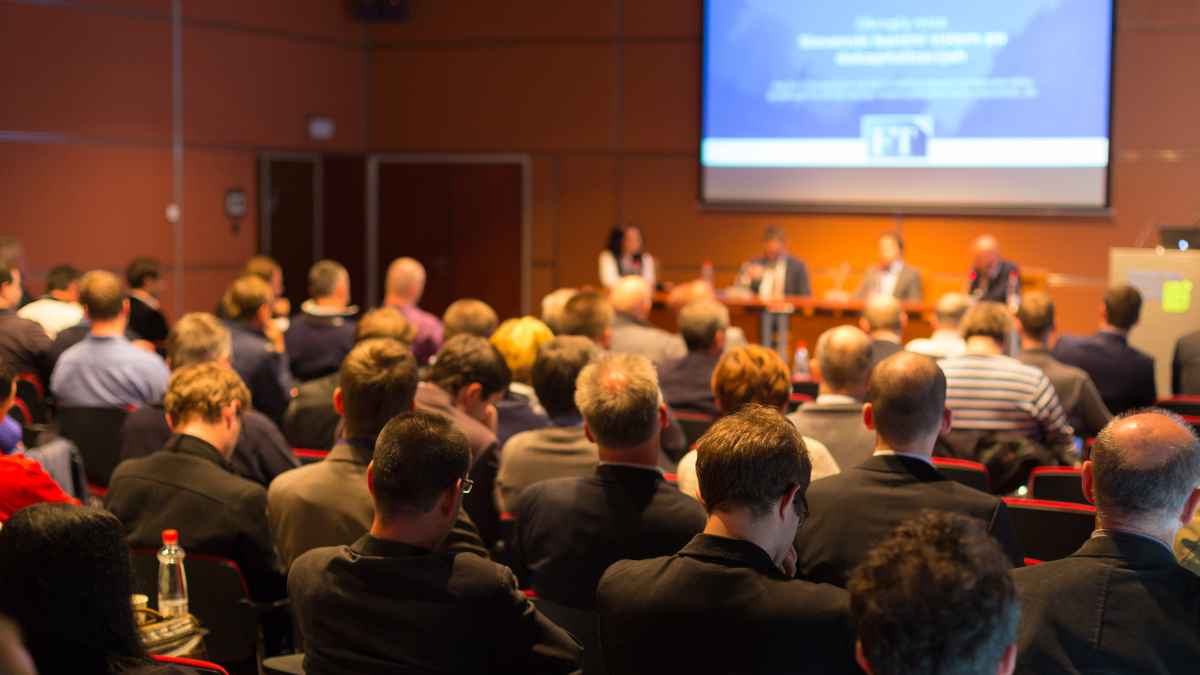
The 22nd Fab Lab Global Conference (FAB26 Boston) was held at the MIT campus and Fab Hub Kendall in Cambridge, Massachusetts, USA. Marking the 25th anniversary of the global maker movement, the conference brought together Fab Lab community members from around the world to reflect on the past and explore the future of digital fabrication and innovation. DFRobot participated deeply in the event through a series of workshops, keynote sessions, and hands-on demonstrations, showcasing how programmable hardware platforms and accessible development environments continue to empower creators and developers at different levels.
MIT Media Lab Workshop: Ten Years of Hardware Innovation, Five Years of Making AI Accessible
On July 27, Yang Shaodong, Senior Training Engineer at DFRobot, hosted a hands-on workshop titled “10 Years of Making, 5 Years of AI.” The workshop brought together Fab Lab leaders and makerspace organizers from eight countries, including the Netherlands, the United States, Japan, Peru, Finland, India, Jordan, and Colombia.
During the session, Yang reviewed DFRobot’s decade-long journey in bringing open source hardware into K-12 education in China — from the early days of using Arduino to connect code with the physical world, to today’s AI era, where students can complete image acquisition, model training, and local deployment through the Mind+ 2.0 programming platform and UNIHIKER M10. Using a lunar phase recognition project as an example, the workshop demonstrated a complete AI workflow that required no cloud infrastructure and no advanced programming background. By turning AI into a tangible and verifiable physical system, the session showed that AI development is no longer limited to cloud-based black-box APIs, but can become a programmable, transparent, and embedded tool for real-world applications.
MIT Museum International Youth Maker Challenge
On July 28, DFRobot collaborated with internationally recognized maker educator Rico Kanthatham to host a cross-country youth maker challenge at the MIT Museum. Students from the United States, Malaysia, France, and other countries participated in an engaging micro:bit and DFRobot Maqueen robot innovation competition.
The activity introduced a creative interactive experience: participants used micro devices attached to their legs to collect real-time movement data, transmitted the data through infrared communication, and controlled Maqueen robots to compete. Through immersive human-machine interaction and game-based learning, students from different countries experienced the possibilities of digital fabrication and creative technology.
AI Bidirectional Programming Workshop: UNIHIKER K10 Sparks Creativity at FAB26
On July 29, Rockets Xia, Co-founder of Mushroom Cloud Maker Space, hosted a workshop featuring UNIHIKER K10 under the theme “Code for AI, AI for Code.” The session explored both sides of AI programming — teaching participants how to build AI applications with code while also demonstrating how AI can assist the programming process.
The workshop attracted technology educators and experienced makers from Mexico, the United States, Paraguay, Peru, India, Colombia, and other countries. Using UNIHIKER K10 as the development platform, participants explored practical implementations of computer vision, voice interaction, and other AI applications with UNIHIKER K10’s edge AI capabilities. The projects created during the workshop showcased diverse ideas. One participant developed a smart tree-growing project using a light sensor — when the sensor was covered, the virtual tree stopped growing. Another created an environmental monitoring device that changed the screen expression to a “sad face” when indoor CO₂ levels exceeded a certain threshold.
eduFAB International Education Forum: Bringing Maker Education to Rural Communities Worldwide
Rebecca Jiang, Operations Manager of Mushroom Cloud Maker Space, delivered a keynote speech titled “Bringing Maker Education to Rural Communities Worldwide,” sharing the team’s experience in expanding AI and STEM education to underserved communities.
She highlighted the long-term collaboration with Shanghai Chunhe Youth Development Center, through which AI and maker education programs have been introduced to rural K-12 schools in regions such as Guizhou and Yunnan, China. Since 2023, the initiative has reached more than 100 schools and 10,000 students through project-based learning, accessible tools, and community-driven education models.