
Crypto exchanges are evolving from trading venues into financial infrastructure providers as tokenization, stablecoins, and artificial intelligence reshape the architecture of global finance, according to Bybit Co-Founder and CEO Ben Zhou.
Speaking at Point Zero Forum 2026 in Zurich during the fireside chat “The Exchange as Settlement Layer: How Tokenization Rewires the Role of a Crypto Platform,” Ben shared his perspective on how exchanges must adapt as financial assets become programmable, settlement becomes instantaneous, and financial services become increasingly intelligent and interconnected.
“The role of exchanges is changing fundamentally,” said Ben. “In the early days, exchanges competed on matching engines, latency, and execution speed. Today, we are becoming gateways to payments, tokenized assets, real-world assets, and global financial access.”
Tokenization Solves Access, Not Liquidity
While tokenization has emerged as one of the defining narratives in financial markets, Ben argued that the industry remains overly focused on putting assets on-chain without addressing the more difficult challenge of creating sustainable liquidity.
“Tokenization solves access, not liquidity,” Ben said. “Making an asset available globally does not automatically create demand for it. The next question is who will buy it, where liquidity comes from, and how that liquidity moves across borders and jurisdictions.”
Ben noted that governments, institutions, and asset issuers around the world are racing to tokenize everything from money market funds to real-world assets. However, long-term success will depend less on issuance and more on the development of deep and efficient secondary markets.
Exchanges Will Become Liquidity Networks
As settlement becomes increasingly automated and programmable, Ben believes exchanges will continue to play a critical role as liquidity hubs and distribution networks.
He compared exchanges to major international airports.
“Settlement is only one part of the equation,” Ben explained. “Airports are important not simply because planes land there, but because they become hubs for connectivity, services, and movement. Exchanges are similar. Liquidity, distribution, and access remain the core value proposition.”
According to Ben, the future competitive advantage of financial platforms will increasingly come from their ability to connect fragmented pools of liquidity across products, geographies, and regulatory regimes.
Fragmentation Is the Next Challenge
Ben also warned that tokenization risks creating a fragmented financial ecosystem if institutions issue proprietary versions of the same assets across multiple chains and platforms.
“We are already seeing multiple versions of the same assets emerge across different ecosystems,” Ben said. “The challenge of the next decade is not creating more tokenized assets. It is creating interoperability and shared liquidity across those assets.”
As tokenized finance matures, Ben expects the industry to focus increasingly on liquidity aggregation, interoperability, and cross-platform market infrastructure.
Instant Settlement Changes Market Structure
Ben described instant settlement as one of the most underestimated developments in financial markets.
Traditional finance relies heavily on clearing houses and intermediaries to manage settlement risk during multi-day settlement cycles. As blockchain infrastructure enables near-instant settlement, parts of this market structure may gradually become obsolete.
However, Ben believes trust, custody, and legal enforceability will remain essential.
“Technology can automate settlement, but trust still matters,” Ben said. “Institutions that provide custody, governance, and legal certainty will continue to play an important role in financial markets.”
AI Will Become the Interface for Finance
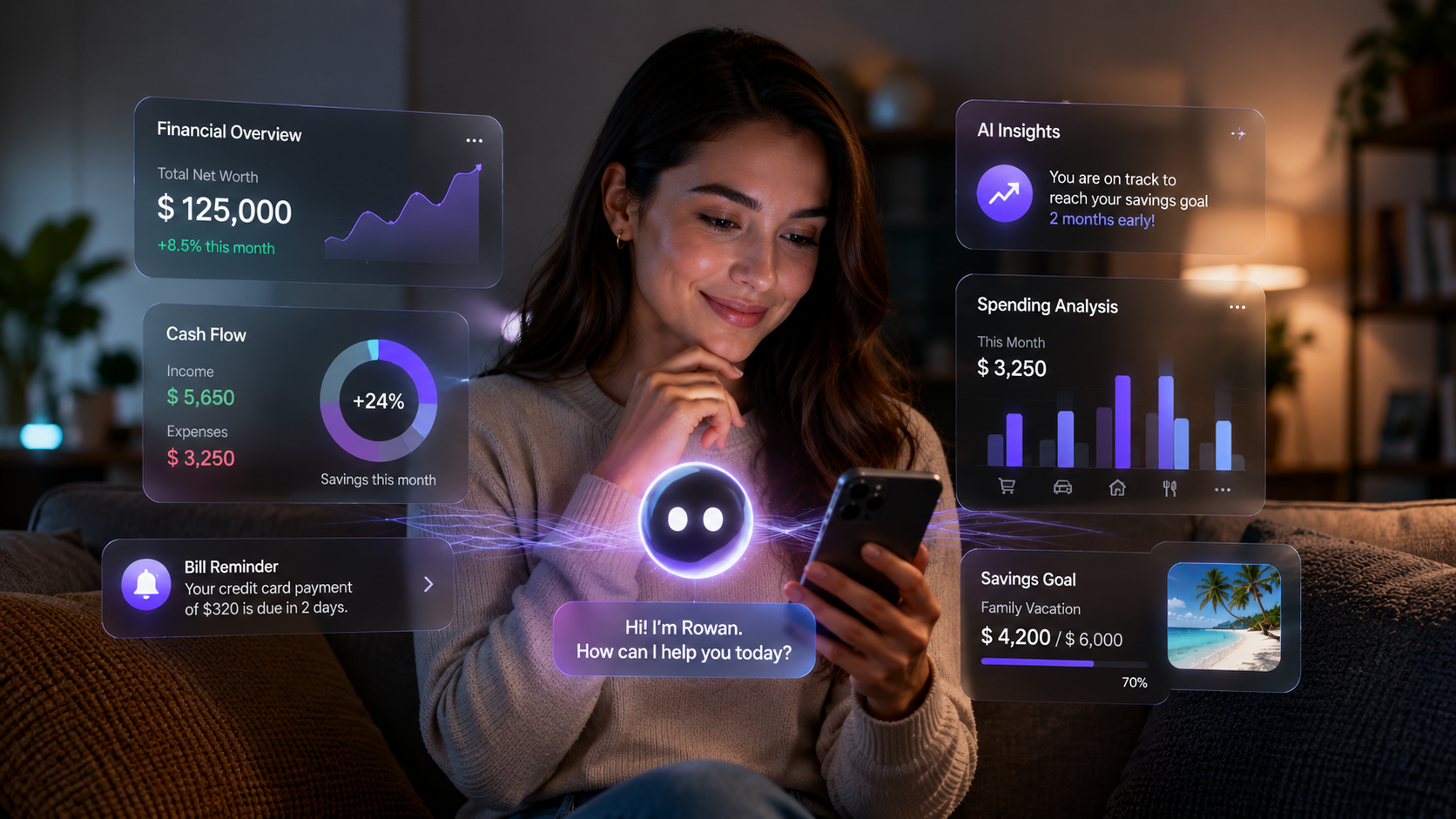
Looking beyond tokenization, Ben believes artificial intelligence will become the interface layer for increasingly complex financial ecosystems.
As financial platforms expand beyond trading into payments, investing, wealth management, and real-world assets, AI will simplify interactions and deliver personalized financial experiences.
“The future financial platform will become too complex for users to navigate manually,” Ben said. “AI will act like a personal financial assistant that understands user goals and automatically connects users with the right products, opportunities, and strategies.”