
Qaelon Medical and Scialytics today announced a strategic, non-exclusive partnership to integrate Qaelon’s real-time physiologic GI data into Scialytics’ AI-driven surgical analytics platform. The collaboration marks an important first signal of Qaelon’s broader vision: to serve as a foundational data source for the next generation of intelligent medtech platforms, devices, and AI ecosystems—beginning with colorectal surgery.
Anastomotic leaks remain one of the most serious complications in colorectal procedures, with reported rates as high as 19% and significant associated morbidity. Today, detection and risk assessment rely on subjective, non‑standardized methods. Qaelon and Scialytics are combining their complementary technologies to bring objective, data‑driven intelligence to this critical step in surgery.
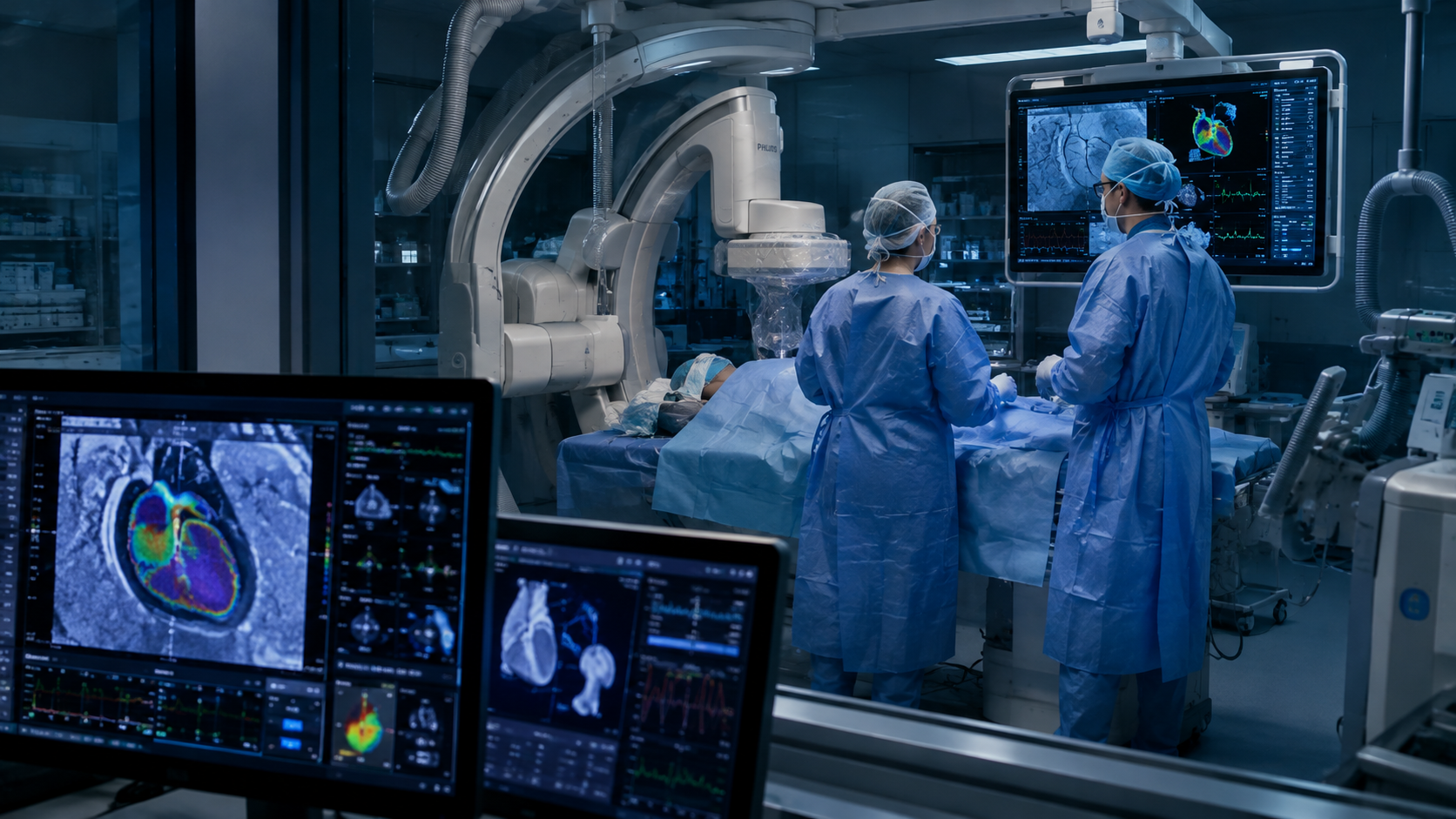
Scialytics develops cutting edge AI-driven medical devices for the operating room, focused on measuring and reducing surgical risk through real-time intraoperative support and postoperative video-based analytics. As the company expands into colorectal surgery, its platform delivers objective, video-based insight into surgical performance—complementing Qaelon’s real-time physiologic signals.
Qaelon is focused on digitizing one of the most critical steps in gastrointestinal surgery: leak detection. The company is converting a century-old, visual, analog air leak test—often subjective and error-prone—into an objective, real-time digital physiologic signal, while simultaneously advancing constant-flow insufflation to provide stable pneumoperitoneum and continuous intraoperative data capture.
By combining complementary data streams, the partnership aims to connect intraoperative performance with postoperative outcomes in a measurable, actionable way—while also demonstrating how Qaelon’s physiologic data can enhance broader AI platforms by enabling richer analysis, stronger prediction, and more informed intervention.
A Complementary Approach to Surgical Risk
Anastomotic leaks in colorectal surgery often arise from a combination of mechanical failure and biological vulnerability but are typically assessed through fragmented and non-standardized methods.
Qaelon introduces an objective verification step at the moment it matters most—before the patient leaves the operating room, while Scialytics provides continuous insight into surgical performance through AI-driven analysis.
This partnership reflects a broader shift toward continuous, data-driven surgical assessment, where:
- AI models analyze surgical technique and workflow
- Physiologic signals verify tissue integrity in real time
- Multimodal AI estimate the risk of leaks and suggest best interventions
- Outcomes are tracked and correlated across the full care pathway
Together, these capabilities enable a more actionable framework:
“sense → analyze → predict → intervene → optimize”
Building the First GI Data Ecosystem
This partnership is a key component of Qaelon’s strategy to develop the first open-architecture GI data ecosystem spanning pre-, intra-, and post-operative care. The ecosystem is anchored by Qaelon’s proprietary Objective Performance Indicator (OPI)—a real-time, quantifiable measure of GI integrity captured during surgery. Importantly, this collaboration is non-exclusive and signals Qaelon’s broader role as a data layer for intelligent medtech platforms, whether device-based, ecosystem-based, or AI-native. Scialytics’ decision to incorporate Qaelon’s data into its platform reflects the strategic value of these signals in broadening what can be analyzed, modeled, and predicted across the surgical continuum. Qaelon plans to expand this ecosystem through additional collaborations in postoperative monitoring and intraoperative data platforms to support structured, regulatory-aligned data capture across care settings.
Addressing a Systemic Challenge in Surgery
Both companies are aligned around a shared industry need: surgical complications such as leaks are often under‑recognized, inconsistently labeled, and measured with subjective or delayed methods. The lack of structured data limits the ability to predict and improve outcomes at scale. By digitizing previously subjective steps and combining them with AI‑driven analytics, Qaelon and Scialytics aim to establish transparent, standardized measurements and endpoints that support earlier detection and more reliable clinical decisions.