
Artificial intelligence is reshaping nearly every part of modern business, and B2B sales is no exception. From identifying prospects and predicting buying intent to automating outreach and analyzing customer conversations, AI is changing how sales teams find, engage, and retain customers.
But the future of B2B sales isn’t about replacing salespeople with machines. It is about combining human expertise with intelligent technology to create faster, more personalized, and more effective buying experiences.
As AI becomes embedded into everyday sales operations, organizations that understand how to use it strategically will be better positioned to adapt to increasingly complex B2B markets.
The Shift From Traditional Sales to AI-Powered Selling
Traditional B2B sales has often relied on manual prospecting, cold outreach, spreadsheets, CRM updates, and sales representatives working through large volumes of leads.
AI is changing this model.
Modern sales platforms can analyze enormous amounts of customer and market data in seconds. AI can identify patterns in customer behavior, determine which prospects are most likely to convert, recommend the next action for a salesperson, and automate repetitive administrative tasks.
This creates a shift from activity-based selling to intelligence-based selling.
Instead of asking, “How many calls did the sales team make today?” businesses can increasingly focus on questions such as:
- Which prospects are showing genuine buying intent?
- What problems are those prospects trying to solve?
- What message is most relevant to each account?
- Which opportunities require human intervention?
- What action is most likely to move an opportunity forward?
The result is a sales process that can be more targeted and data-driven.
AI Will Transform Prospecting
Prospecting is one of the areas where AI can have an immediate impact.
Sales teams traditionally spend significant time researching companies, identifying decision-makers, collecting contact information, and determining whether a prospect fits their ideal customer profile.
AI can automate much of this research.
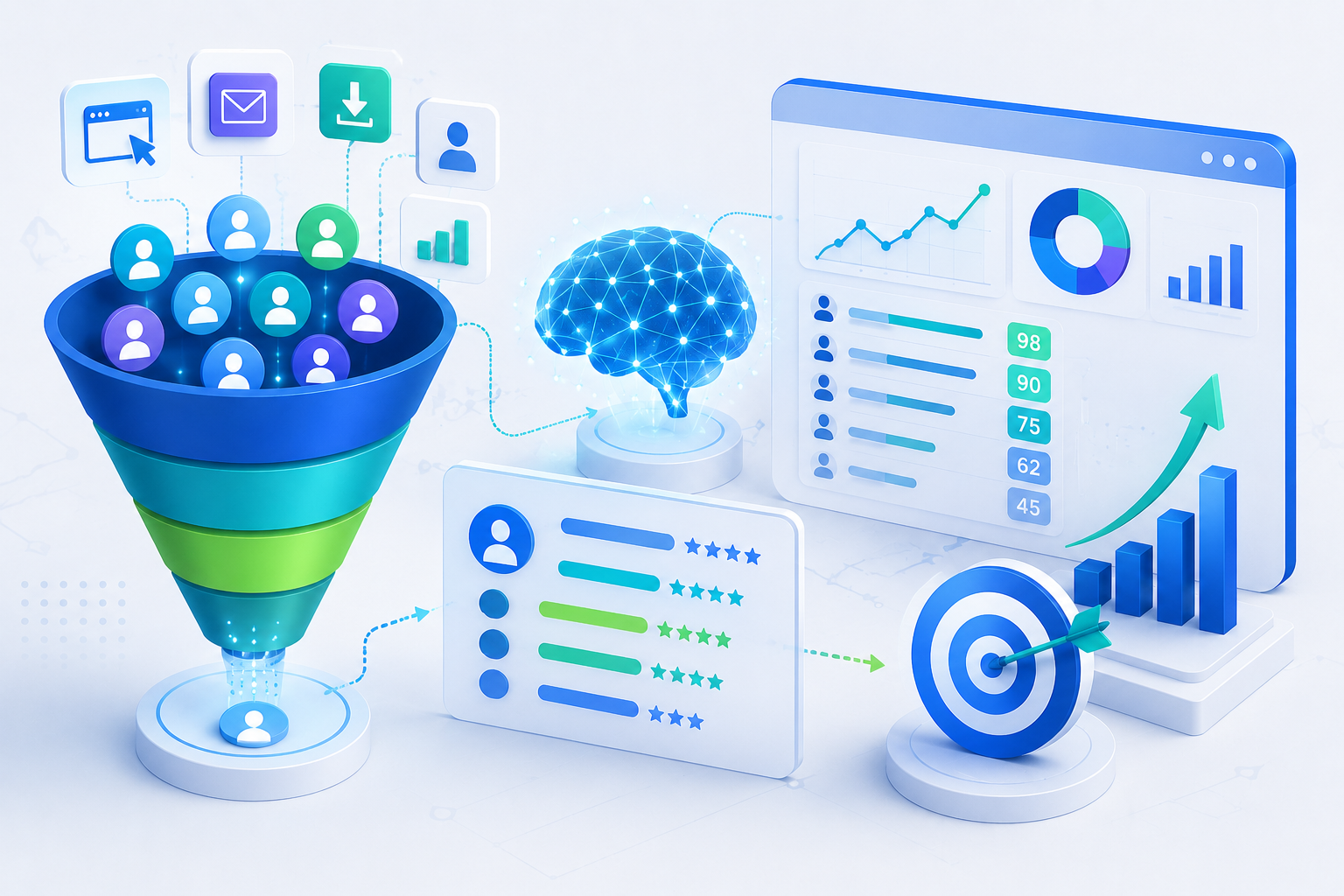
AI-powered tools can analyze firmographic information, website activity, public business information, previous interactions, and other signals to help sales teams identify potentially valuable accounts.
Instead of creating a massive list of prospects and contacting everyone, salespeople can focus their attention on accounts that show stronger signals of relevance or intent.
This doesn’t eliminate prospecting. It makes prospecting more intelligent.
Personalization at Scale
Personalization has always been important in B2B sales, but traditional personalization can be difficult to scale.
A sales representative might research an individual prospect and write a customized email, but doing this manually for hundreds of prospects is time-consuming.
AI changes the economics of personalization.
AI can help sales teams generate account-specific messaging based on a prospect’s industry, business challenges, role, previous interactions, or publicly available information. Sales representatives can then review, refine, and personalize the communication before sending it.
This creates a useful balance:
AI provides scale. Humans provide judgment and authenticity.
However, there is an important caveat. More personalization does not automatically mean better communication. If AI-generated messages become repetitive, overly generic, or obviously automated, customers may become less responsive.
The future of personalization will therefore depend not simply on generating more content, but on generating more relevant content.
Predictive Analytics Will Improve Sales Forecasting
Sales forecasting has historically been difficult because it often depends on incomplete information and subjective assessments.
AI can improve forecasting by analyzing historical sales data, pipeline activity, customer engagement, deal velocity, and other signals.
Instead of relying entirely on a salesperson’s confidence level, organizations can use AI-assisted analysis to identify patterns associated with successful or unsuccessful deals.
For sales leaders, this can provide greater visibility into questions such as:
- Which opportunities may be at risk?
- Which deals have stalled?
- Which accounts are showing increased engagement?
- Where are pipeline gaps emerging?
- Which activities correlate with successful outcomes?
AI will not make forecasting perfect. Markets change, customers behave unpredictably, and data can contain errors. But better analysis can give sales leaders more information with which to make decisions.
The Rise of AI Sales Assistants
One of the most significant developments in B2B sales is the emergence of AI assistants and agents that can support salespeople throughout the sales cycle.
These systems can potentially help with tasks such as:
- Researching accounts
- Summarizing customer meetings
- Updating CRM records
- Drafting follow-up emails
- Preparing sales presentations
- Answering routine questions
- Identifying sales opportunities
- Recommending next steps
- Monitoring customer engagement
This means sales representatives can spend less time on administrative work and more time on activities that require human interaction.
In complex B2B sales, that distinction matters.
A machine can summarize a meeting. A salesperson still needs to understand the customer’s priorities, build trust, navigate internal politics, negotiate, and communicate value.
Human Relationships Will Become More Important
It may seem contradictory, but greater automation could make human relationships more valuable.
As AI-generated emails, chatbots, automated research, and digital interactions become widespread, customers may become increasingly selective about where they invest their attention.
When a purchase involves significant financial, operational, or strategic consequences, buyers often want more than information. They want confidence.
They want to know:
- Does this vendor understand our business?
- Can this solution solve our specific problem?
- Will the supplier deliver on its promises?
- Can we trust the people behind the product?
- What happens if something goes wrong?
These questions require empathy, credibility, communication, and judgment.
AI can support these qualities, but it cannot simply automate trust.
The B2B Buyer Journey Will Become More Self-Directed
Another major change is happening on the buyer side.
B2B buyers increasingly have access to enormous amounts of information before they ever speak to a salesperson. They can research vendors, compare solutions, read reviews, analyze pricing models, watch demonstrations, and use AI tools to evaluate potential solutions.
This means sales teams may have less control over the early stages of the buying journey.
The salesperson’s role is consequently evolving from information provider to strategic advisor.
If customers can find basic product information themselves, salespeople need to provide something more valuable: context, expertise, problem-solving, and guidance.
Companies will therefore need content and sales strategies that support buyers before, during, and after direct sales conversations.
AI Will Change Sales Team Structures
The sales organization of the future may look different from today’s sales organization.
Some traditional responsibilities may become increasingly automated, particularly repetitive research, data entry, lead qualification, and routine communication.
At the same time, demand may increase for professionals who can:
- Work effectively with AI systems
- Interpret data
- Understand customer needs
- Conduct complex negotiations
- Build executive relationships
- Manage strategic accounts
- Develop creative solutions
- Apply business judgment
The most valuable salesperson may not be the person who can perform the most manual tasks. It may be the person who knows how to combine technology, business knowledge, and human skills effectively.
Data Quality Will Become a Competitive Advantage
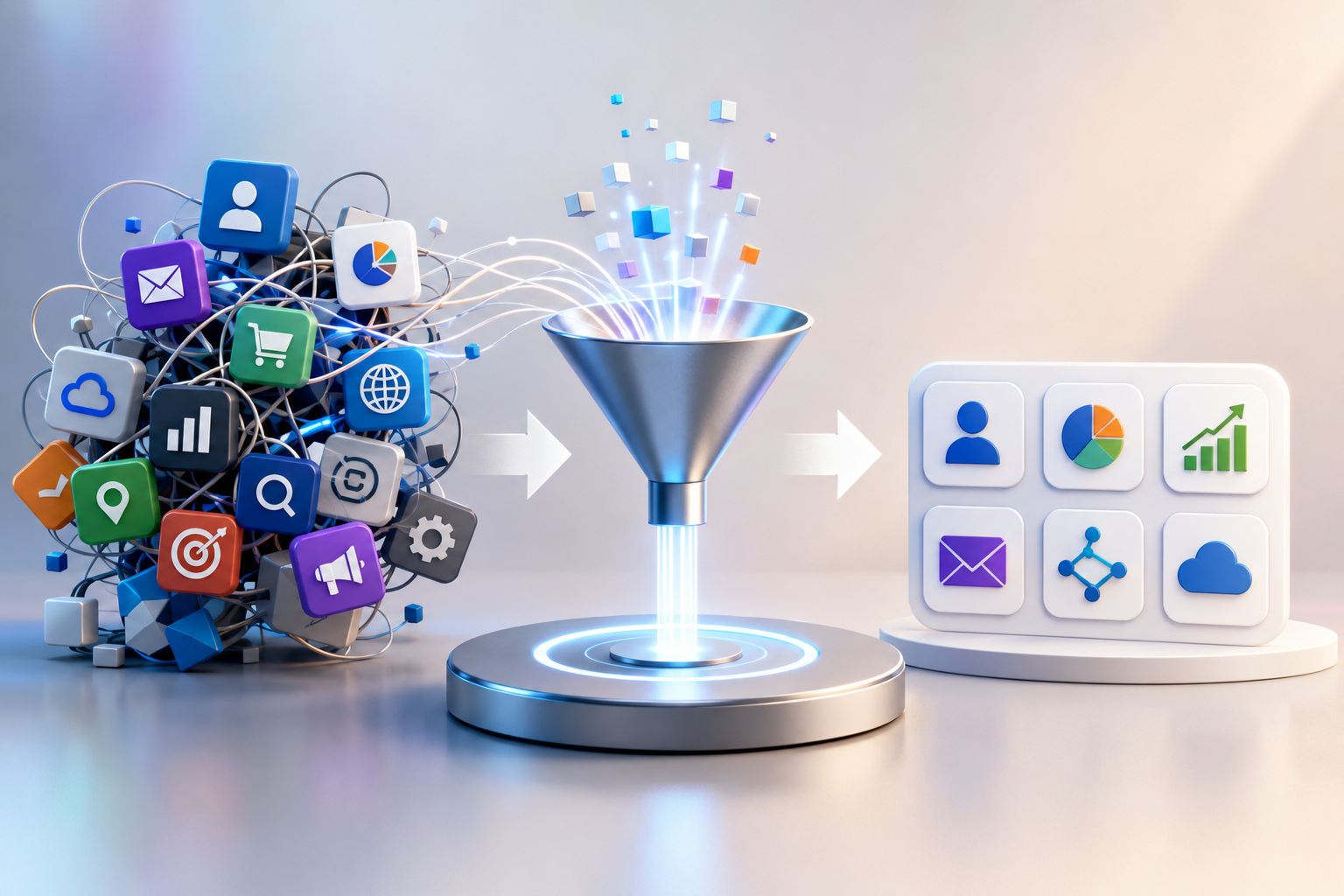
AI is only as useful as the information it receives.
Poor CRM data, outdated customer information, duplicate records, inconsistent processes, and incomplete sales histories can undermine AI-driven sales strategies.
Organizations therefore need to treat data quality as a strategic priority.
Successful AI adoption in sales will require businesses to establish:
- Reliable customer data
- Consistent CRM processes
- Clear data governance
- Appropriate privacy controls
- Regular data maintenance
- Transparent AI policies
Companies that invest heavily in AI without improving their underlying data may find that technology amplifies existing problems rather than solving them.
Trust, Privacy, and Responsible AI
The growing use of AI in sales also introduces important ethical and operational questions.
How much customer data should organizations collect? How should that information be used? When should customers be informed that they are interacting with AI? Who is responsible when an AI system generates incorrect information?
These questions will become increasingly important as AI becomes integrated into customer-facing processes.
Businesses will need clear policies around data privacy, security, human oversight, transparency, and responsible AI use.
The goal should not simply be to automate as much as possible. It should be to use AI in ways that create value while maintaining customer trust.
What the Future B2B Sales Team Will Look Like
The future sales organization is likely to be a hybrid model.
AI will handle much of the high-volume, repetitive, and analytical work, while people focus on complex decisions and relationships.
A simplified version of this model looks like:
AI handles:
- Data analysis
- Lead research
- Routine follow-ups
- Meeting summaries
- Opportunity monitoring
- Forecasting support
- Administrative tasks
Humans handle:
- Relationship building
- Strategic conversations
- Negotiation
- Complex problem-solving
- Executive communication
- Trust-building
- High-stakes decisions
The boundaries will continue to evolve, but the underlying principle is clear: technology and people will increasingly work together rather than operate independently.
Preparing for the Future
Businesses that want to succeed in an AI-driven sales environment should begin with strategy rather than technology.
Instead of asking, “Which AI tool should we buy?” organizations should ask:
“Which parts of our sales process create the most friction, and where can AI create measurable value?”
A practical approach includes:
1. Identify repetitive tasks
Find activities that consume significant salesperson time without requiring significant human judgment.
2. Improve your data
Clean and standardize CRM and customer data before relying heavily on AI-driven insights.
3. Start with measurable use cases
Begin with specific applications such as sales research, meeting summaries, lead prioritization, or forecasting support.
4. Keep humans in the loop
AI-generated recommendations should be reviewed when decisions affect customers, revenue, or business relationships.
5. Train sales teams
AI adoption requires more than software. Salespeople need to understand how to use AI effectively and when human judgment should override an automated recommendation.
6. Measure outcomes
Track meaningful business metrics such as conversion rates, sales-cycle length, productivity, customer engagement, and revenue impact.
Read Also: How AI Is Bringing Sales and Marketing Teams Closer Together