
For years, businesses treated marketing, sales, and customer success as separate functions. Marketing generated leads, sales converted them into customers, and customer success focused on retention. Each department had its own processes, technology, metrics, and goals.
That model is rapidly changing.
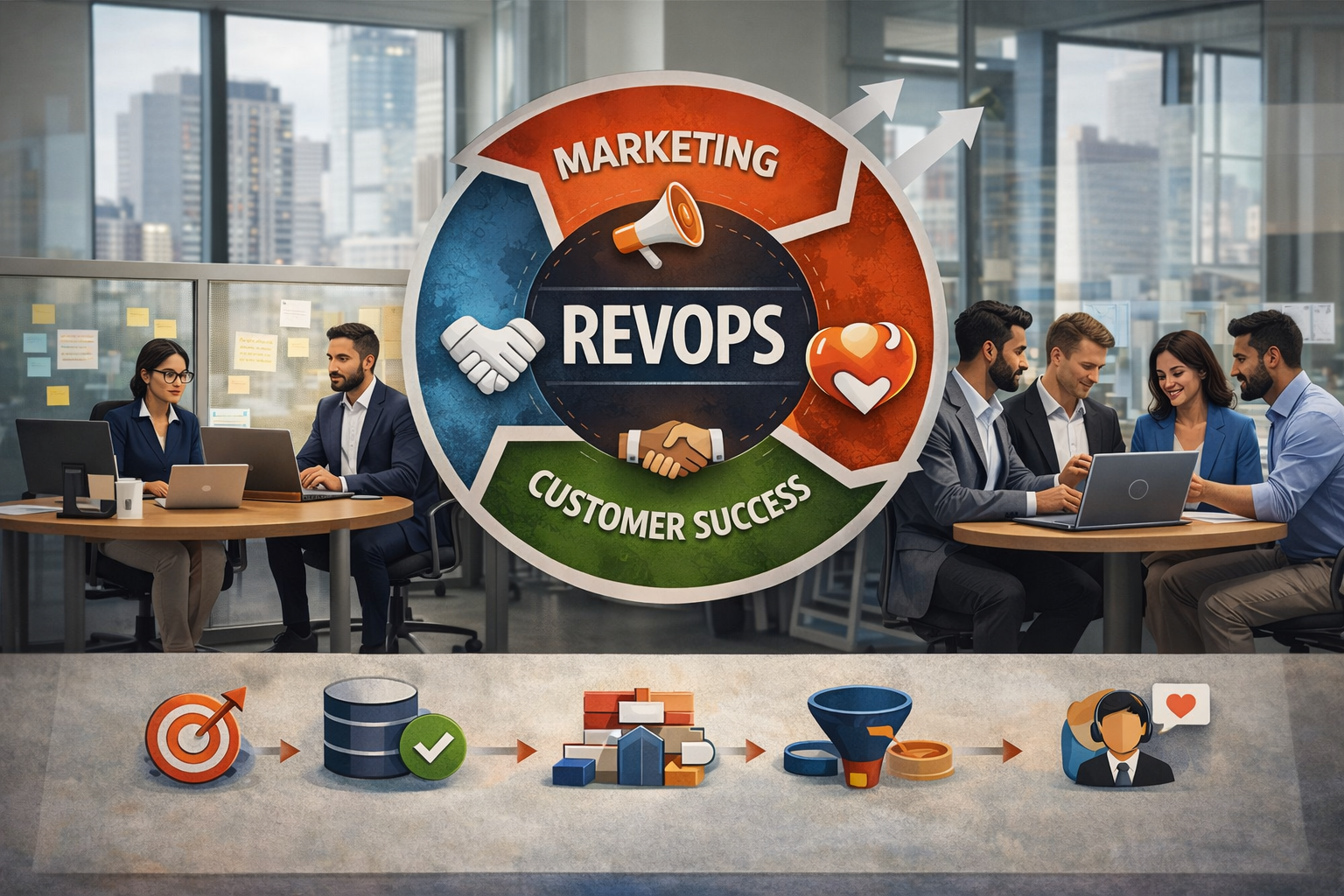
Today, companies are increasingly adopting Revenue Operations (RevOps)—an operating model that connects marketing, sales, and customer success through shared data, processes, technology, and accountability. RevOps has evolved from a niche operational function into a strategic part of how modern businesses drive predictable growth.
What Is RevOps?
Revenue Operations, commonly called RevOps, is designed to create a single, connected revenue engine across the customer lifecycle.
Instead of allowing marketing, sales, and customer success to operate as independent silos, RevOps brings their operations together around common definitions, systems, data, and revenue objectives.
At its core, RevOps focuses on four areas:
- People: Aligning teams around shared revenue goals.
- Processes: Standardizing workflows, handoffs, and customer journeys.
- Technology: Connecting CRM, marketing automation, sales engagement, customer success, analytics, and other revenue tools.
- Data: Creating a reliable source of truth for reporting, forecasting, attribution, and decision-making.
The objective is simple: make revenue more predictable, measurable, efficient, and scalable.
Why RevOps Is Rising
The growth of RevOps is closely connected to the increasing complexity of modern customer journeys.
A buyer may discover a company through social media, read several pieces of content, attend a webinar, interact with an AI-powered chatbot, speak with a salesperson, and later engage with customer success. These interactions generate data across multiple systems.
When those systems are disconnected, companies struggle to answer basic questions:
- Where did the customer come from?
- Which marketing activities influenced the deal?
- Why did the opportunity stall?
- Which accounts are most likely to convert?
- Which customers are at risk of churn?
- Where is the next revenue opportunity?
RevOps addresses these problems by connecting the operational infrastructure behind the entire revenue lifecycle.
The Technology Behind RevOps
Technology is one of the biggest forces accelerating RevOps adoption.
A modern RevOps technology stack may include:
1. CRM Platforms
Customer relationship management platforms provide the foundation for revenue data. They track prospects, opportunities, accounts, interactions, and customer information.
The goal is no longer simply to maintain a contact database. The CRM increasingly acts as the central operating system for revenue teams.
2. Marketing Automation
Marketing automation platforms connect campaigns and customer engagement with downstream revenue outcomes.
RevOps teams can use these systems to automate lead nurturing, segmentation, attribution, lifecycle management, and communication.
3. Sales Engagement Tools
Sales engagement technology helps sales teams automate repetitive activities such as prospecting, follow-ups, sequencing, and task management.
When integrated with other revenue systems, these tools can provide sales teams with better context about prospect behavior.
4. Customer Success Technology
RevOps extends beyond acquiring customers.
Customer success platforms help teams monitor product adoption, customer health, renewals, expansion opportunities, and churn signals. This gives organizations a more complete view of revenue throughout the customer lifecycle.
5. Data and Analytics Platforms
Revenue teams need more than dashboards—they need trustworthy data.
Modern RevOps environments increasingly connect data from CRM, marketing, sales, finance, product, and customer success systems to create a unified view of revenue performance.
6. Artificial Intelligence
AI is becoming one of the most important developments in RevOps technology.
AI can assist with forecasting, lead scoring, data enrichment, anomaly detection, reporting, workflow automation, and customer insights. In 2026, industry discussions around RevOps increasingly focus on AI-assisted and agentic workflows that can execute operational tasks rather than simply generate reports.
This represents an important shift: RevOps technology is moving from helping people analyze revenue toward helping teams actively operate the revenue engine.
From Tool Sprawl to Technology Consolidation
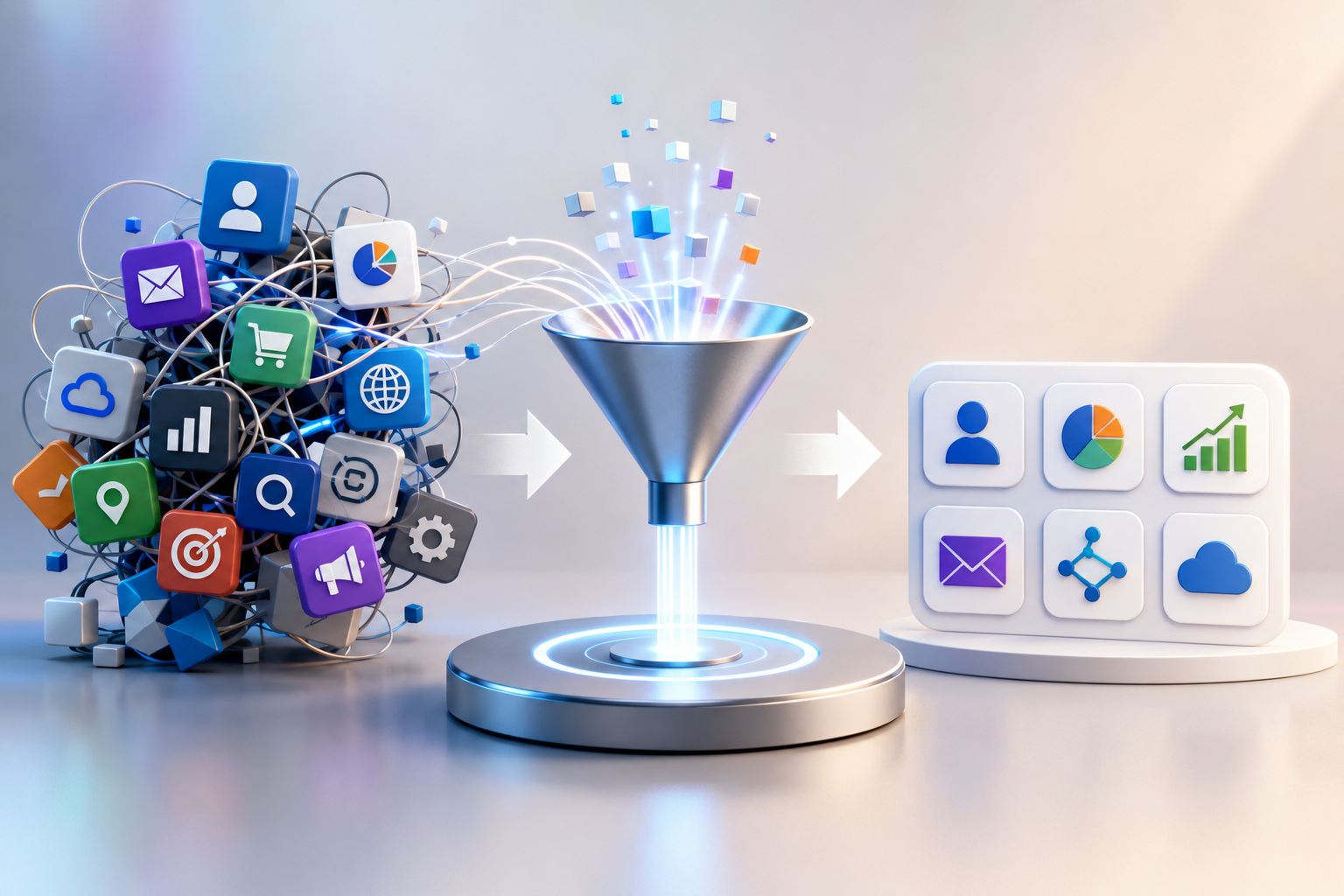
Ironically, the rise of RevOps has also exposed a major problem: too many tools.
Organizations often purchase separate platforms for lead generation, enrichment, sales engagement, analytics, customer success, forecasting, attribution, and automation. When these systems do not communicate effectively, they create more complexity instead of solving it.
The next phase of RevOps technology is therefore likely to emphasize integration and consolidation.
Rather than asking, “What new tool should we buy?”, RevOps leaders are increasingly asking:
“How can we make our existing revenue technology work together?”
This shift places greater importance on APIs, data integration, automation, governance, and a clearly defined revenue data model.
AI Is Changing the RevOps Role
AI could fundamentally change what RevOps professionals spend their time doing.
Historically, RevOps teams have devoted significant effort to activities such as:
- Building reports
- Cleaning CRM data
- Managing spreadsheets
- Updating dashboards
- Routing leads
- Creating forecasts
- Monitoring pipeline
- Identifying operational bottlenecks
Increasingly, automation and AI can handle portions of these repetitive activities.
That does not make RevOps less important. It makes the function more strategic.
Instead of spending hours assembling reports, RevOps professionals can focus on questions such as:
- Why is conversion declining?
- Which segments are producing the highest-quality pipeline?
- Where is revenue leaking from the funnel?
- Which processes should be redesigned?
- How should AI be governed across the revenue organization?
The future RevOps professional is therefore likely to be part technologist, part data strategist, and part business operator.
The Benefits of RevOps Technology
When implemented effectively, RevOps technology can deliver several advantages.
Better Alignment
Marketing, sales, and customer success can work from the same definitions and customer information rather than competing versions of the truth.
More Accurate Forecasting
Connected data provides leadership with greater visibility into pipeline, conversion, retention, and expansion.
Greater Efficiency
Automation reduces repetitive administrative work and allows revenue teams to spend more time on activities that directly influence customers and revenue.
Improved Customer Experience
When customer information flows across departments, customers do not have to repeatedly explain their history, needs, or previous interactions.
More Predictable Growth
Perhaps the biggest benefit is visibility. Companies can better understand what drives revenue, where growth is slowing, and which actions are most likely to improve performance.
Challenges on the Road to RevOps
RevOps technology is not a magic solution.
One of the biggest mistakes companies make is buying technology before fixing their underlying processes.
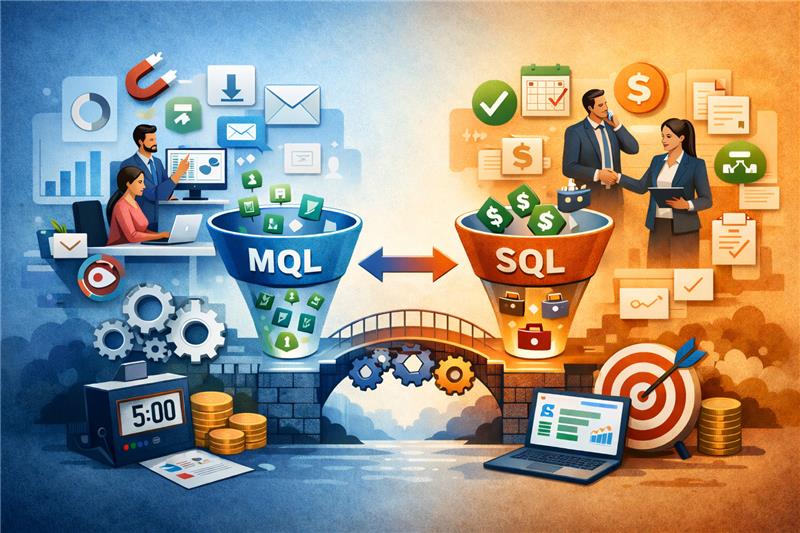
If marketing and sales disagree about what constitutes a qualified lead, a new AI platform will not solve the problem.
If CRM data is inaccurate, more dashboards will simply produce faster access to unreliable information.
And if teams have conflicting incentives, technology alone will not create alignment.
Successful RevOps therefore starts with strategy, definitions, processes, and governance before technology.
A useful principle is:
Fix the process. Standardize the data. Then automate it.
The Future of RevOps Technology
The future of RevOps will likely be defined by three major trends.
First, AI will become embedded in everyday revenue workflows. Instead of merely recommending an action, AI agents will increasingly be capable of executing routine operational tasks under appropriate controls.
Second, revenue data will become more unified. Companies will continue moving away from disconnected systems toward integrated revenue data architectures.
Third, RevOps will become more strategic. The function will increasingly influence pricing, customer segmentation, forecasting, go-to-market strategy, retention, and overall revenue planning.
Market research also points to continued expansion: Grand View Research estimates the global RevOps market could grow from approximately $5.6 billion in 2026 to $17 billion by 2033, representing a projected 16.6% CAGR.
Read Also: Aligning Sales and Marketing Through Better Technology Integration