B2B sales rarely happen after a single conversation. Unlike many B2C purchases, business-to-business buying decisions often involve multiple stakeholders, longer sales cycles, extensive research, and careful evaluation.
That’s where a B2B sales funnel comes in.
A well-designed B2B sales funnel helps businesses understand how prospects move from their first interaction with a brand to becoming paying customers—and eventually, loyal advocates.
In this guide, we’ll explain the complete B2B sales funnel, its key stages, effective strategies for each stage, common mistakes to avoid, and how businesses can optimize the funnel for better conversions.
What Is a B2B Sales Funnel?
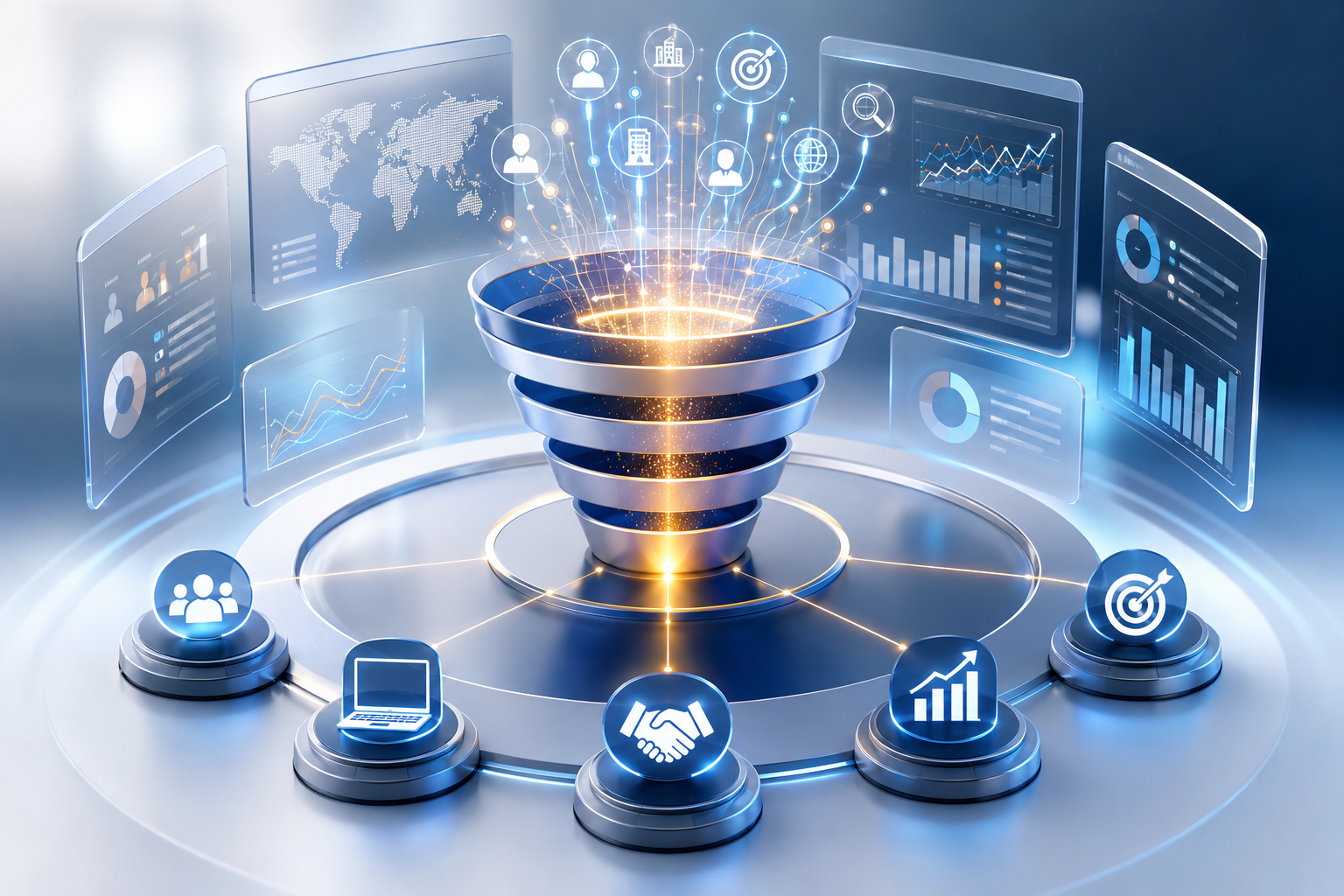
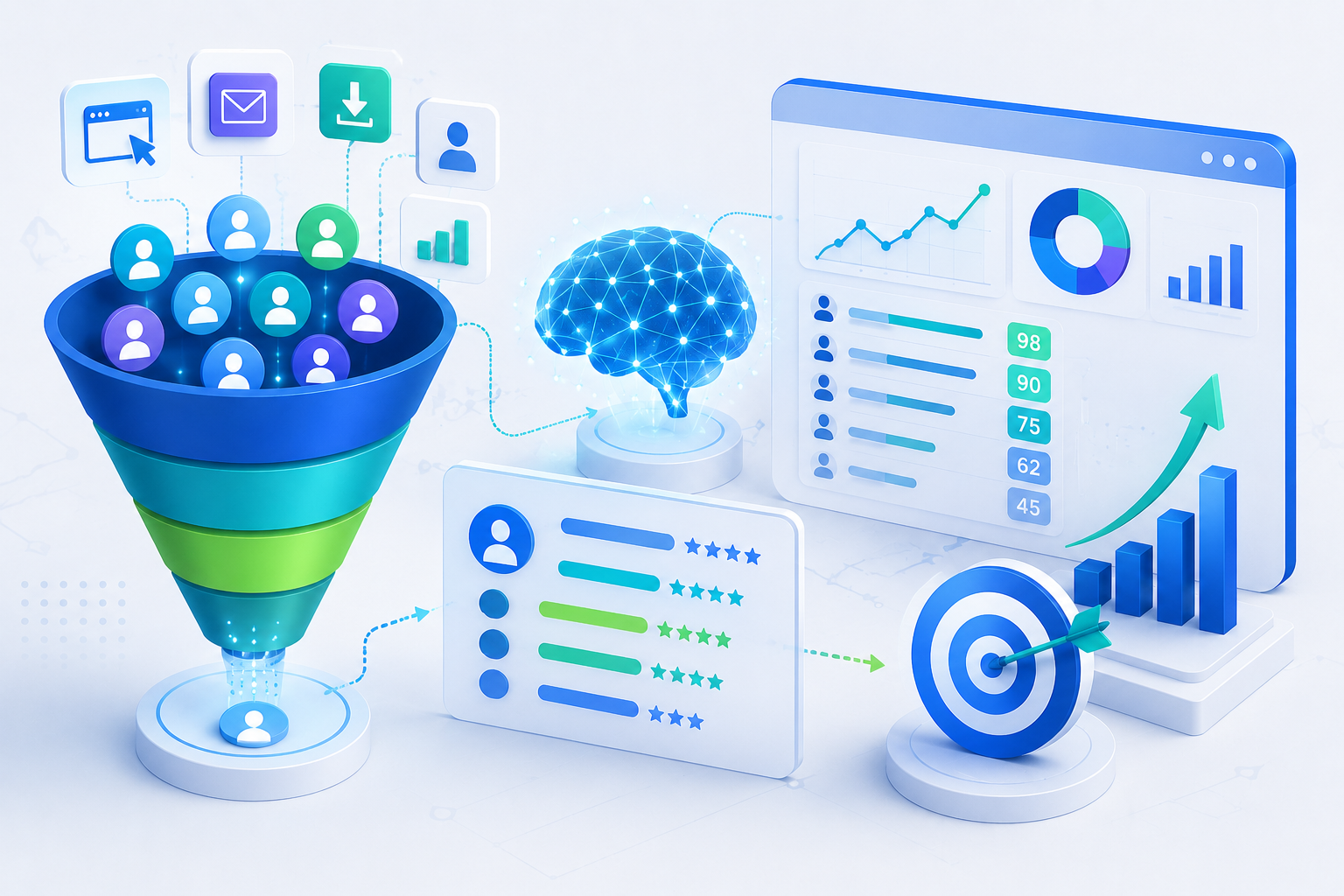
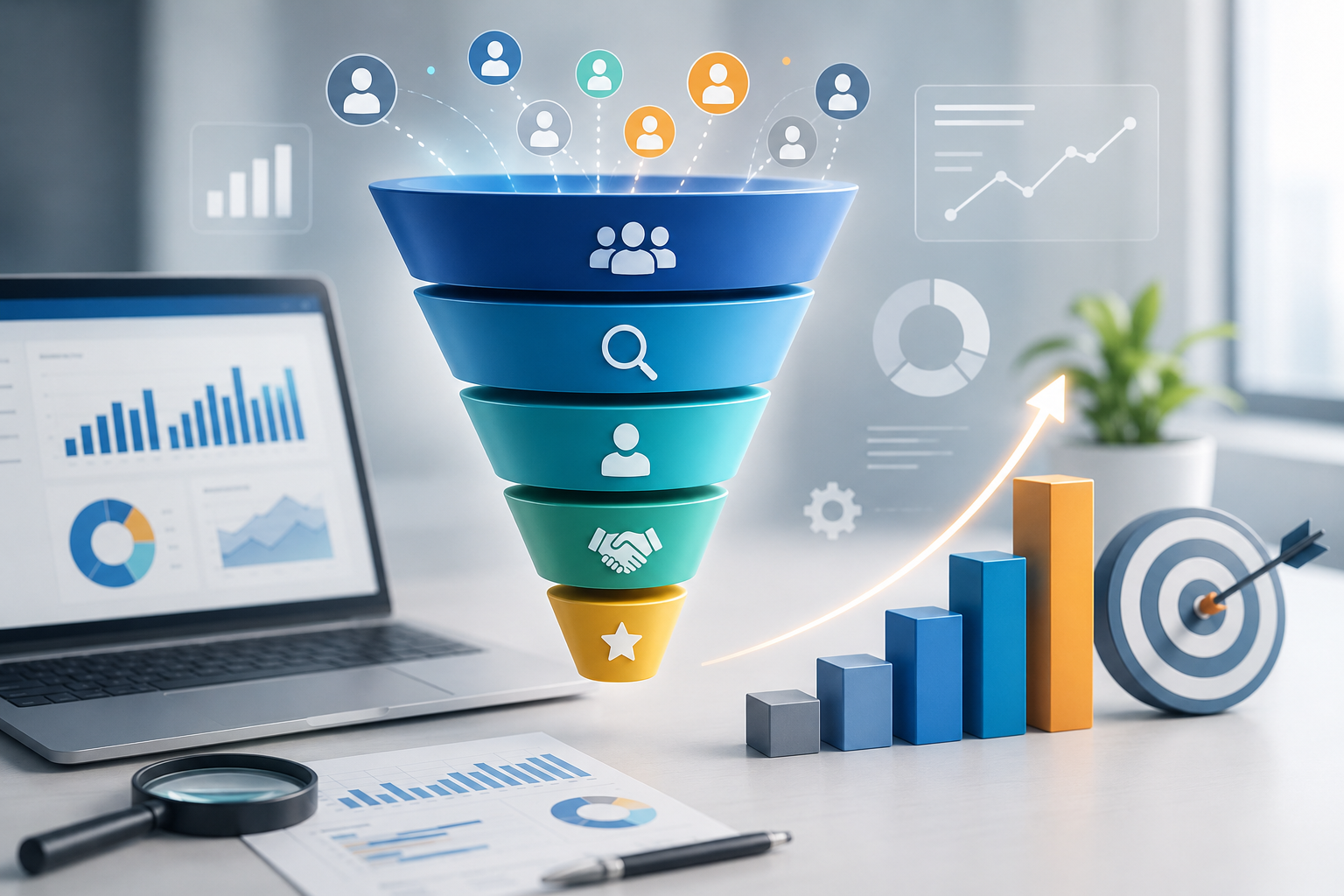
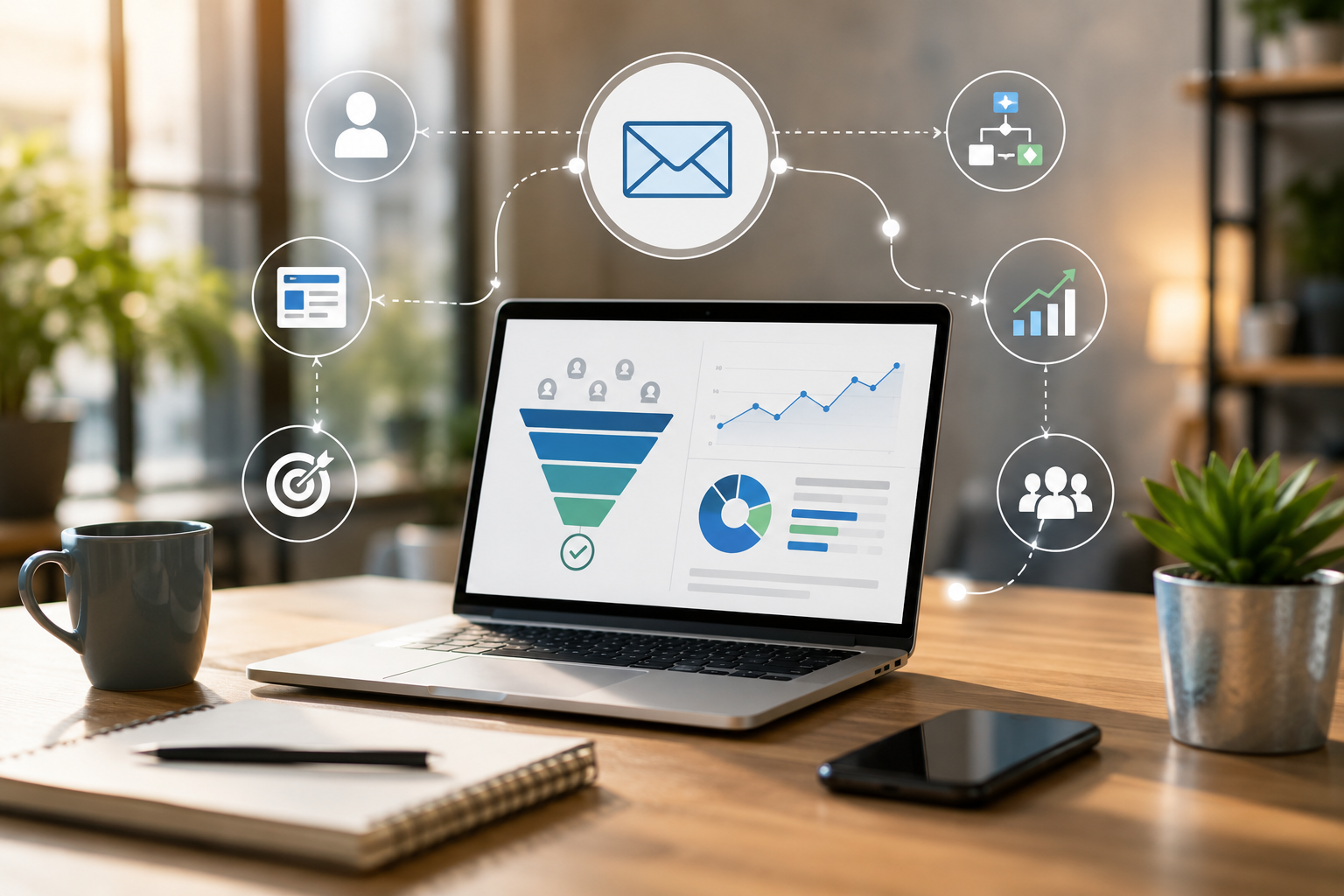
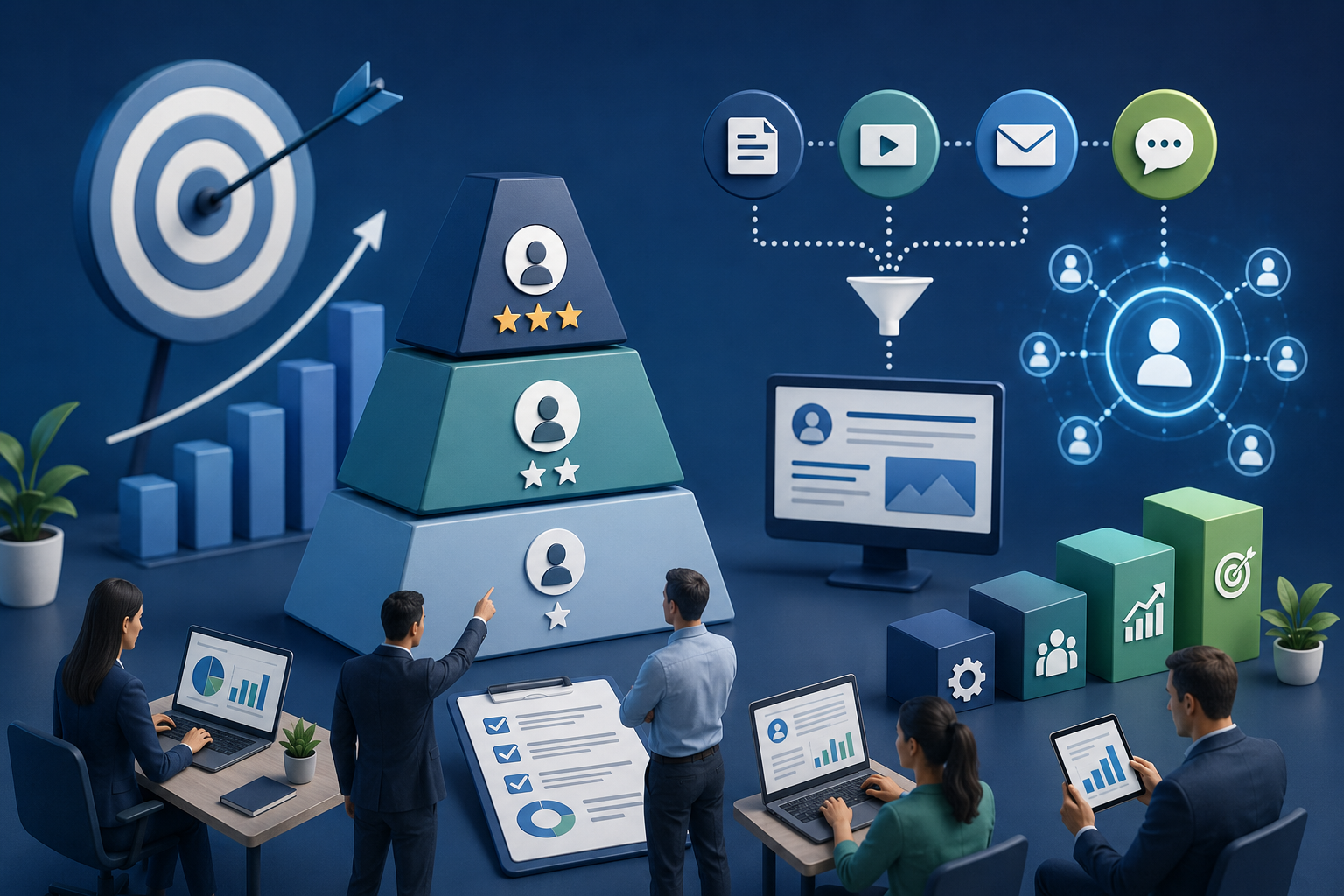
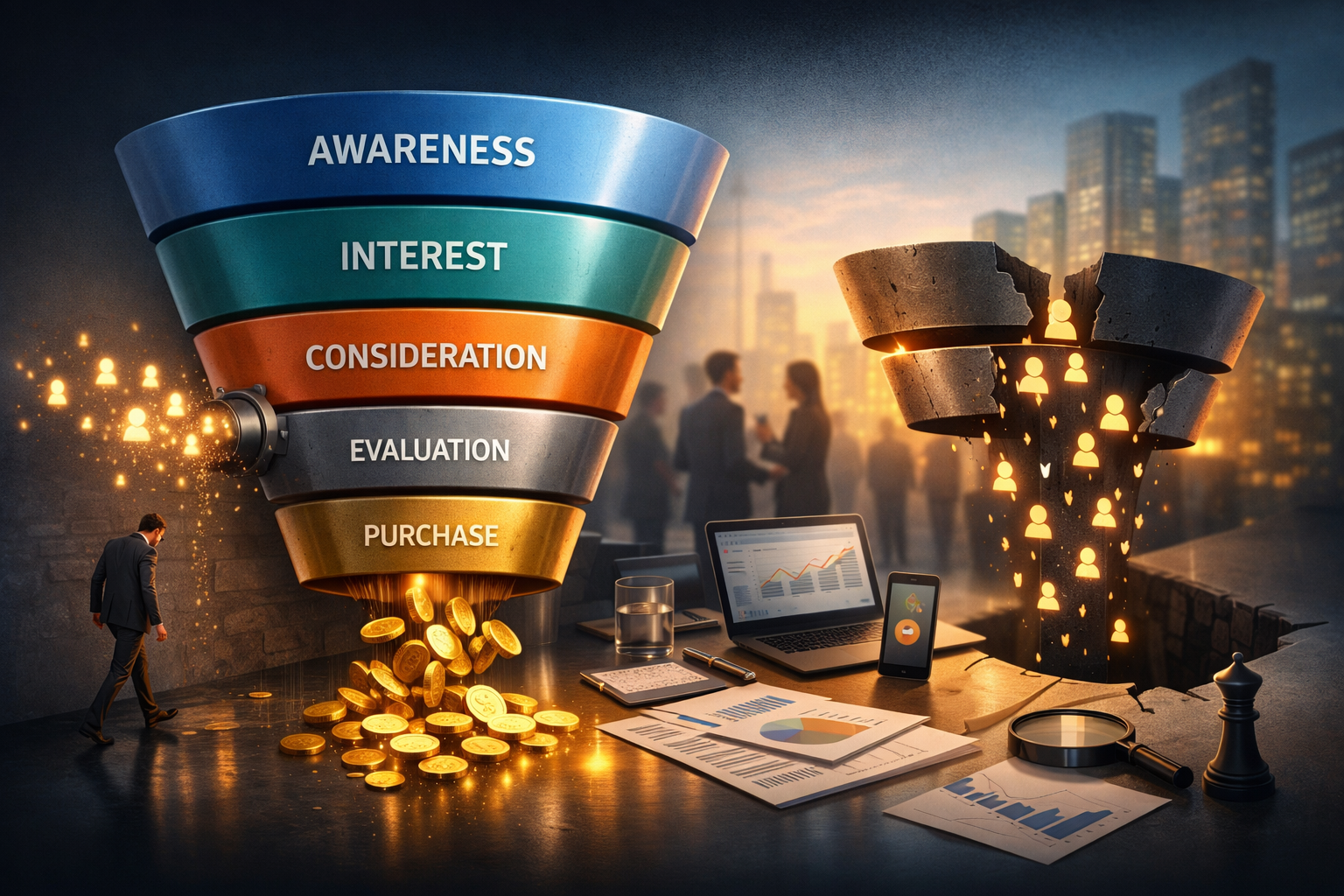
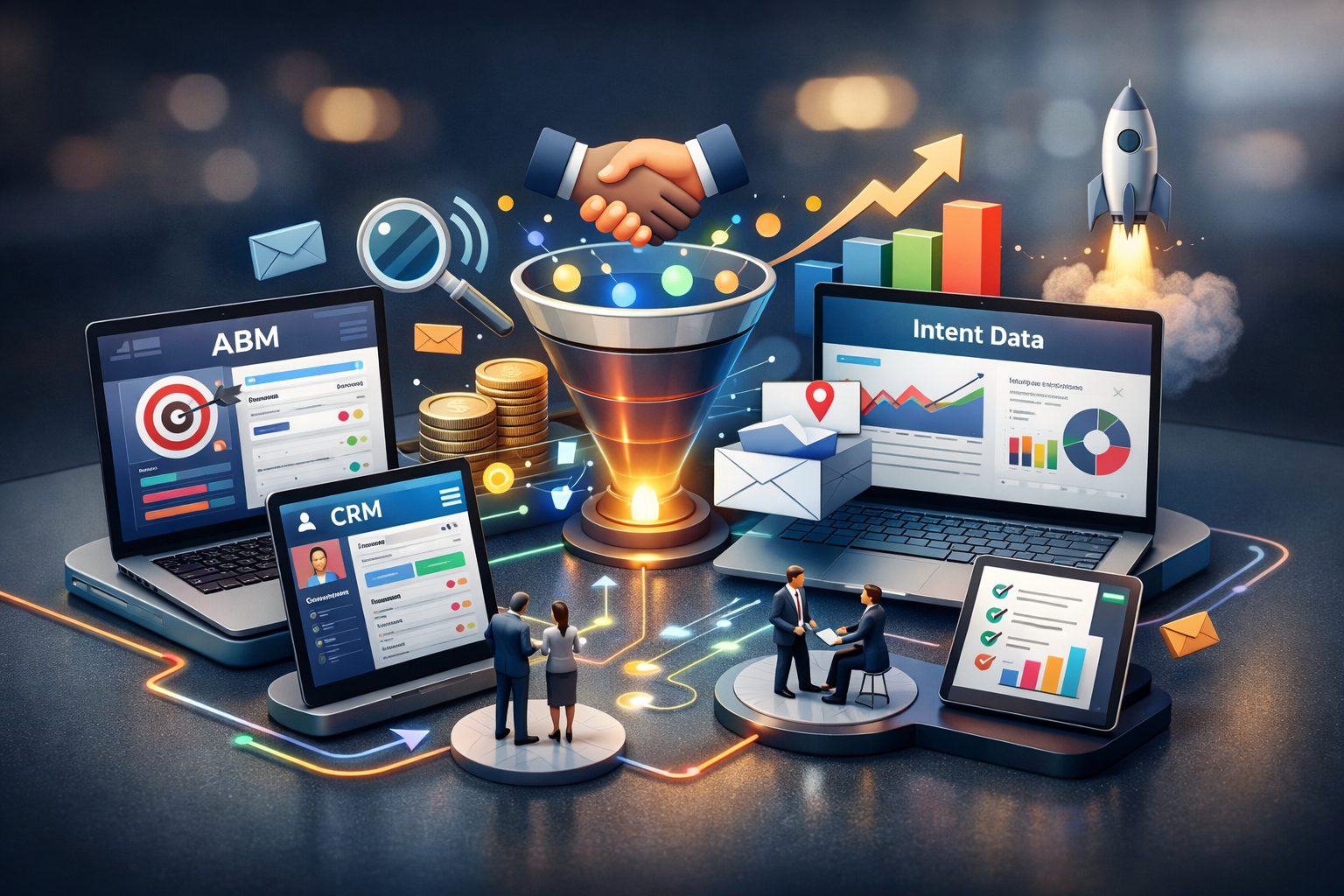
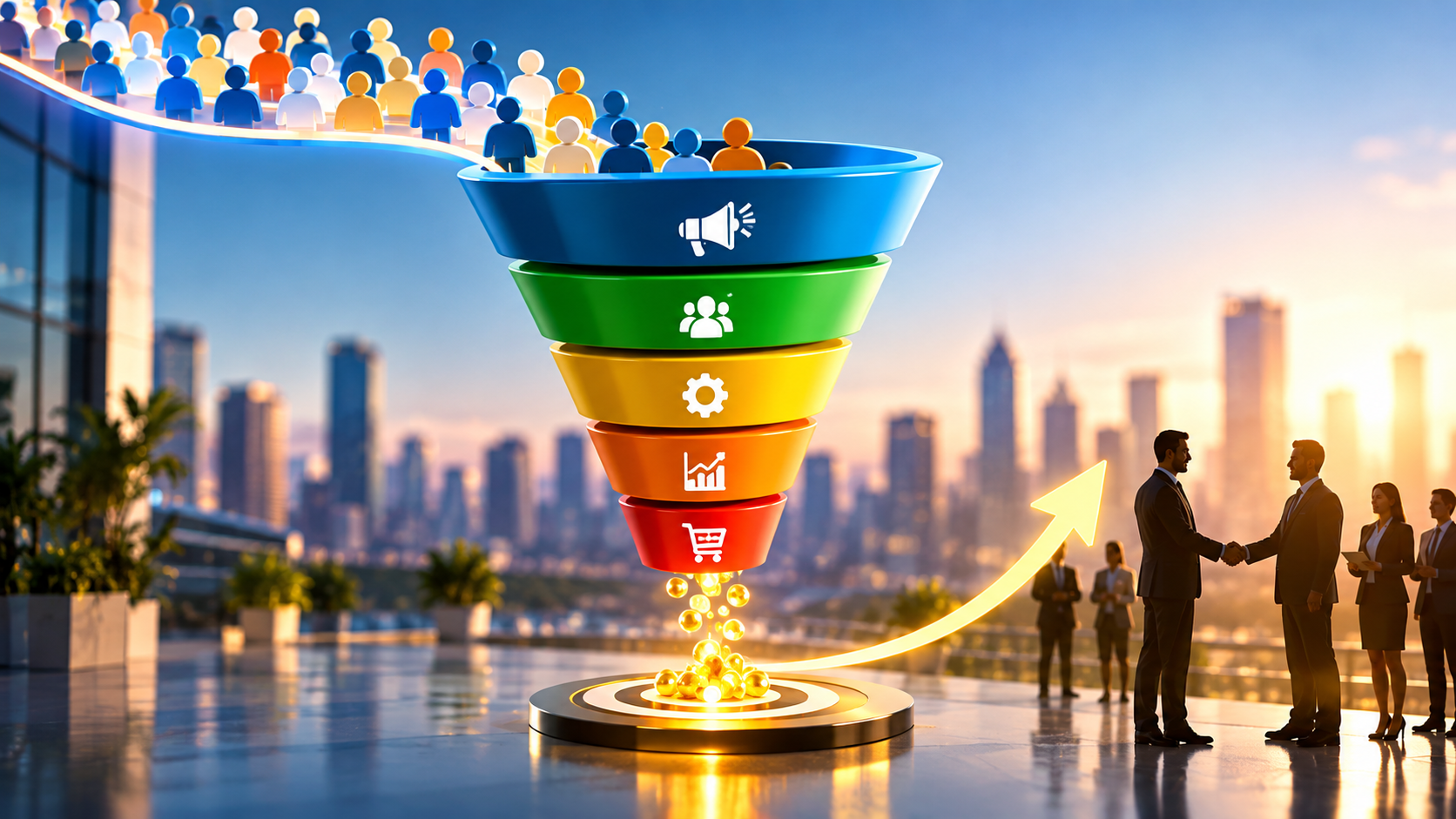
A B2B sales funnel is the journey a potential business customer takes from becoming aware of your company to purchasing your product or service.
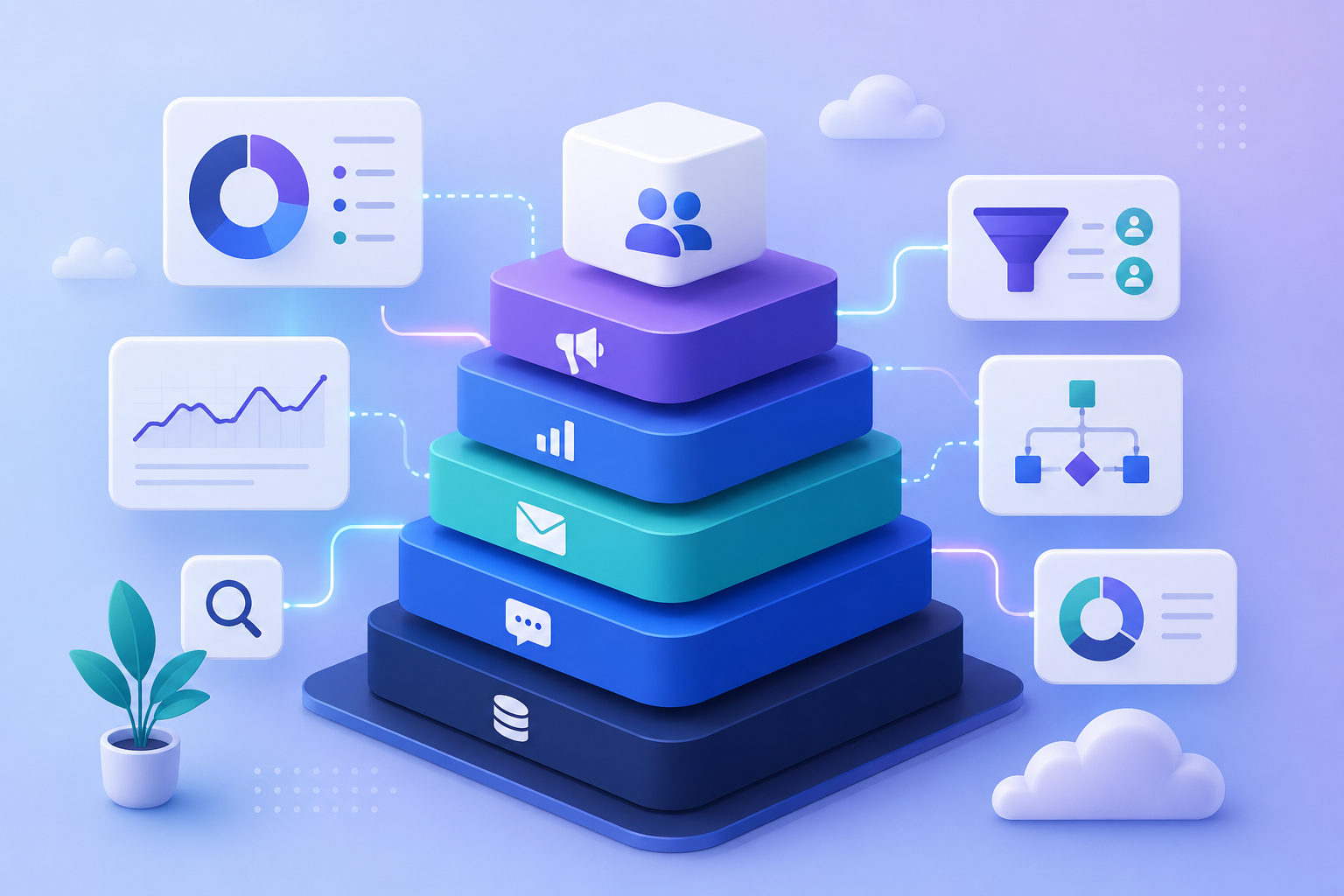
The funnel represents the gradual process of turning an unknown prospect into a qualified lead, then into an opportunity, and finally into a customer.
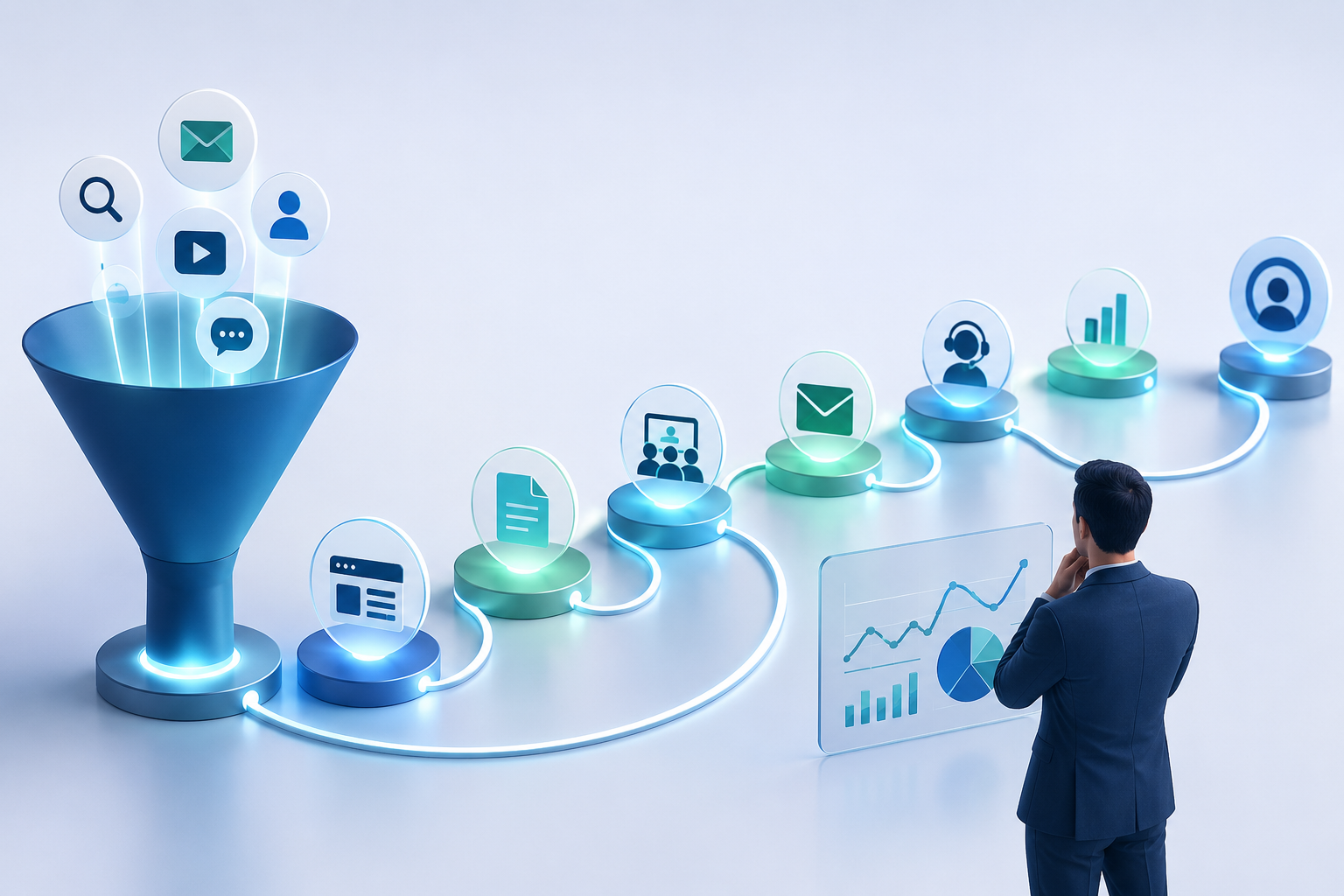
A typical B2B sales funnel includes these stages:
- Awareness
- Interest
- Consideration
- Qualification
- Evaluation
- Decision
- Purchase
- Retention and Expansion
The exact stages can vary depending on the company, industry, product, and sales process.
Why Is the B2B Sales Funnel Important?
Understanding your sales funnel gives your sales and marketing teams a clear picture of how prospects interact with your business.
A properly managed funnel can help you:
- Identify where leads are dropping off
- Improve lead quality
- Shorten the sales cycle
- Increase conversion rates
- Align marketing and sales teams
- Forecast revenue more accurately
- Personalize communication with prospects
- Improve customer retention
Without a defined funnel, sales teams may spend too much time pursuing prospects who aren’t ready—or aren’t a good fit.
The Stages of a B2B Sales Funnel
1. Awareness: Getting on the Prospect’s Radar
The awareness stage is where potential customers first discover your business.
At this point, prospects may not even realize they have a problem that needs solving. Your goal is not necessarily to sell immediately. Instead, you want to create awareness and establish credibility.
Common B2B awareness channels include:
- Search engine optimization (SEO)
- Blog content
- Industry events
- Webinars
- Paid advertising
- Podcasts
- Referrals
- Industry publications
For example, a company struggling with inefficient sales reporting might search Google for “how to improve sales reporting.” An informative article from your company could introduce them to your brand.
Key goal: Generate awareness and attract relevant prospects.
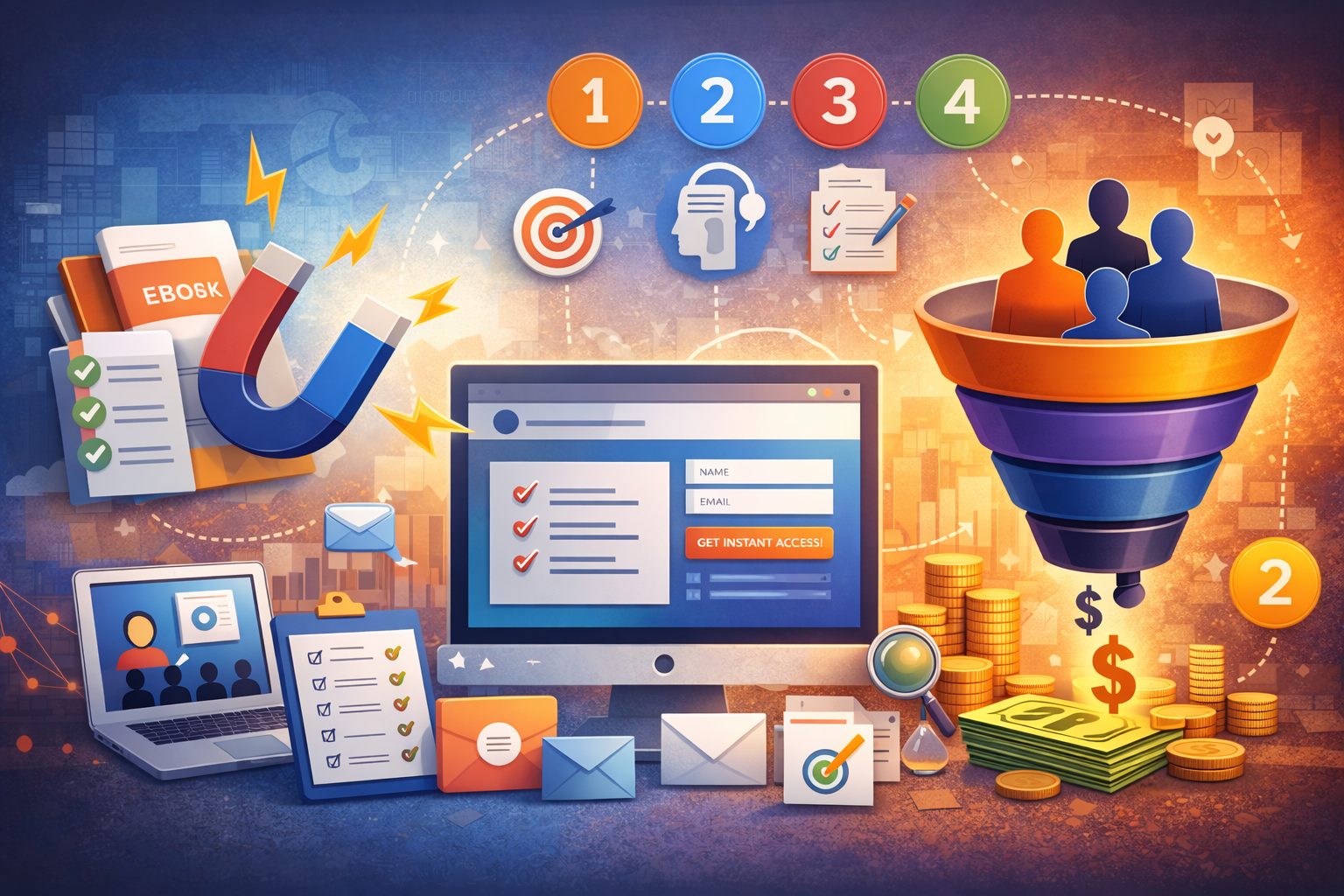
2. Interest: Turning Visitors Into Leads
Once prospects know your brand, the next step is encouraging them to engage with your content or business.
They may:
- Download an ebook
- Subscribe to your newsletter
- Attend a webinar
- Follow your LinkedIn page
- Request more information
- Sign up for a free resource
- Visit product pages
At this stage, your content should address the prospect’s problems rather than aggressively promoting your product.
Useful content includes:
- Guides
- Checklists
- Industry reports
- Case studies
- Educational webinars
- Templates
- Research reports
Key goal: Capture interest and convert anonymous visitors into identifiable leads.
3. Consideration: Demonstrating Your Value
At the consideration stage, prospects understand their problem and are actively exploring potential solutions.
They may compare:
- Vendors
- Features
- Pricing
- Reviews
- Customer success stories
- Integrations
- Implementation requirements
This is where your business needs to clearly communicate its value proposition.
Effective content includes:
- Product comparisons
- Case studies
- ROI calculators
- Product guides
- Customer testimonials
- Detailed solution pages
- Expert webinars
- Product demonstrations
For example, instead of simply saying that your software is “easy to use,” show how customers reduced onboarding time by using it.
Key goal: Position your solution as a strong option.
4. Qualification: Identifying High-Value Opportunities
Not every lead is ready to talk to sales.
Some may simply be researching. Others may not have the budget, authority, need, or timeline to purchase.
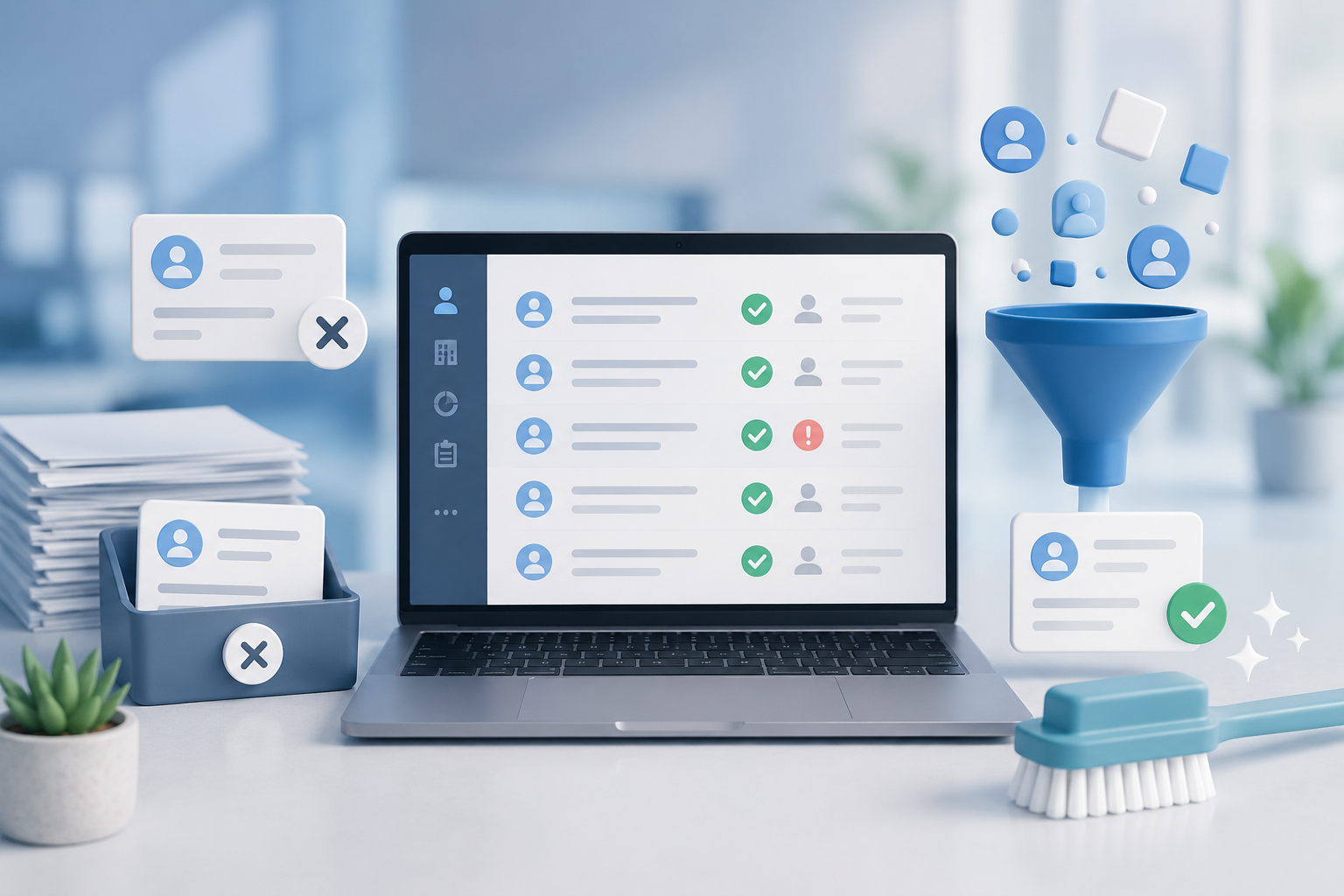
Lead qualification helps sales teams prioritize the prospects most likely to become customers.
One commonly used qualification framework is BANT:
- Budget: Can the prospect afford the solution?
- Authority: Is the person involved in the buying decision?
- Need: Does the company have a problem your solution can solve?
- Timeline: When does the company plan to implement a solution?
Modern B2B teams may also consider factors such as company size, industry, technology stack, buying intent, and potential customer lifetime value.
Key goal: Separate high-potential opportunities from low-priority leads.
5. Evaluation: Helping the Buyer Make a Decision
At this point, the prospect is seriously evaluating your solution.
This stage can involve multiple stakeholders, including:
- Business leaders
- Department managers
- Finance teams
- IT teams
- Procurement
- Legal teams
- End users
The buying process can therefore become complex.
Sales teams should provide the information each stakeholder needs to make a confident decision.
Useful tools include:
- Personalized demos
- Technical documentation
- Security information
- Pricing proposals
- ROI analysis
- References
- Case studies
- Implementation plans
Your sales representatives should also identify potential objections early.
Key goal: Reduce perceived risk and demonstrate business value.
6. Decision: Moving From Opportunity to Customer
The decision stage is where the prospect chooses whether to move forward.
Common obstacles include:
- Price concerns
- Internal approval processes
- Contract negotiations
- Competitor offers
- Implementation concerns
- Lack of urgency
A strong sales team focuses on removing friction rather than simply pushing for a signature.
Clear proposals, transparent pricing, defined next steps, and strong communication can make the process easier.
Key goal: Turn a qualified opportunity into a committed buyer.
7. Purchase: Closing the Deal
The purchase stage is when the agreement is finalized and the customer officially becomes a client.
However, closing the deal shouldn’t be treated as the end of the funnel.
The handoff from sales to customer success or implementation is critical.
A smooth transition should include:
- Contract confirmation
- Customer onboarding
- Account setup
- Implementation planning
- Training
- Communication of expectations
- Introduction to customer success teams
Key goal: Deliver a smooth buying and onboarding experience.
8. Retention and Expansion: Growing Customer Value
The modern B2B funnel doesn’t end after the sale.
Existing customers can become one of your company’s most valuable growth opportunities.
Businesses can increase customer value through:
- Renewals
- Upselling
- Cross-selling
- Customer referrals
- Reviews
- Case studies
- Expansion into new departments or locations
For example, a customer who initially purchases software for a 20-person sales team may eventually expand it across marketing, customer success, and operations.
Key goal: Retain customers and increase lifetime value.
B2B Sales Funnel vs. B2B Marketing Funnel
The terms “sales funnel” and “marketing funnel” are often used interchangeably, but they aren’t exactly the same.
The marketing funnel focuses primarily on generating awareness, attracting prospects, educating them, and creating demand.
The sales funnel focuses more heavily on qualification, conversations, proposals, negotiations, and closing deals.
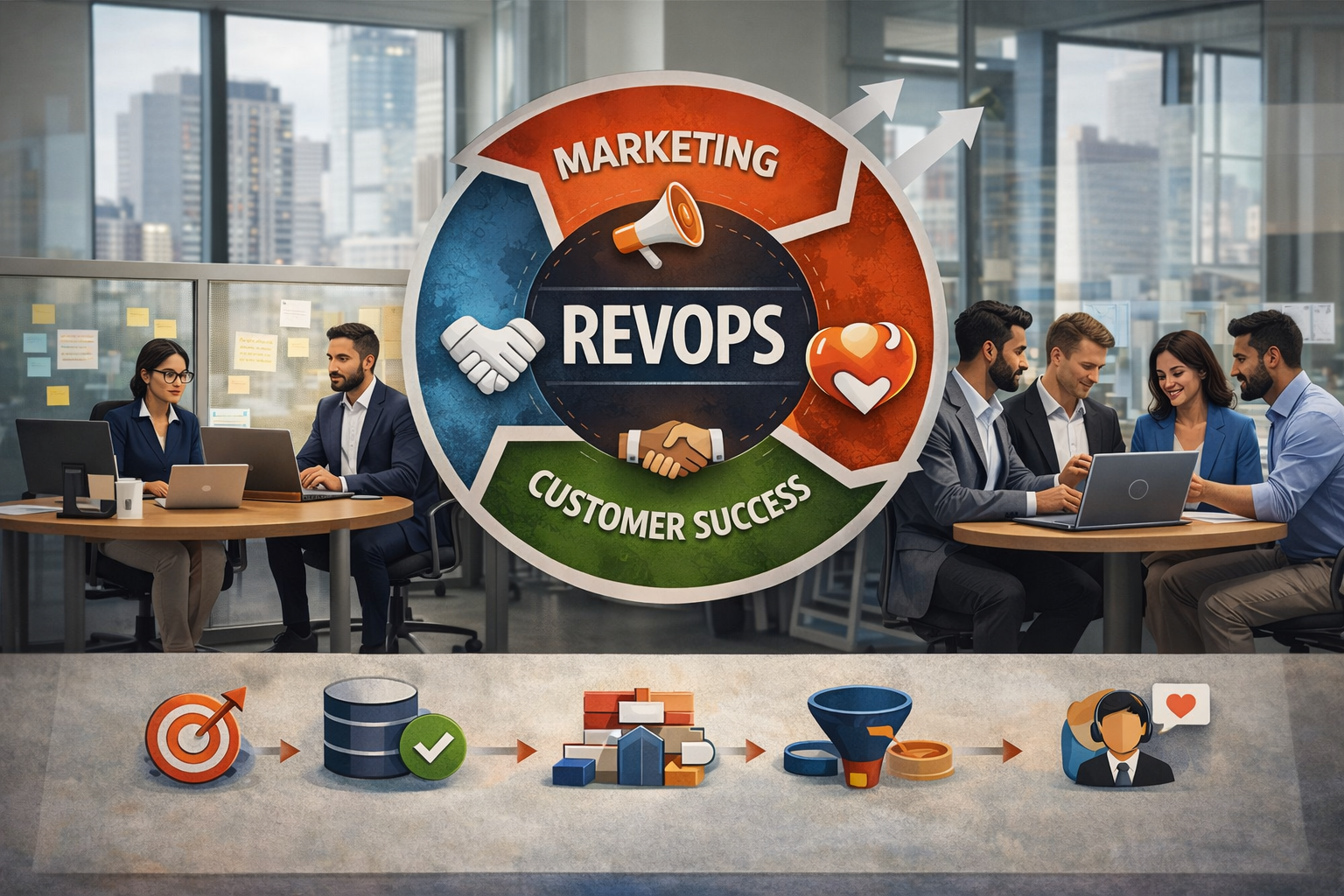
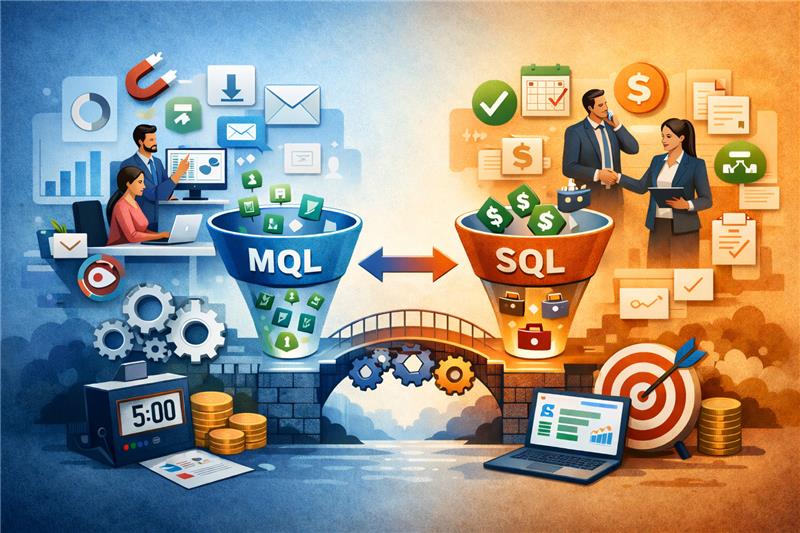
In modern B2B organizations, the two should work together.
Marketing can generate and nurture demand while sales converts qualified opportunities into customers.
How Marketing and Sales Should Work Together
One of the biggest challenges in B2B organizations is poor alignment between marketing and sales.
Marketing may complain that sales doesn’t follow up with leads, while sales may argue that marketing is sending low-quality prospects.
A shared funnel can solve much of this problem.
Both teams should agree on:
- Ideal customer profiles
- Lead qualification criteria
- Lead scoring
- Marketing-qualified lead (MQL) definitions
- Sales-qualified lead (SQL) definitions
- Follow-up expectations
- Conversion targets
- Revenue goals
Regular communication between teams can also help identify where leads are getting stuck.
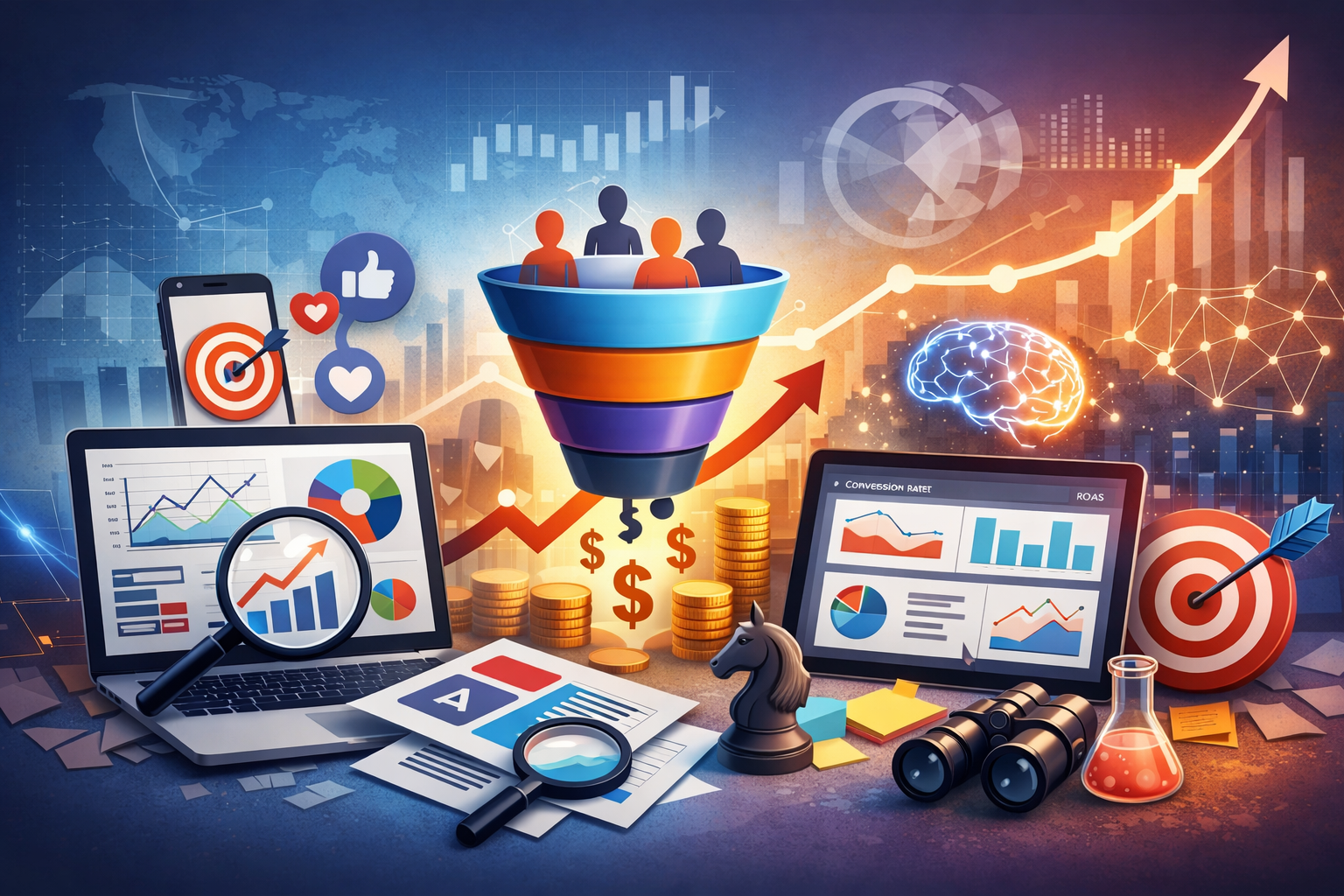
B2B Sales Funnel Metrics to Track
You can’t improve your funnel without measuring it.
Important B2B sales funnel metrics include:
Lead-to-Opportunity Conversion Rate
This shows how effectively leads turn into genuine sales opportunities.
Formula:
Lead-to-Opportunity Rate = Opportunities ÷ Leads × 100
Opportunity-to-Customer Conversion Rate
This measures how effectively your sales team closes qualified opportunities.
Formula:
Opportunity-to-Customer Rate = Customers ÷ Opportunities × 100
Sales Cycle Length
This measures the average amount of time required to move from initial engagement to a closed deal.
A long sales cycle isn’t necessarily bad, but understanding why it is long can reveal opportunities for improvement.
Average Deal Size
Average deal size helps businesses estimate potential revenue from their pipeline.
Customer Acquisition Cost
CAC measures how much it costs to acquire a new customer.
Customer Lifetime Value
CLV estimates the total revenue a customer can generate throughout their relationship with your business.
Pipeline Velocity
Pipeline velocity measures how quickly potential revenue moves through the sales funnel.
Tracking these metrics together provides a much clearer view of sales performance than simply counting leads.
How to Optimize Your B2B Sales Funnel
1. Define Your Ideal Customer Profile
Start by identifying the companies most likely to benefit from your product.
Consider:
- Industry
- Company size
- Revenue
- Location
- Business model
- Technology used
- Common challenges
- Buying behavior
A clear ideal customer profile helps your marketing and sales teams focus their efforts.
2. Create Content for Every Funnel Stage
Don’t rely on one type of content.
Create educational content for prospects at the awareness stage and more detailed, product-focused content for buyers closer to making a decision.
The goal is to provide the right information at the right time.
3. Improve Lead Qualification
A large number of leads doesn’t necessarily mean a healthy funnel.
Use qualification criteria and lead scoring to identify prospects with genuine buying potential.
This allows sales representatives to spend more time on high-value opportunities.
4. Personalize Your Sales Process
B2B buyers expect relevant communication.
Instead of sending generic messages, personalize outreach based on:
- Industry
- Company challenges
- Job role
- Previous interactions
- Business goals
- Product interest
Personalization can make sales conversations more relevant and valuable.
5. Use Automation Where It Makes Sense
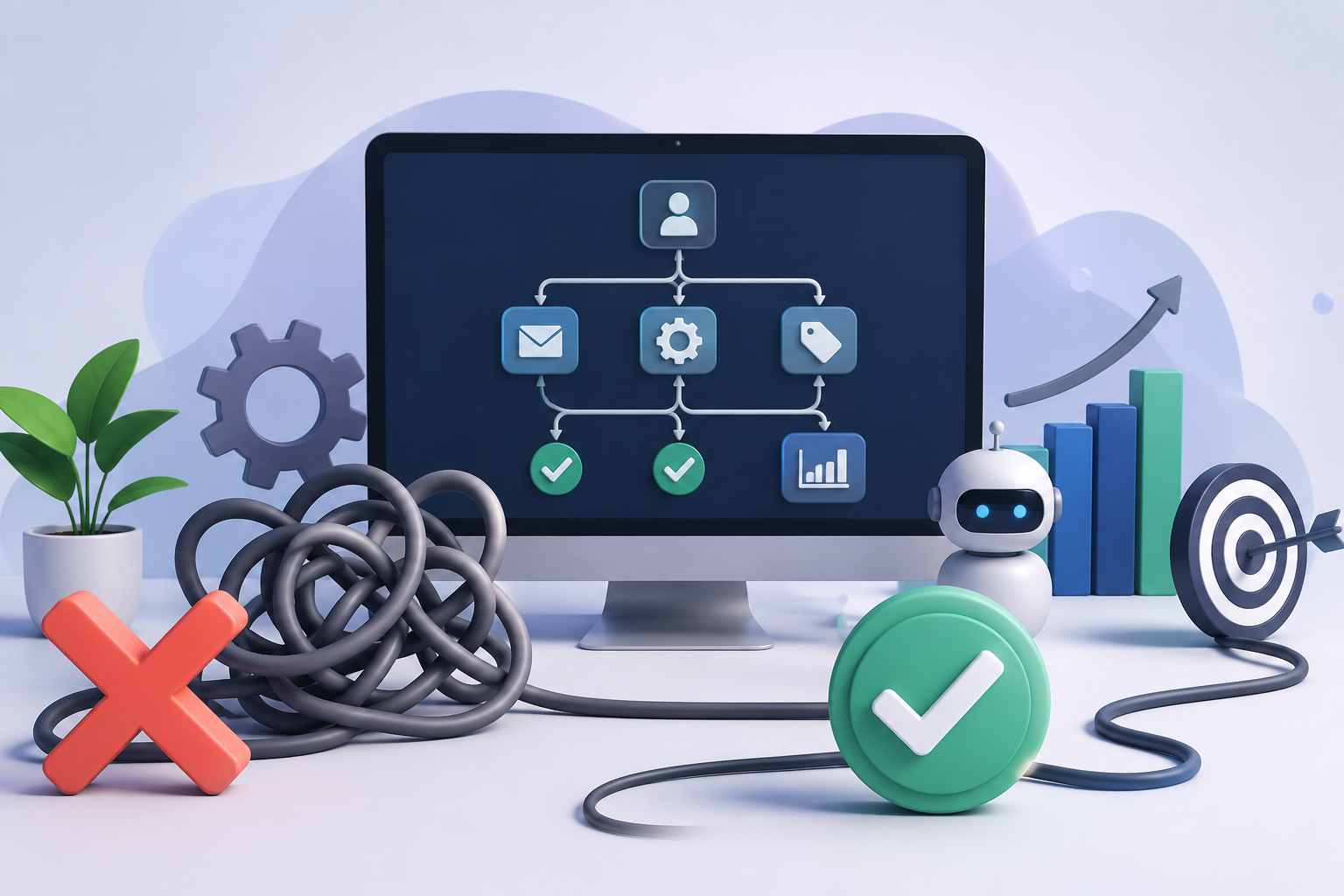
Automation can help sales and marketing teams manage repetitive tasks.
For example, automation can support:
- Lead nurturing
- Email follow-ups
- Lead scoring
- Meeting scheduling
- CRM updates
- Reporting
- Task reminders
Automation shouldn’t replace human conversations. It should give salespeople more time to focus on high-value interactions.
6. Identify Funnel Bottlenecks
Look for stages where prospects consistently stop moving forward.
For example:
1,000 visitors → 100 leads → 30 opportunities → 3 customers
If many leads become opportunities but very few opportunities become customers, your problem may be in the sales or evaluation stage rather than lead generation.
Analyzing conversion rates between every stage helps identify the real bottleneck.
Common B2B Sales Funnel Mistakes
Focusing Only on Lead Volume
More leads aren’t always better. Low-quality leads can consume significant sales resources.
Selling Too Early
Trying to sell before understanding the prospect’s problem can push potential customers away.
Ignoring Existing Customers
Customer retention and expansion can be more efficient growth opportunities than constantly finding new prospects.
Using the Same Message for Everyone
Different buyers have different priorities. A CFO may care about ROI, while an IT leader may care about security and integration.
Failing to Follow Up
B2B purchases often involve long decision cycles. Consistent, useful follow-up can make a major difference.
Measuring Vanity Metrics
Website traffic and social media engagement can be useful, but revenue-related metrics ultimately matter most.
A Simple Example of a B2B Sales Funnel
Imagine a SaaS company selling project management software to mid-sized businesses.
The funnel might look like this:
Awareness: A prospect discovers an article about improving project productivity.
Interest: They download a project management checklist.
Consideration: They attend a product webinar.
Qualification: A sales representative determines that the company has 200 employees, a suitable budget, and a need for better project visibility.
Evaluation: The prospect attends a personalized demo and compares the software with two competitors.
Decision: The company approves the purchase.
Purchase: The contract is signed.
Retention & Expansion: After a successful implementation, the company adds additional teams to the platform.
This example demonstrates that the B2B sales funnel is not simply about getting someone to buy. It’s about guiding the right prospect through a series of increasingly valuable interactions.
Read Also: How AI Is Changing B2B Marketing