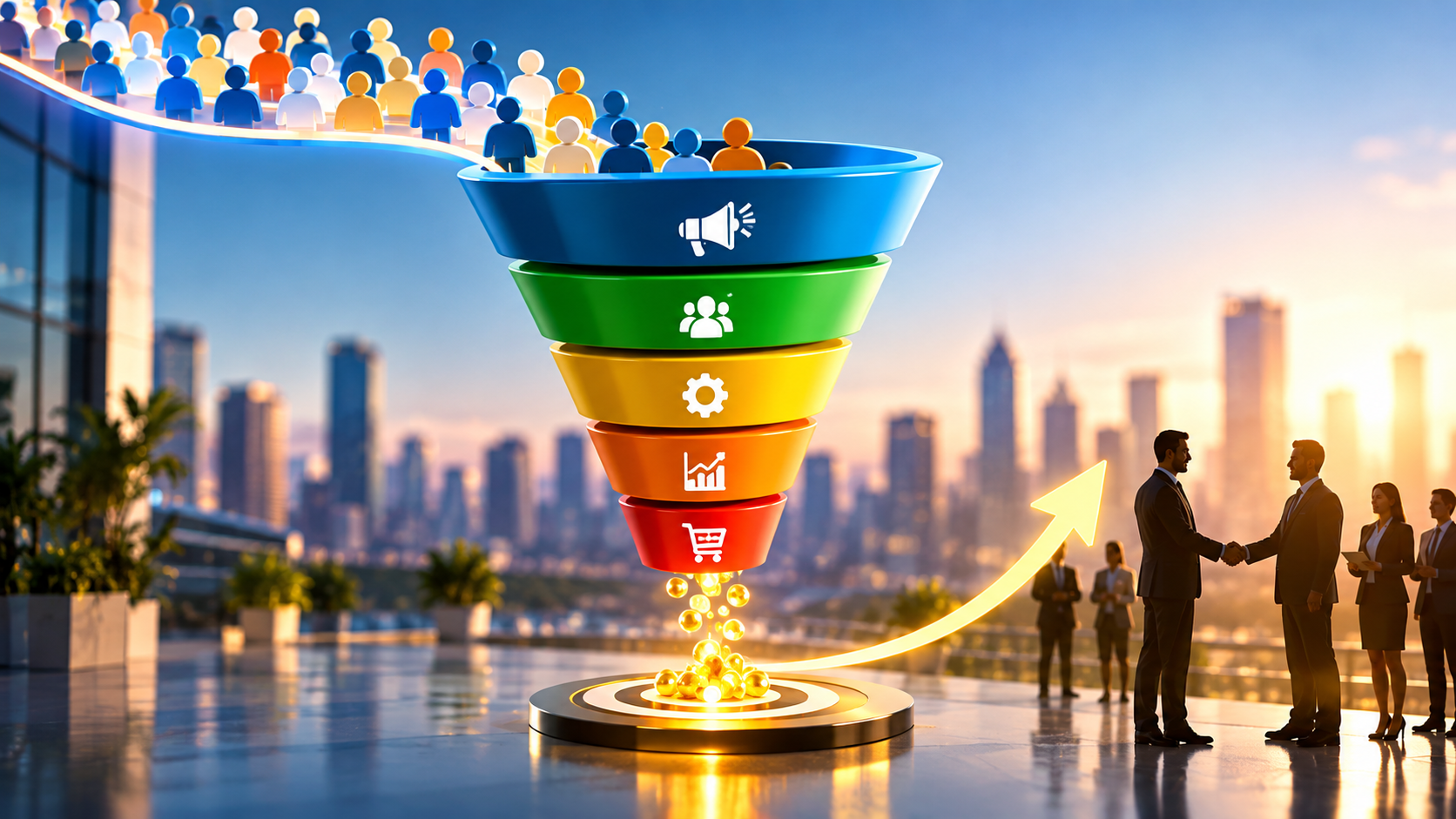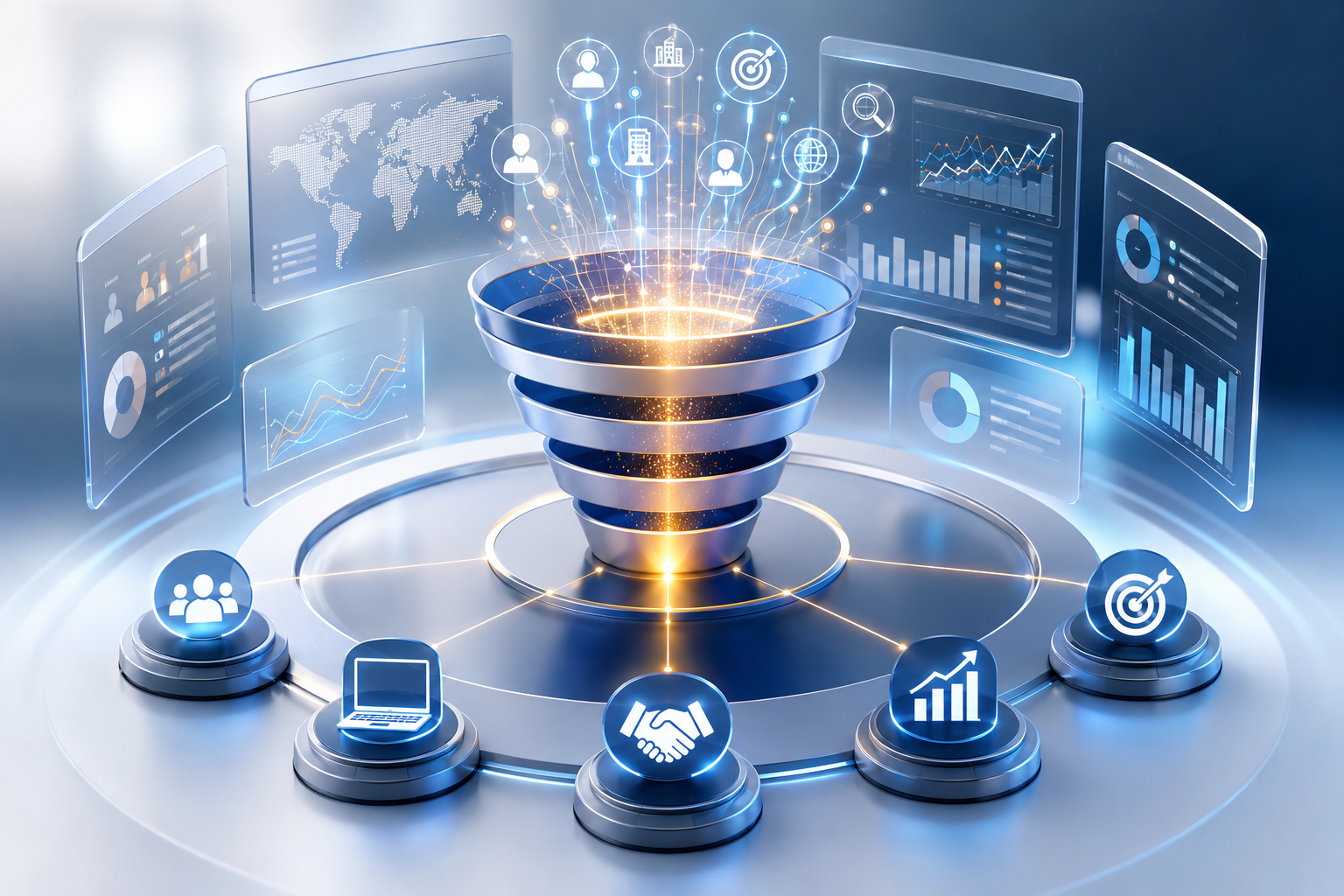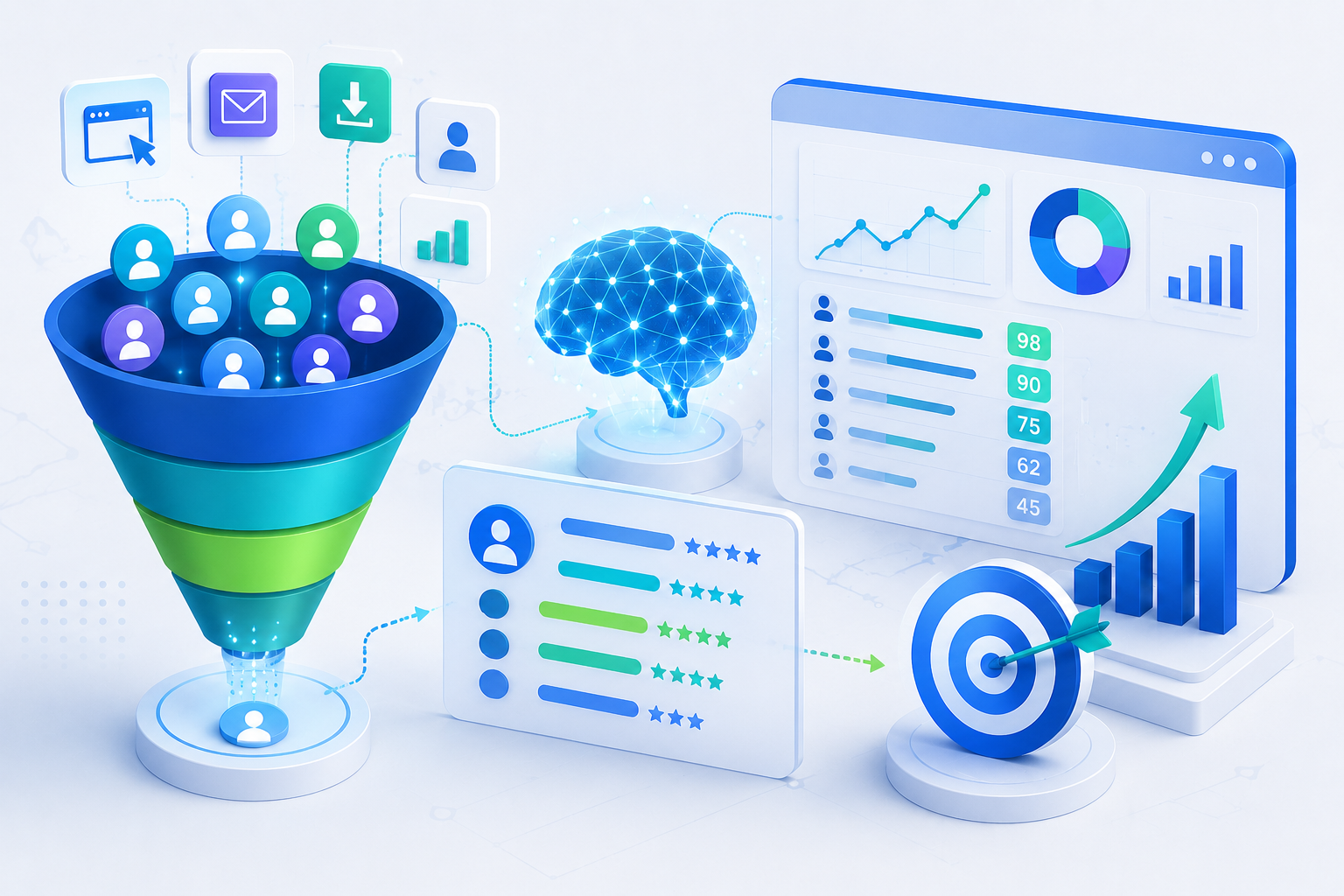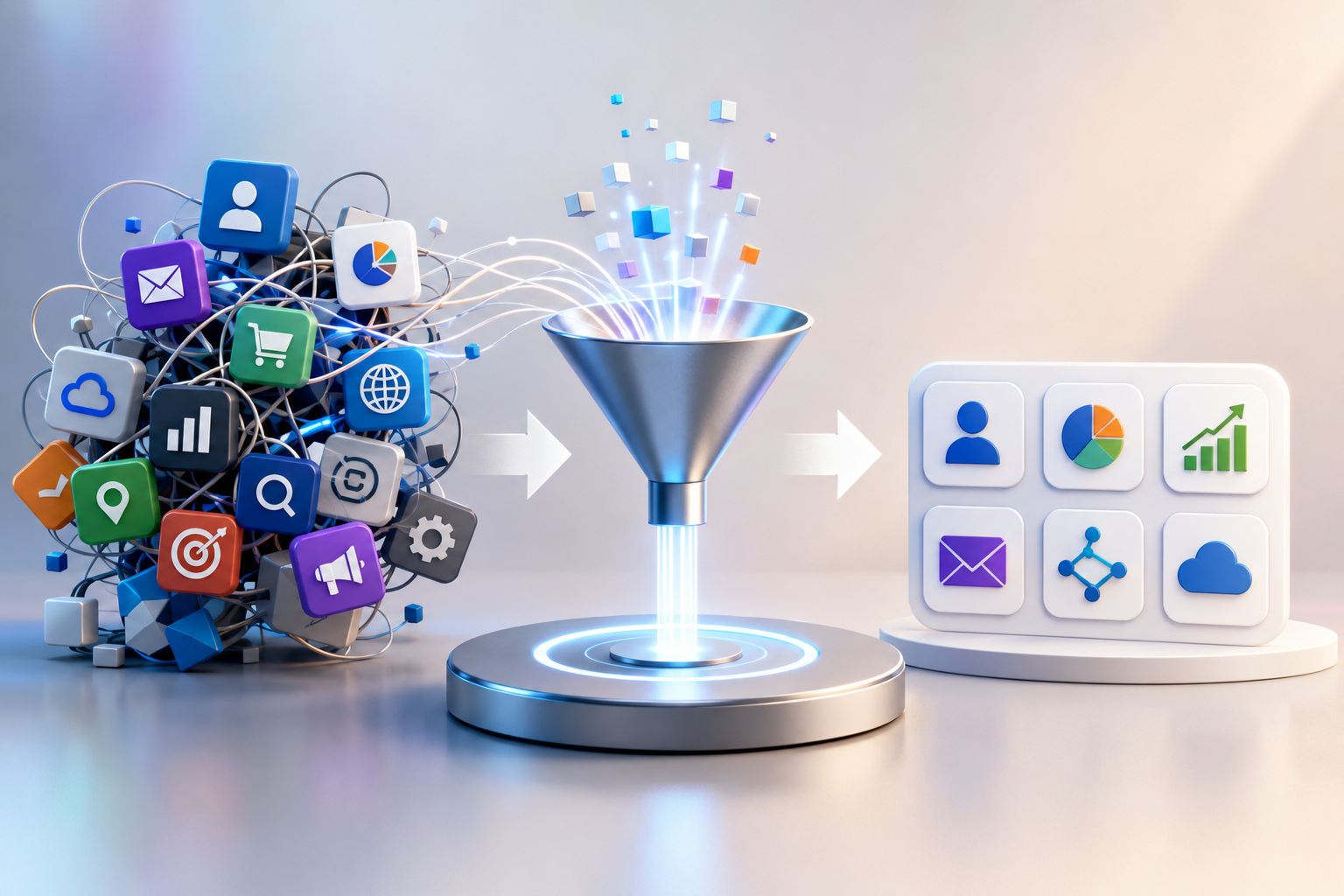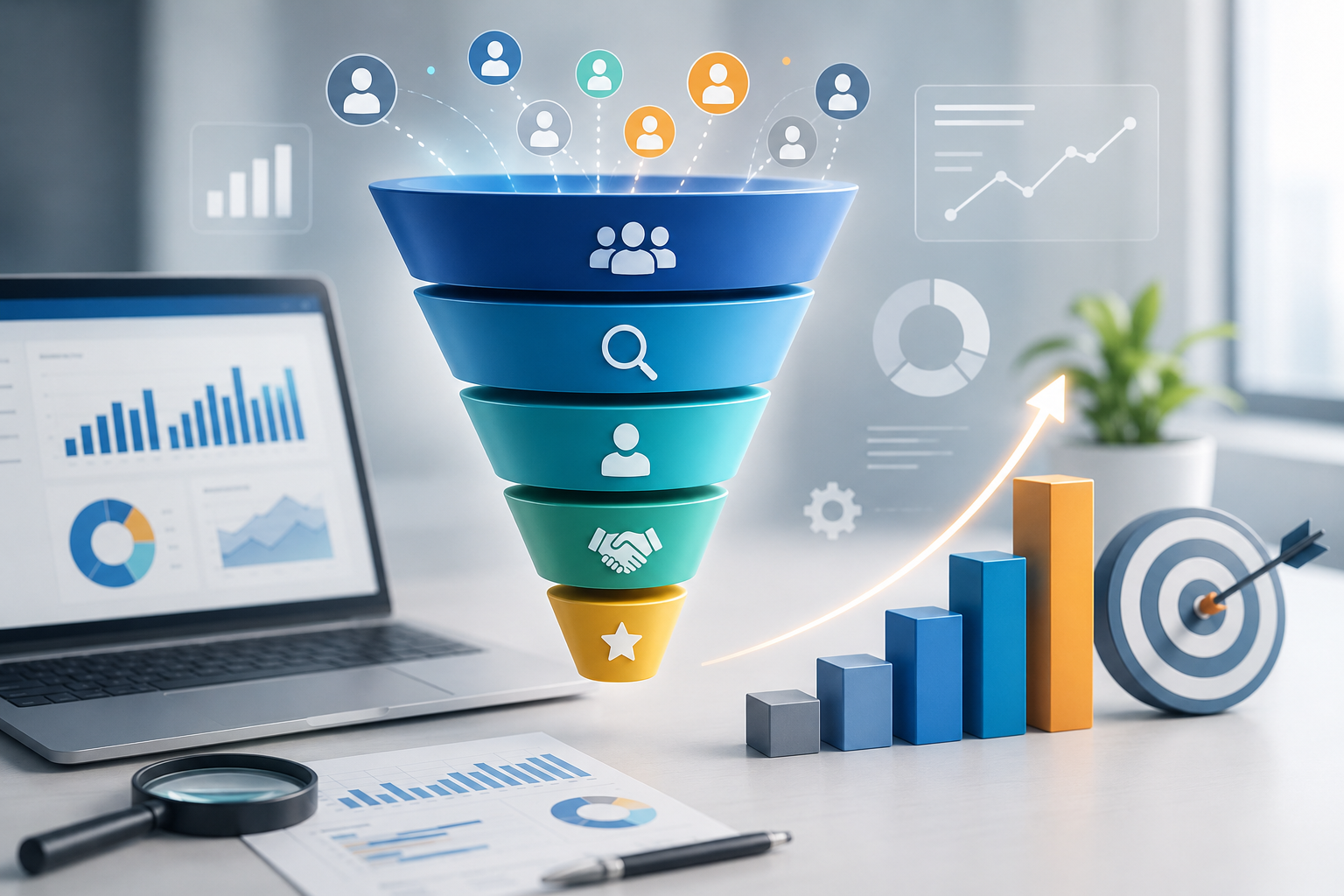

For SaaS companies, marketing technology is no longer just a support function — it is the infrastructure powering customer acquisition, retention, expansion, and revenue intelligence. A modern martech stack enables teams to automate workflows, personalize customer experiences, align sales and marketing, and make data-driven decisions at scale.
As SaaS buying journeys become increasingly digital and self-directed, companies need integrated systems that connect data, campaigns, analytics, and customer engagement into a unified growth engine.
What Is a Martech Stack?
A martech stack refers to the collection of tools and platforms marketers use to execute, manage, analyze, and optimize marketing activities.
For SaaS businesses, a typical martech stack includes:
- CRM platforms
- Marketing automation tools
- Analytics platforms
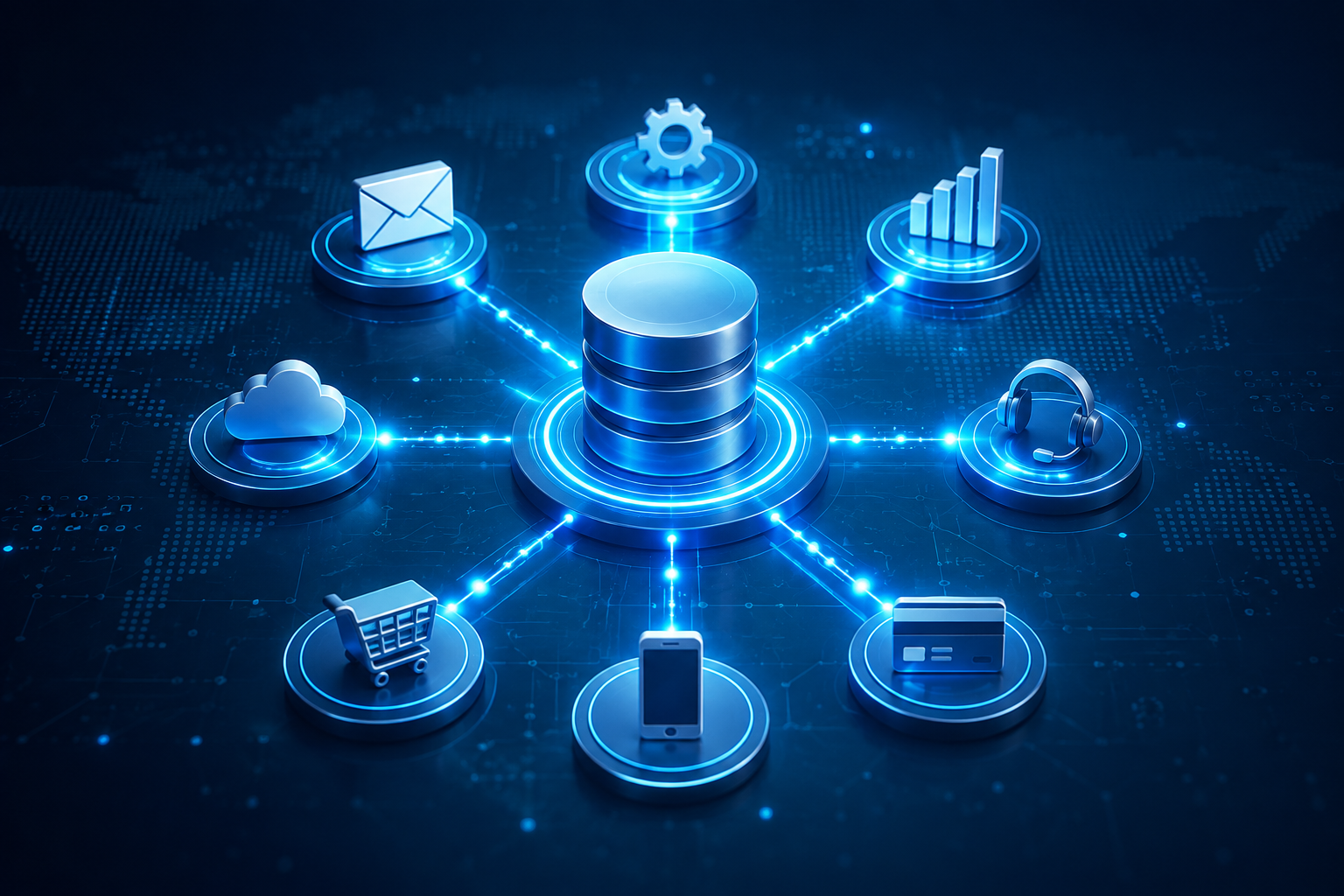
- Customer data platforms (CDPs)
- SEO and content tools
- Advertising platforms
- Customer engagement software
- Attribution and reporting systems
The goal is not simply to accumulate tools, but to create an ecosystem where data flows seamlessly between systems.
Core Components of a Modern SaaS Martech Stack
1. Customer Relationship Management (CRM)
The CRM acts as the central source of truth for customer and prospect information.
Popular tools:
- Salesforce
- HubSpot
- Zoho
Key functions:
- Lead management
- Sales pipeline tracking
- Customer lifecycle visibility
- Revenue forecasting
A strong CRM ensures alignment between marketing, sales, and customer success teams.
2. Marketing Automation
Marketing automation platforms help SaaS companies scale communication and nurture leads efficiently.
Popular tools:
- Marketo
- Pardot
- ActiveCampaign
Capabilities include:
- Email workflows
- Lead nurturing
- Behavioral segmentation
- Campaign orchestration
- Drip campaigns
Automation reduces manual effort while improving engagement consistency.
3. Customer Data Platforms (CDPs)
Modern SaaS businesses generate data across websites, ads, email campaigns, product usage, and support channels. CDPs unify this data into a single customer profile.
Leading CDPs:
- Segment
- mParticle
- RudderStack
Benefits:
- Unified customer identity
- Better personalization
- Cross-channel tracking
- Improved attribution
CDPs are becoming foundational in AI-driven marketing ecosystems.
4. Analytics and Attribution
Without analytics, martech becomes guesswork.
Essential analytics tools:
- Google Analytics
- Mixpanel
- Amplitude
Metrics SaaS companies track:
- CAC (Customer Acquisition Cost)
- LTV (Lifetime Value)
- Conversion rates
- Retention
- Product adoption
- Revenue attribution
Modern attribution models increasingly rely on multi-touch and AI-assisted analysis.
5. SEO and Content Marketing Tools
Content remains a major acquisition channel for SaaS businesses.
Popular platforms:
- Ahrefs
- SEMrush
- Surfer
These tools help with:
- Keyword research
- Competitive analysis
- Content optimization
- Technical SEO audits
- SERP monitoring
As AI search evolves, content quality and topical authority are becoming more important than keyword density alone.
6. Conversational Marketing and Engagement
Modern buyers expect instant interactions.
Common engagement tools:
- Intercom
- Drift
- Zendesk
Use cases:
- Live chat
- AI chatbots
- Product onboarding
- Customer support
- Lead qualification
These platforms improve user experience while reducing friction in the buying process.
Characteristics of a Modern Martech Stack
Integration-First Architecture
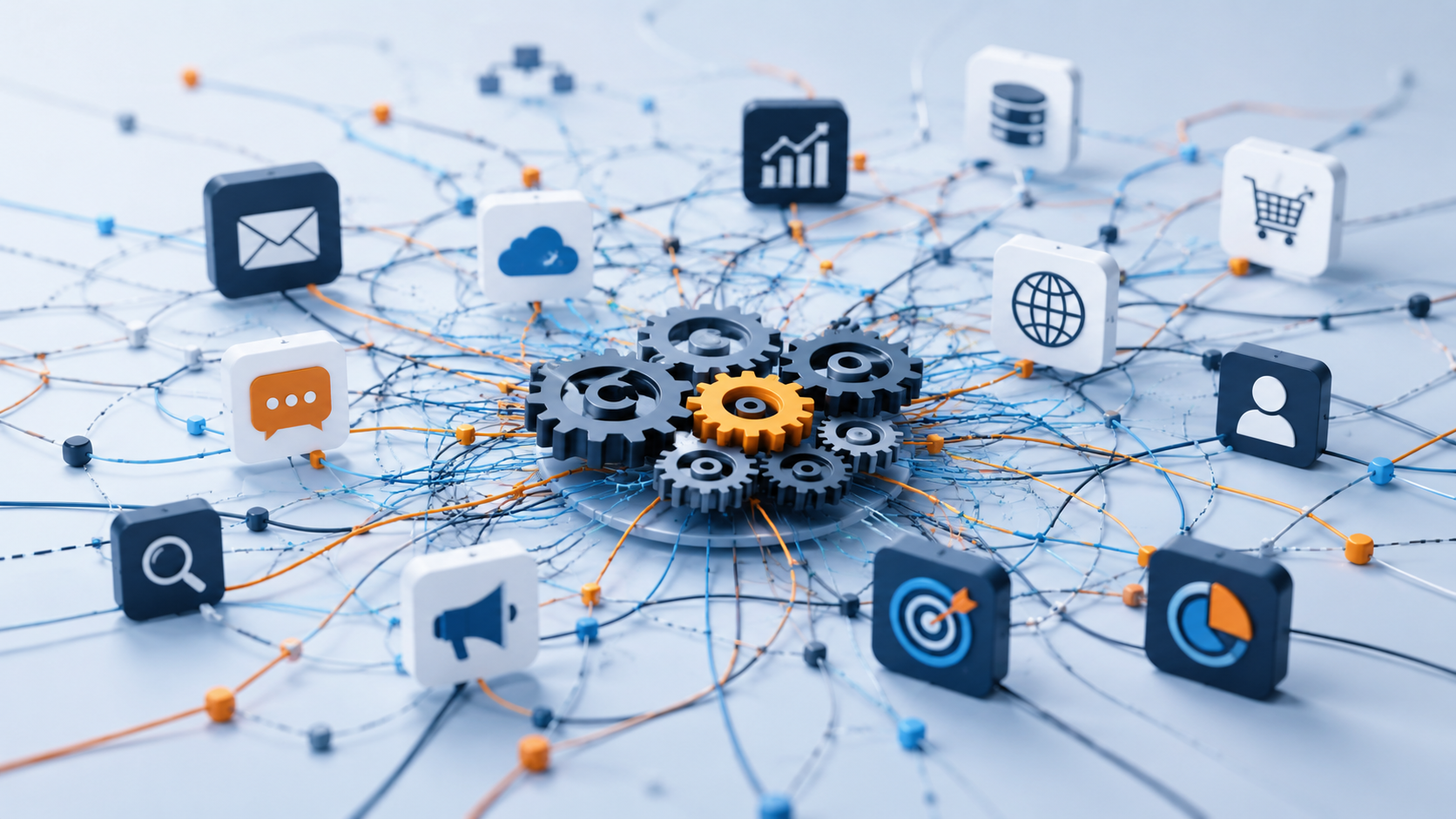
Disconnected tools create data silos. Modern stacks prioritize API integrations and centralized data systems.
Important integration considerations:
- CRM synchronization
- Unified analytics
- Shared customer profiles
- Real-time event tracking
Composable martech architectures are increasingly replacing rigid all-in-one systems.
AI-Powered Automation
AI is transforming martech by enabling:
- Predictive lead scoring
- Automated personalization
- Content generation
- Smart segmentation
- Conversational AI
- Forecasting
AI-native martech stacks allow smaller SaaS teams to scale operations efficiently.
Revenue-Centric Measurement
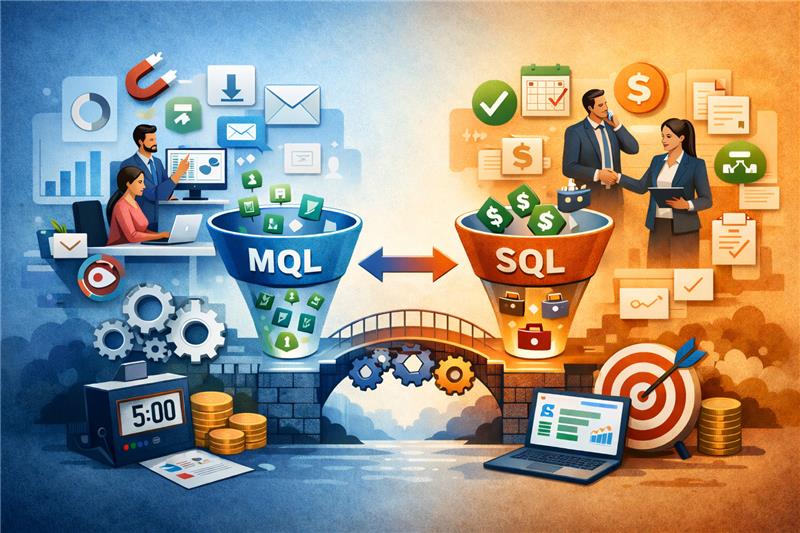
Traditional metrics like MQLs are losing relevance. SaaS companies now focus on:
- Pipeline contribution
- Revenue attribution
- Expansion revenue
- Customer retention
- Product-qualified leads (PQLs)
Marketing is increasingly measured as a revenue function rather than a lead-generation department.
Challenges in Building a Martech Stack
Tool Overload
Many SaaS companies adopt too many tools too quickly, leading to:
- Rising costs
- Poor adoption
- Duplicate functionality
- Integration complexity
A smaller, well-integrated stack often performs better than a fragmented ecosystem.
Data Quality Issues
Poor data hygiene affects:
- Attribution accuracy
- Personalization
- Reporting reliability
- AI model effectiveness
Data governance is now a critical marketing responsibility.
Alignment Across Teams
Marketing, sales, product, and customer success teams often use separate systems and KPIs.
Modern martech strategies require:
- Shared reporting frameworks
- Unified customer journeys
- Cross-functional visibility
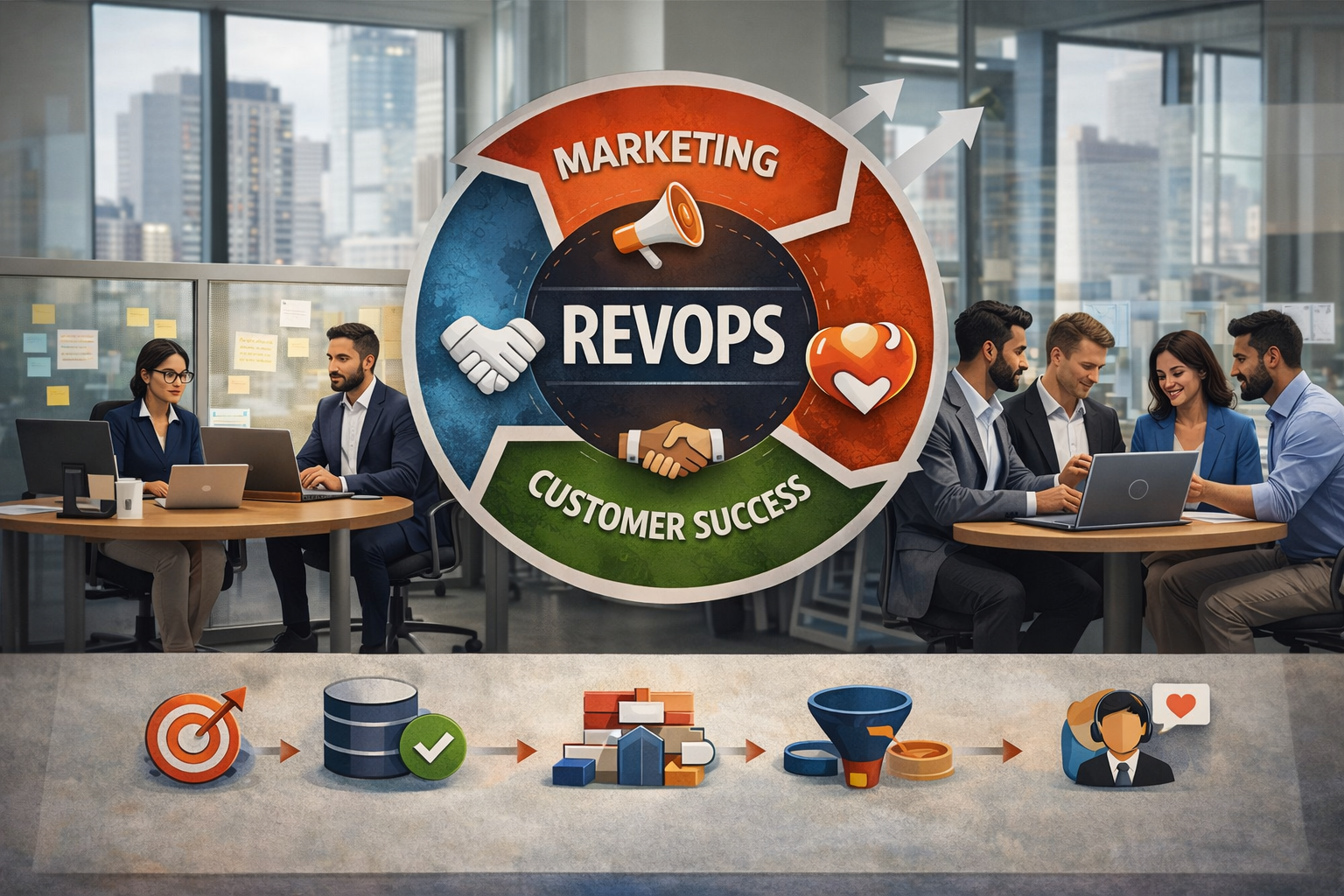
- Revenue operations (RevOps)
RevOps is emerging as the operational backbone connecting GTM teams.
Future of Martech for SaaS Companies
The next generation of martech stacks will likely include:
- AI agents managing workflows autonomously
- Real-time personalization engines
- Unified revenue intelligence systems
- Cookieless tracking solutions
- AI search optimization capabilities
- Predictive customer journey orchestration
The stack itself is evolving from a set of tools into an intelligent operating system for growth.
Read Also: The Role of Predictive Analytics in Modern Marketing