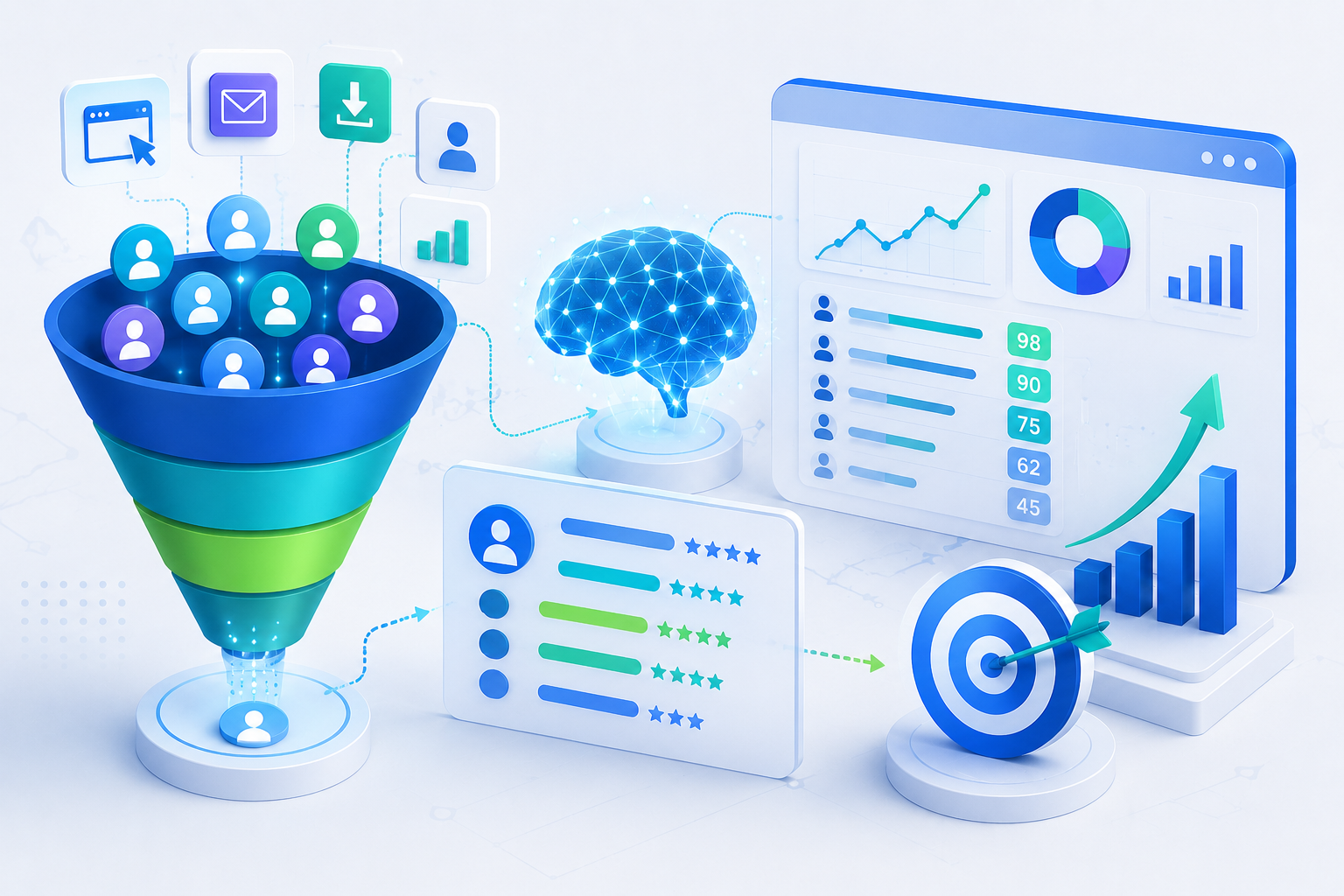

B2B marketing has always been data-driven. But as buying journeys become longer, buying committees become larger, and digital interactions multiply, simply having more data is no longer enough.
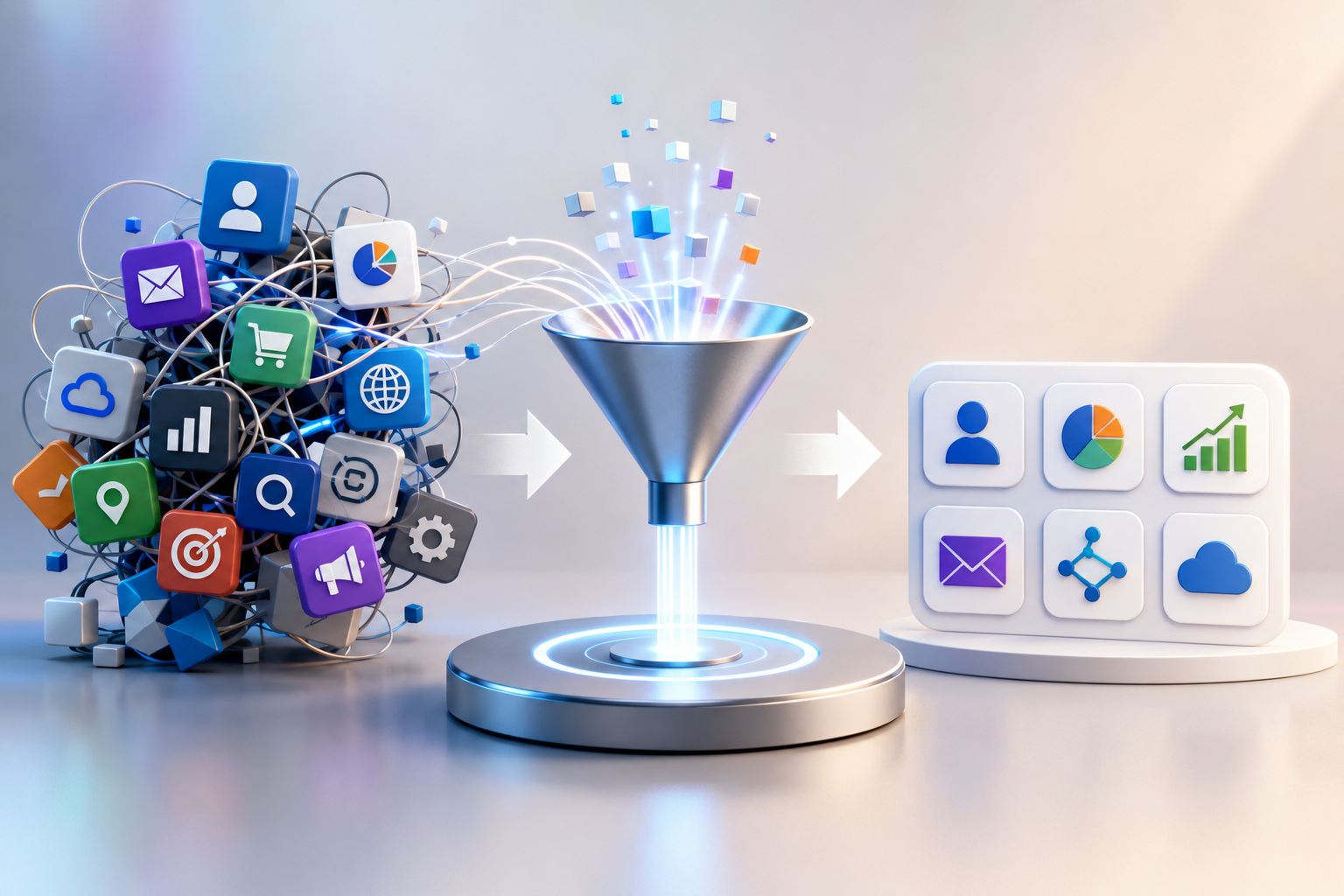
A prospect might visit a website, download a report, attend a webinar, interact with an email, engage with a campaign, speak with sales, and return weeks later from another device. That information often lives in separate systems. As a result, marketing teams can struggle to answer a basic question: What does this customer actually need right now?
This is where Customer Data Platforms (CDPs) are becoming increasingly important.
A CDP brings customer information from multiple sources together, resolves identities, and creates a unified customer profile that can be used for segmentation, personalization, analytics, and activation.
The B2B Data Problem Is Getting More Complex
Unlike many B2C purchases, B2B purchases rarely involve a single individual making an immediate decision.
A typical B2B buying process may involve:
- Marketing and sales interactions
- Multiple decision-makers within the same company
- Website and product engagement
- Email and content interactions
- Events and webinars
- CRM activity
- Customer support conversations
- Product usage data
- Advertising engagement
When these signals are scattered across different platforms, marketers can end up with fragmented customer profiles.
For example, the CRM may show that a prospect is an existing opportunity, while the marketing automation platform shows that several people from the same company have recently downloaded content. Website analytics may reveal increasing product interest, but that information may never reach the sales team.
A CDP can connect these signals and create a more complete picture of the account and the people associated with it.
1. Creating a Single Customer View
One of the biggest advantages of a CDP is data unification.
Instead of treating every interaction as an isolated event, a CDP can combine information from CRM systems, websites, email platforms, advertising channels, applications, and other sources into unified profiles.
For B2B marketers, this means moving beyond questions such as:
“Did this lead open our email?”
and toward questions such as:
“How engaged is this account, who is involved in the buying process, and what signals indicate that the account may be ready for the next conversation?”
That shift can make marketing more strategic and actionable.
2. Personalization at Account Scale
B2B buyers increasingly expect relevant experiences. Yet personalization becomes difficult when marketers don’t have a reliable understanding of the customer.
A CDP provides the data foundation for creating more meaningful segments based on factors such as:
- Industry
- Company size
- Product interest
- Engagement history
- Customer lifecycle stage
- Content preferences
- Account activity
- Purchase history
Instead of sending the same campaign to every prospect, marketers can tailor messages based on what an individual or account has actually done.
For example, someone repeatedly researching a specific solution could receive educational content related to that solution rather than another generic brand email.
The goal isn’t personalization for its own sake. The goal is making every interaction more relevant.
3. Better Account-Based Marketing
Account-based marketing (ABM) depends heavily on understanding organizations rather than treating every lead as an independent contact.
Imagine five people from the same company interacting with your brand:
- One downloads an eBook.
- Another attends a webinar.
- A third visits pricing pages.
- A fourth speaks with sales.
- A fifth engages with an advertising campaign.
A fragmented technology stack may see five separate activities.
A unified data layer can help marketers recognize them as signals coming from the same account.
This creates opportunities to build account-level audiences, identify engagement patterns, and coordinate marketing and sales activity more effectively.
4. First-Party Data Is Becoming More Valuable
Another major reason CDPs are gaining attention is the growing importance of first-party data.
Instead of depending heavily on external audiences or third-party signals, companies can build marketing strategies around information they collect directly through their own customer relationships and digital properties.
A CDP helps organizations centralize this first-party information and make it usable across marketing activities.
This becomes particularly important as privacy expectations, data governance requirements, and changes to digital advertising continue to reshape how marketers collect and activate audience data.
The strategic advantage isn’t simply having data. It’s being able to turn trusted first-party data into useful customer experiences while maintaining appropriate governance.
5. AI Makes a Strong Data Foundation Even More Important
Artificial intelligence is changing how marketing teams analyze audiences, generate content, identify opportunities, and automate campaigns.
But AI is only as useful as the information it can work with.
If customer information is fragmented, duplicated, outdated, or disconnected from behavioral signals, AI systems may struggle to produce reliable insights.
A unified customer data layer can provide the foundation for more sophisticated use cases, including predictive segmentation, next-best-action recommendations, propensity modeling, and personalized experiences.
This is particularly relevant for B2B companies, where understanding intent often requires analyzing many different signals over an extended buying cycle.
6. Improving Marketing and Sales Alignment
Marketing and sales teams often work with different views of the same customer.
Marketing may focus on engagement and campaign activity. Sales may focus on opportunities, conversations, and pipeline stages.
A unified customer profile can help bring these perspectives closer together.
For example, marketing could identify an account showing increased engagement and share that context with sales. Sales, in turn, can provide information about conversations or customer needs that can improve future marketing campaigns.
The result is a more connected revenue process rather than a collection of disconnected activities.
7. Better Measurement and Attribution
B2B marketing measurement is notoriously complicated.
A customer might interact with dozens of touchpoints before becoming an opportunity or customer. Looking at each channel independently can make it difficult to understand what actually influenced the journey.
A CDP can help connect customer interactions across channels, giving marketers a more comprehensive data set for analyzing journeys and campaign performance.
This doesn’t magically solve attribution—B2B attribution remains complicated—but it can give teams a much stronger foundation for understanding customer behavior.
8. CDPs Are Not a Replacement for Every Marketing System
It’s important to understand what a CDP is—and what it isn’t.
A CDP typically complements systems such as:
- CRM platforms
- Marketing automation
- Analytics tools
- Advertising platforms
- Customer support systems
- Data warehouses
The CDP’s role is to help unify and activate customer information across this ecosystem rather than necessarily replace every existing tool.
That distinction matters because implementing a CDP without clear use cases can simply create another expensive technology layer.
The Real Value Is Turning Data Into Action
The biggest mistake B2B companies can make is treating a CDP as a technology project rather than a marketing transformation.
The objective isn’t to collect every possible data point.
The objective is to answer meaningful business questions:
- Which accounts are showing increasing intent?
- Which customers are at risk of disengaging?
- Which prospects should receive different messaging?
- Which accounts should sales prioritize?
- Which campaigns are influencing pipeline?
- What should a customer see or receive next?
When a CDP helps answer these questions, customer data becomes actionable rather than simply stored.
What Should B2B Marketers Consider Before Investing?
A CDP isn’t automatically necessary for every organization. Companies should first evaluate whether they have a genuine data-unification problem and whether they have clear activation use cases.
Before investing, marketers should consider:
1. Data complexity: How many systems contain meaningful customer information?
2. Identity challenges: Can you reliably connect contacts, accounts, and interactions?
3. Activation needs: Do you need to use unified data across multiple marketing and sales channels?
4. Personalization maturity: Are you ready to move beyond basic demographic or firmographic segmentation?
5. Data governance: Can your organization manage consent, permissions, security, and data quality appropriately?
6. Business outcomes: Can you connect the CDP to measurable goals such as pipeline generation, conversion, retention, or marketing efficiency?
The strongest business case is not “we need a CDP because everyone else has one.” It is “we have specific customer-data problems that prevent us from executing our marketing strategy.”
The Future of B2B Marketing Is Connected
B2B marketing is moving from isolated campaigns toward connected customer experiences.
As buying committees become more complex and AI increases the demand for high-quality, unified data, marketers need a clearer understanding of the people and organizations they serve.
Customer Data Platforms can provide that foundation by connecting fragmented data, creating unified profiles, enabling more sophisticated segmentation, supporting personalization, and making customer intelligence available across the marketing ecosystem.
Ultimately, the value of a CDP isn’t the platform itself.
It’s the ability to turn fragmented customer information into timely, relevant, and measurable marketing action.
For B2B organizations trying to compete on customer experience, personalization, and data-driven growth, that capability is increasingly becoming less of a competitive advantage—and more of an essential part of the marketing infrastructure.