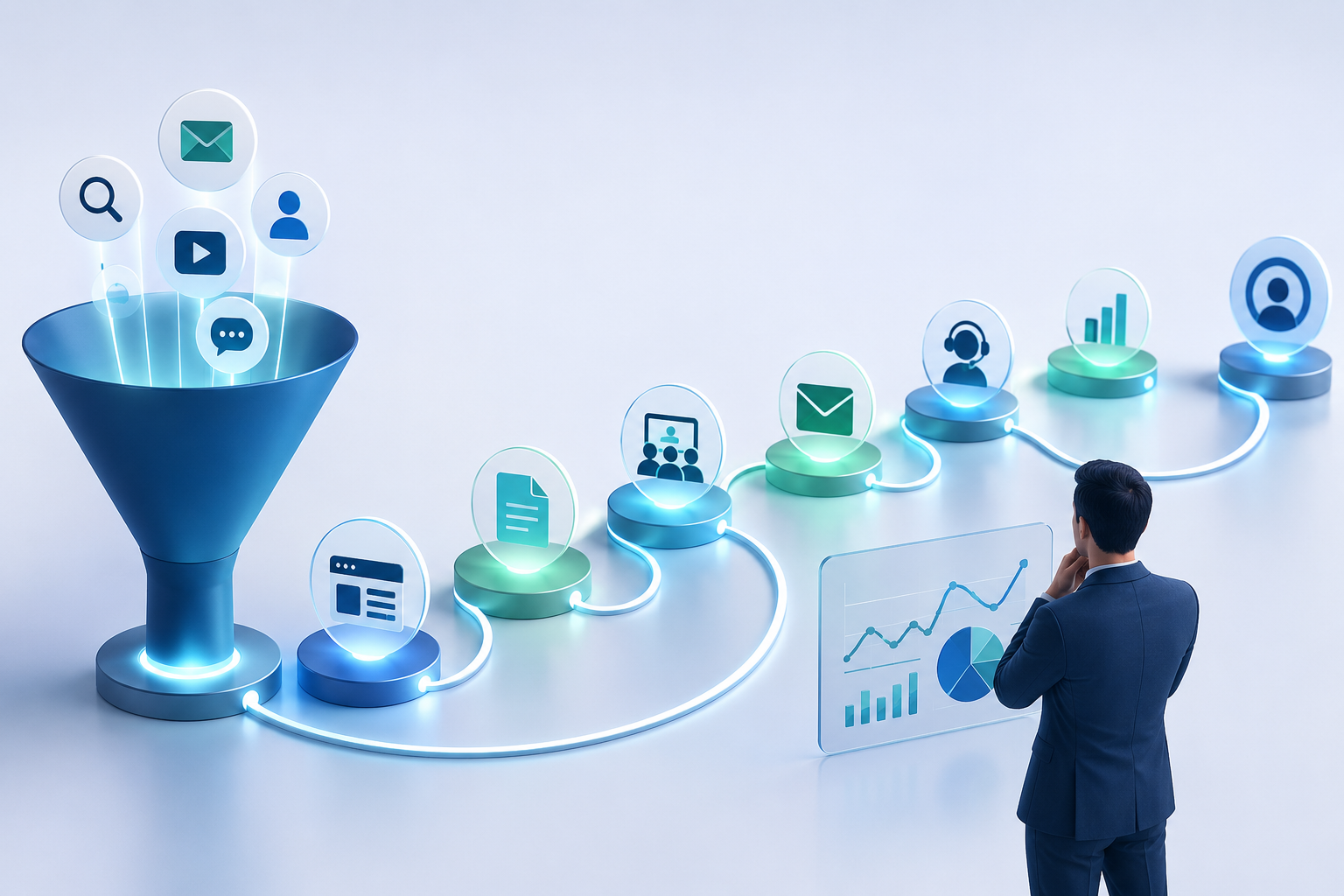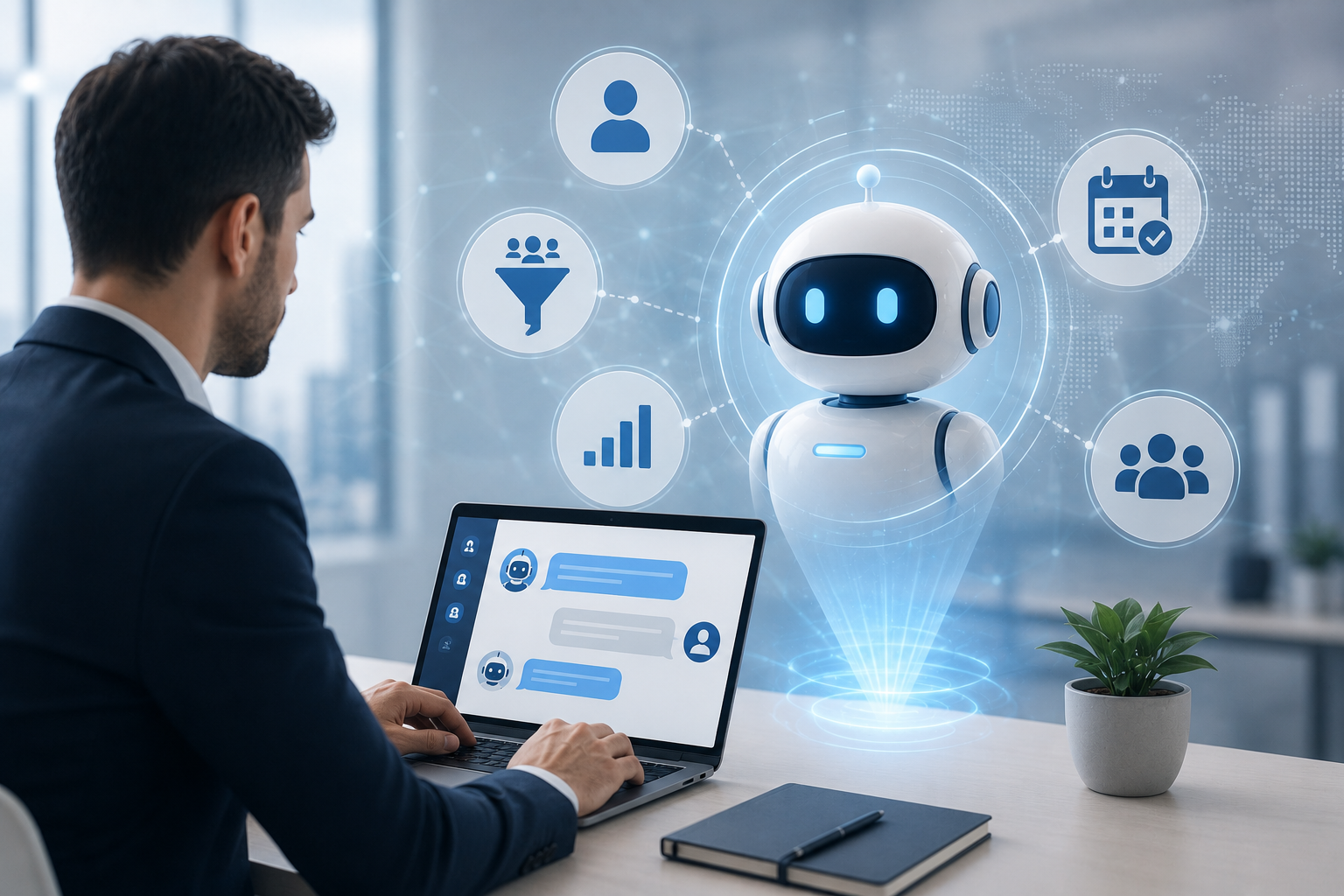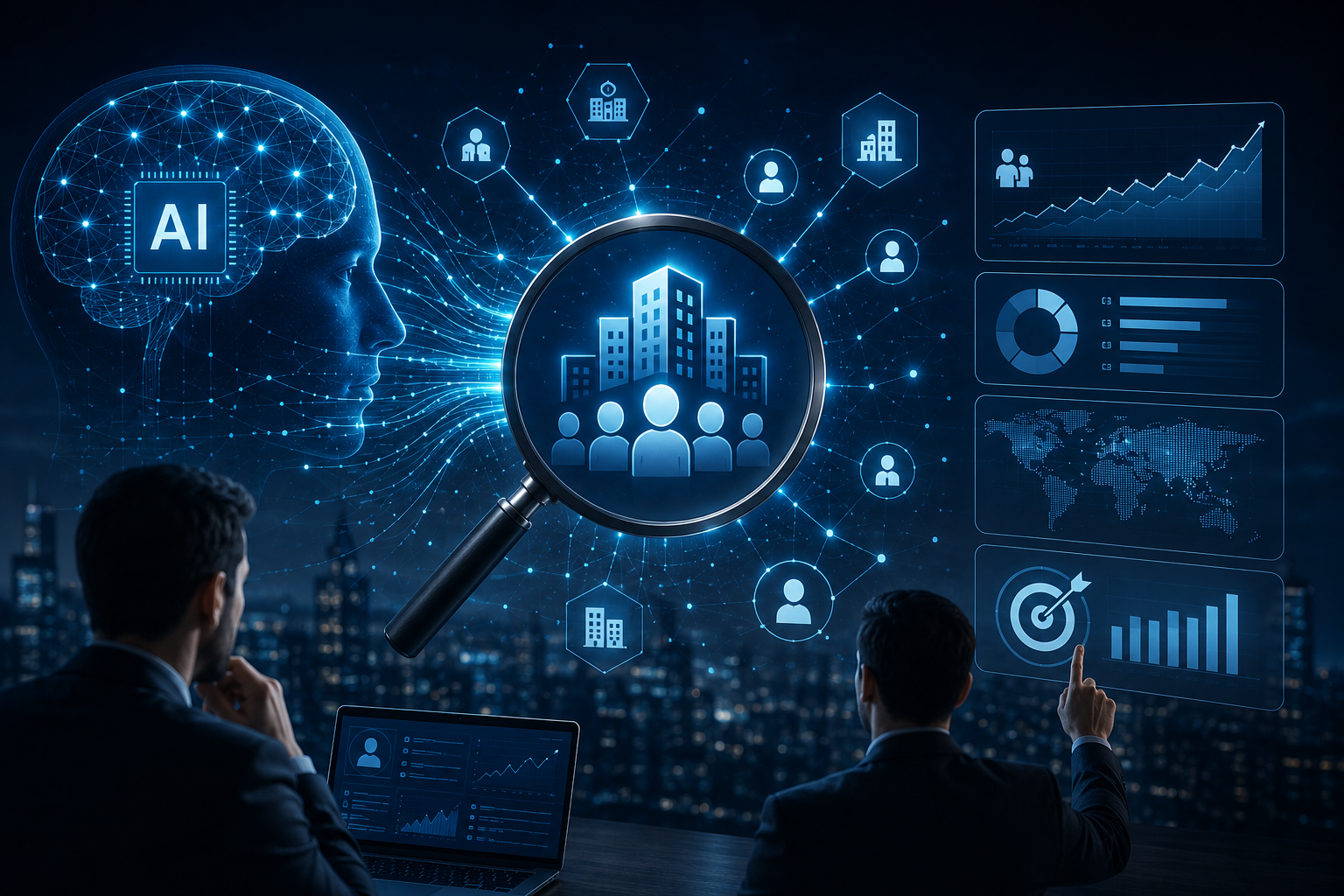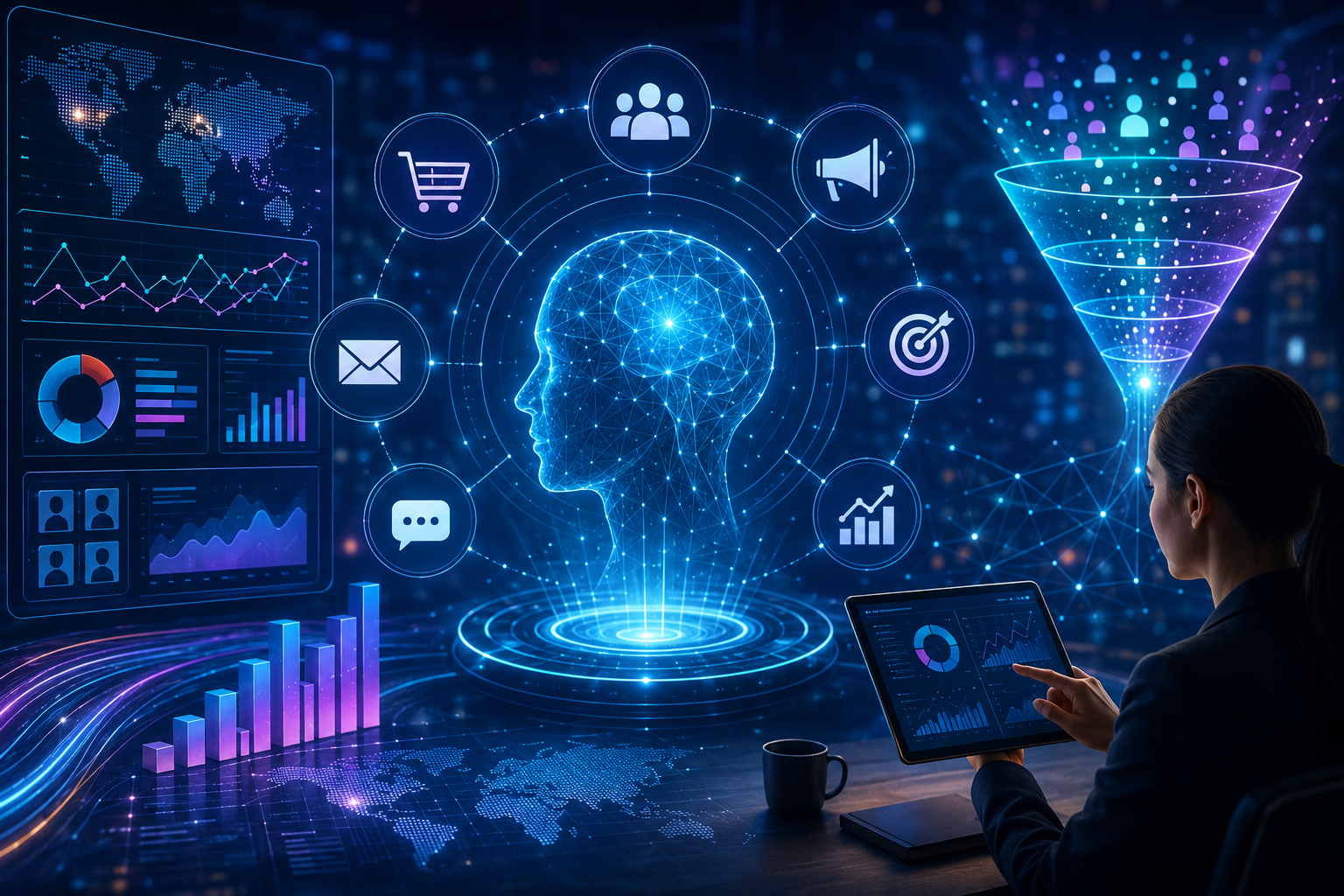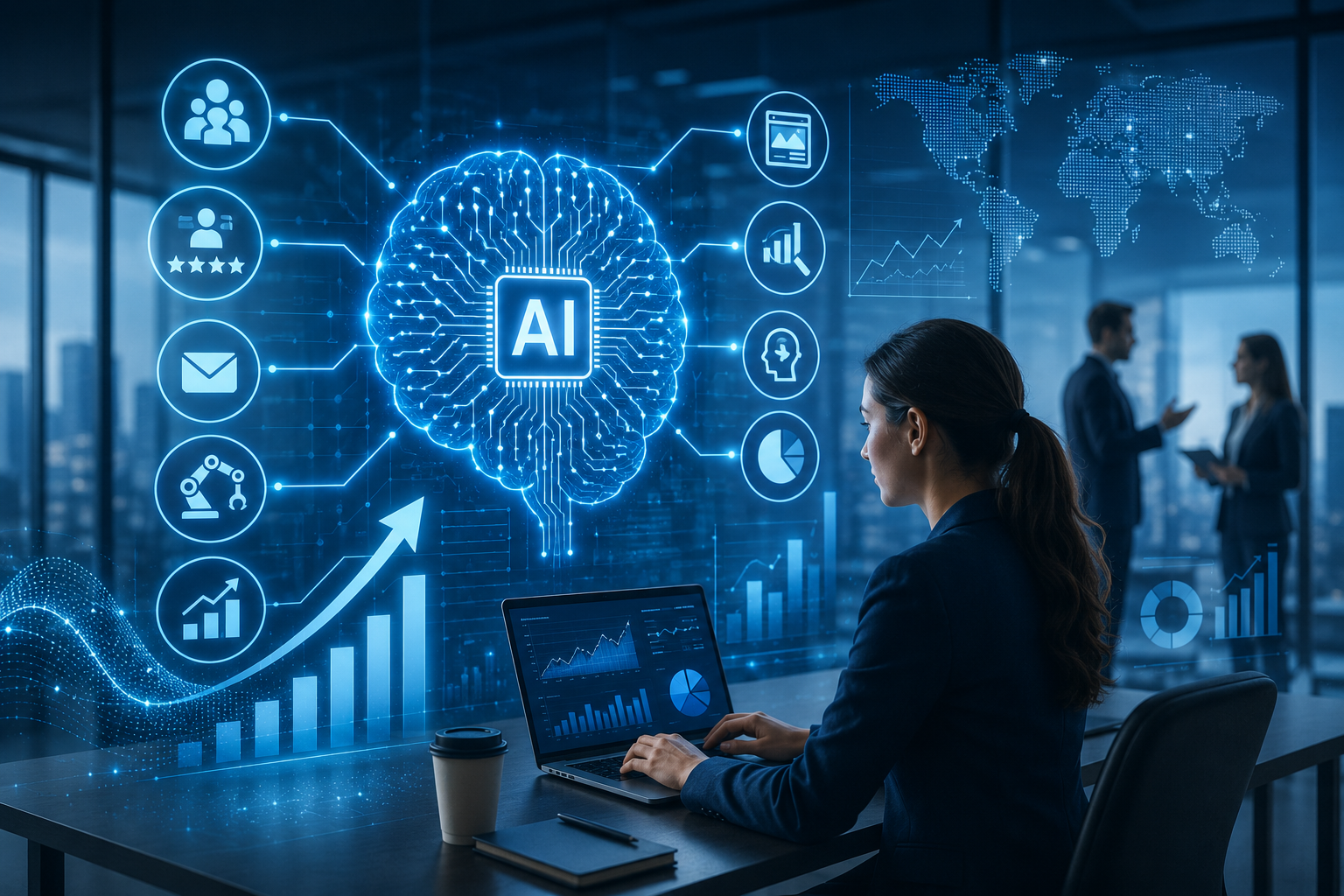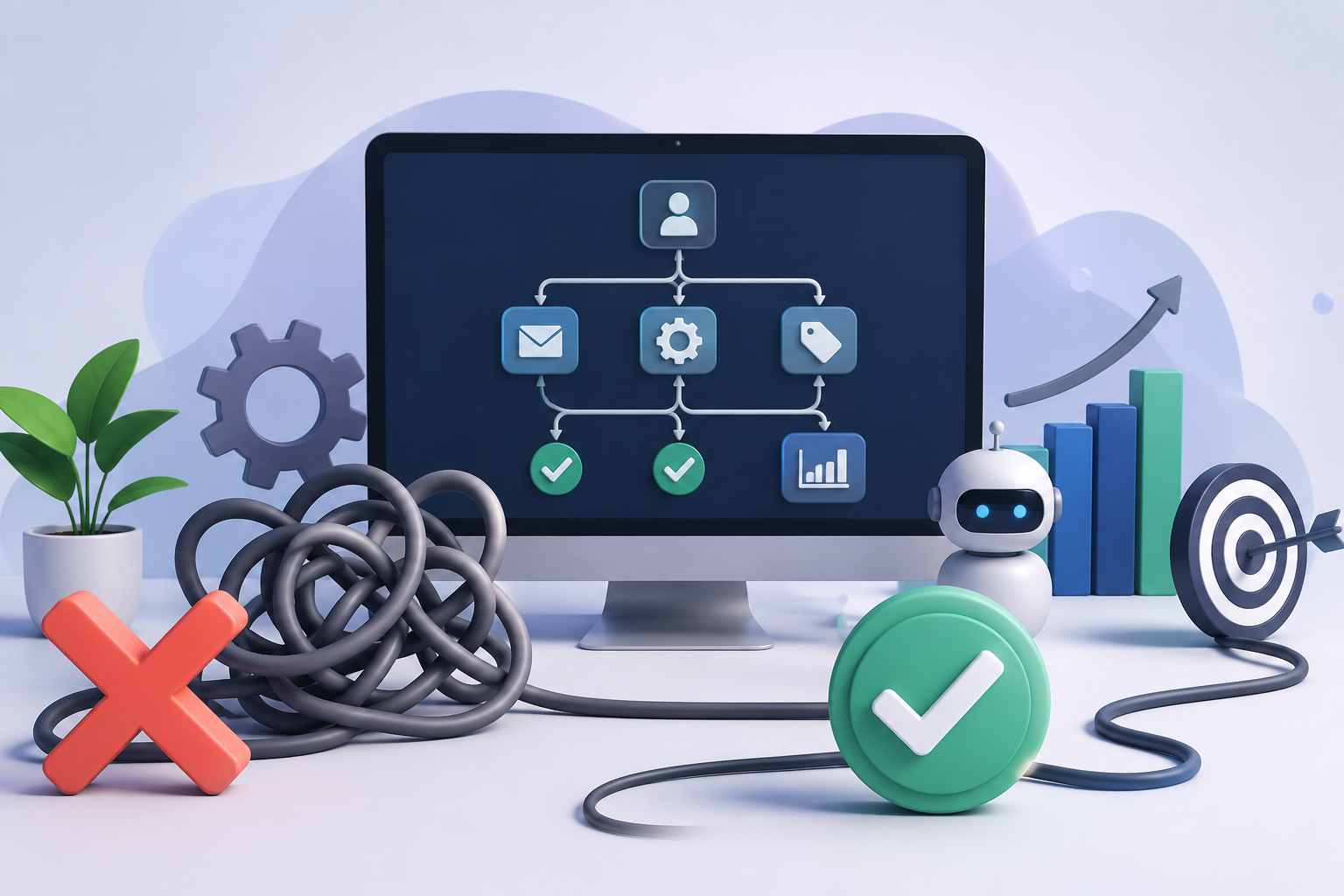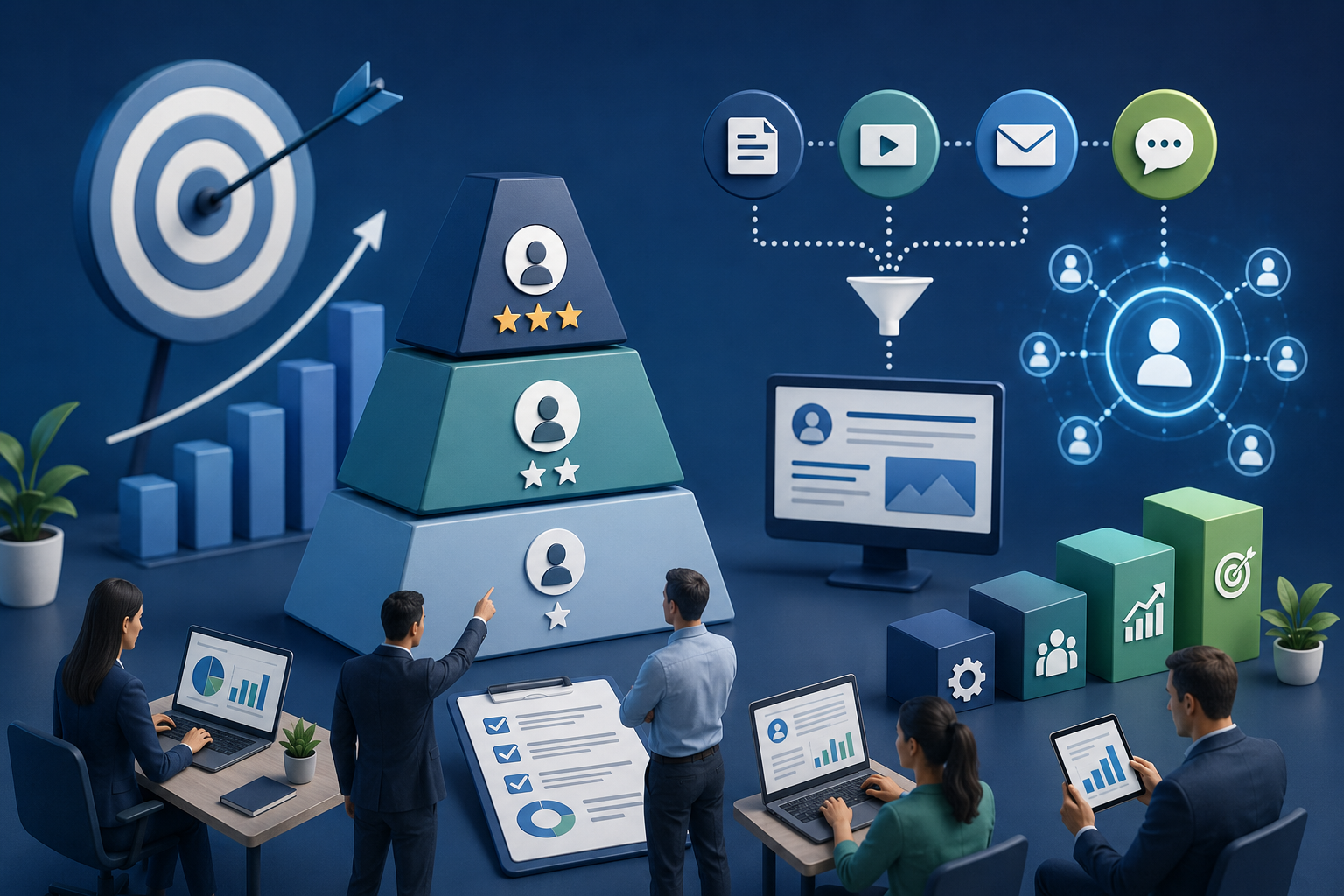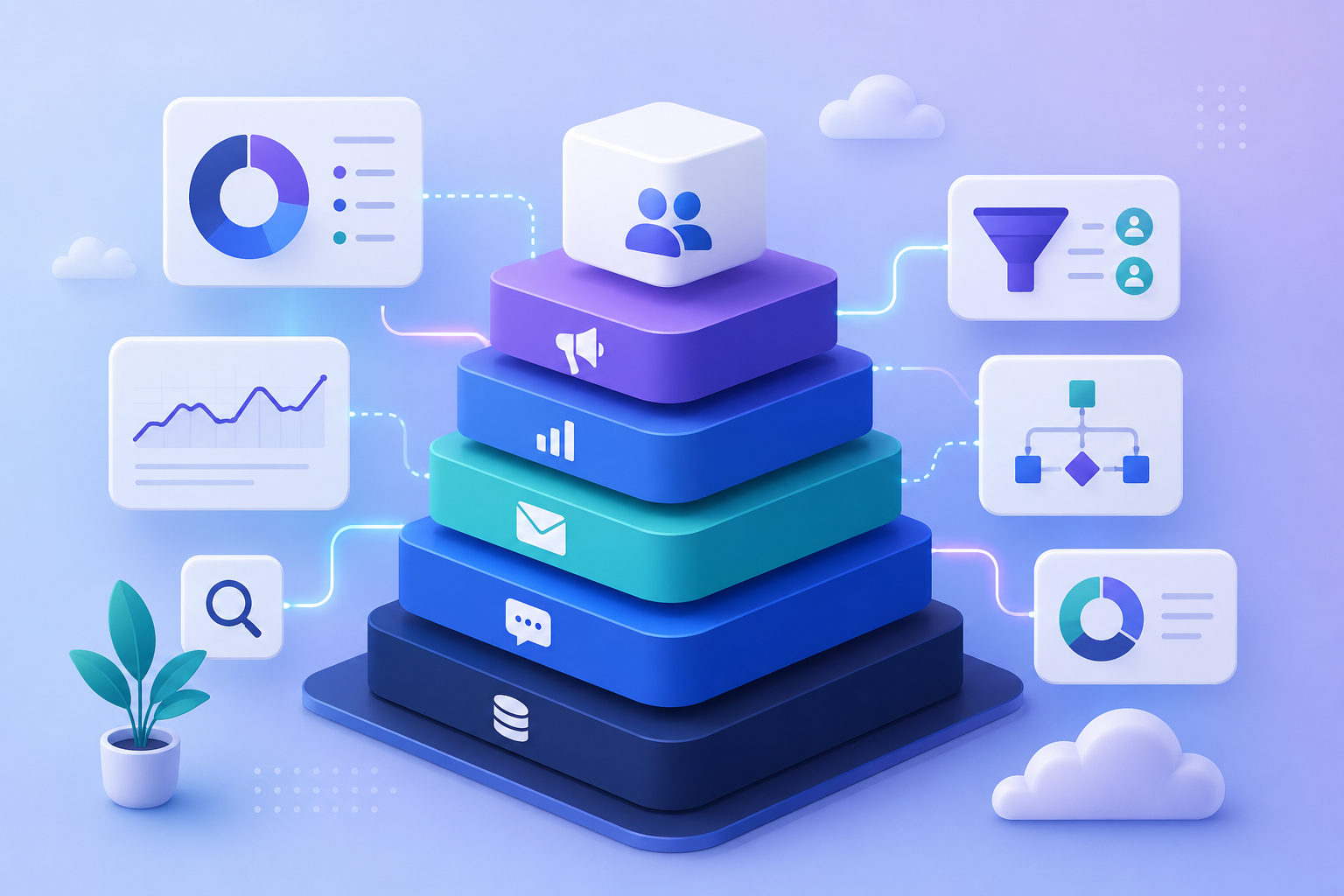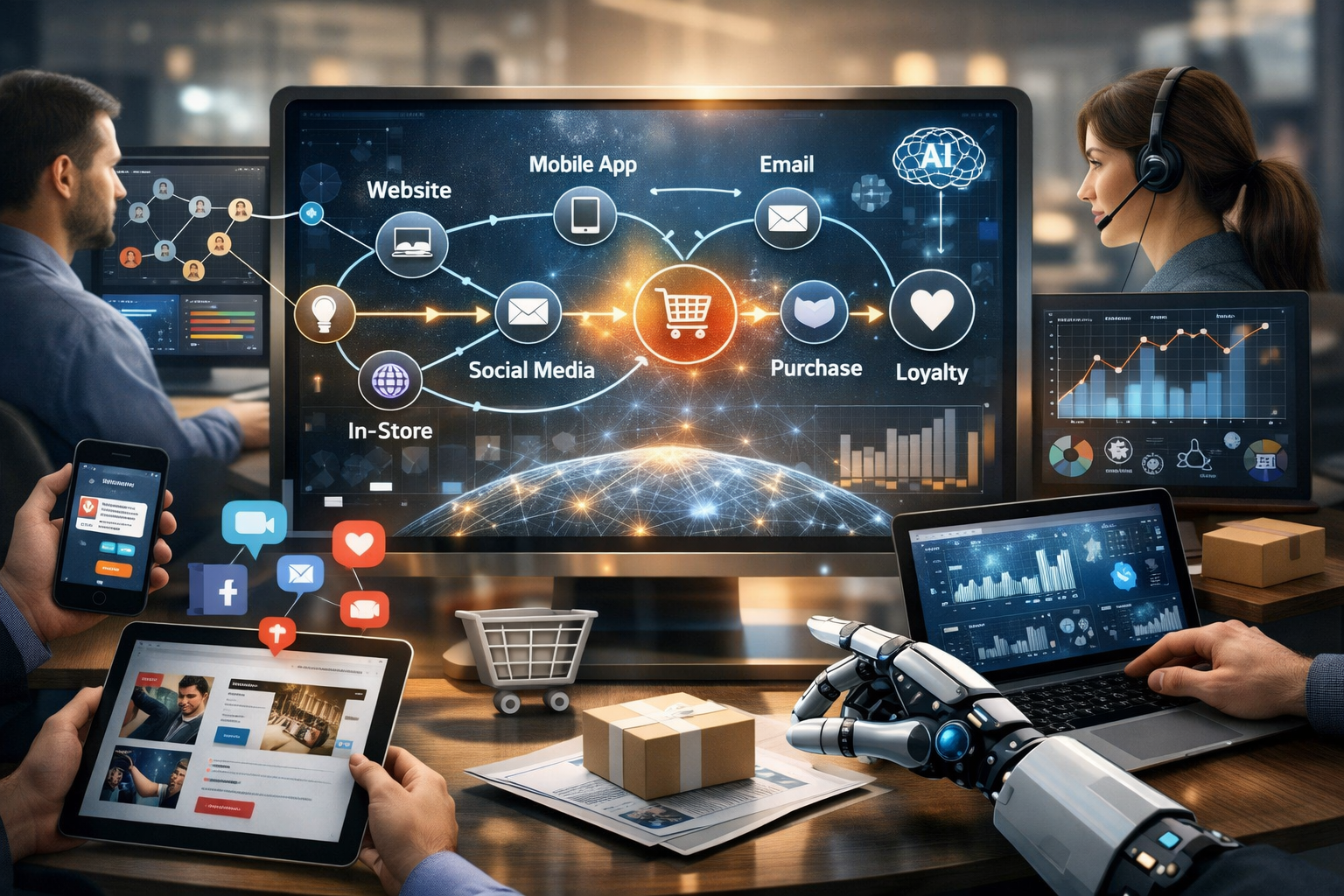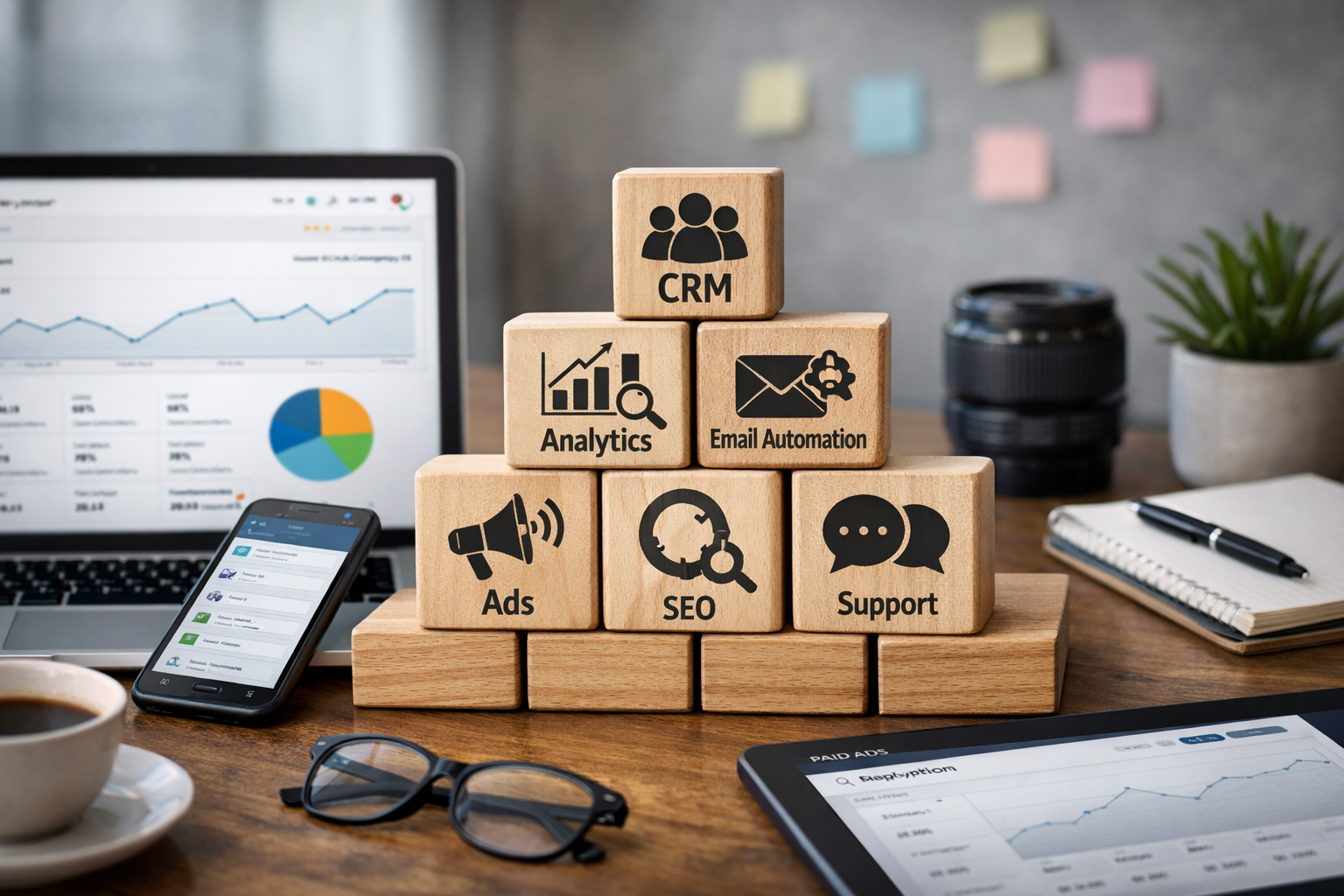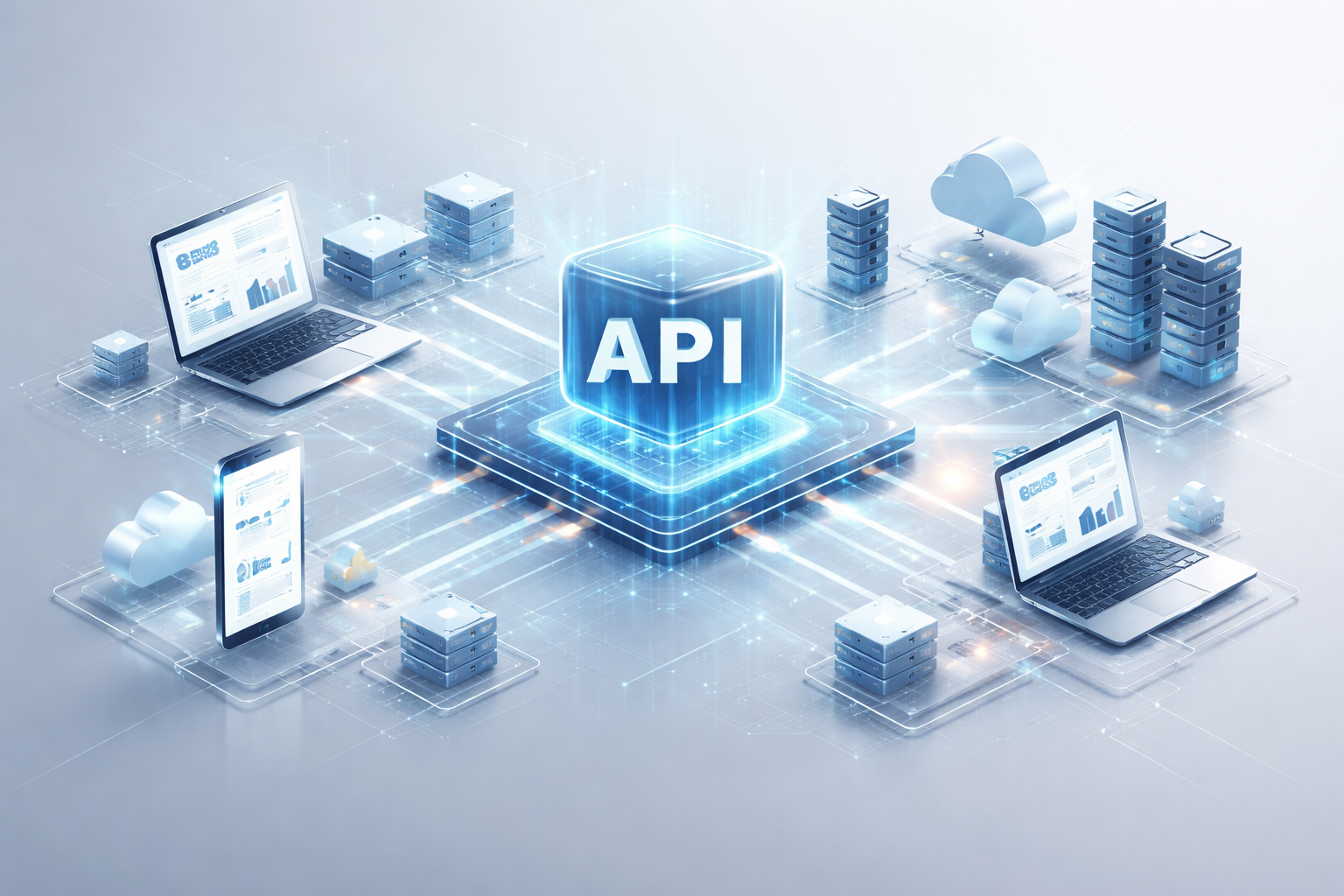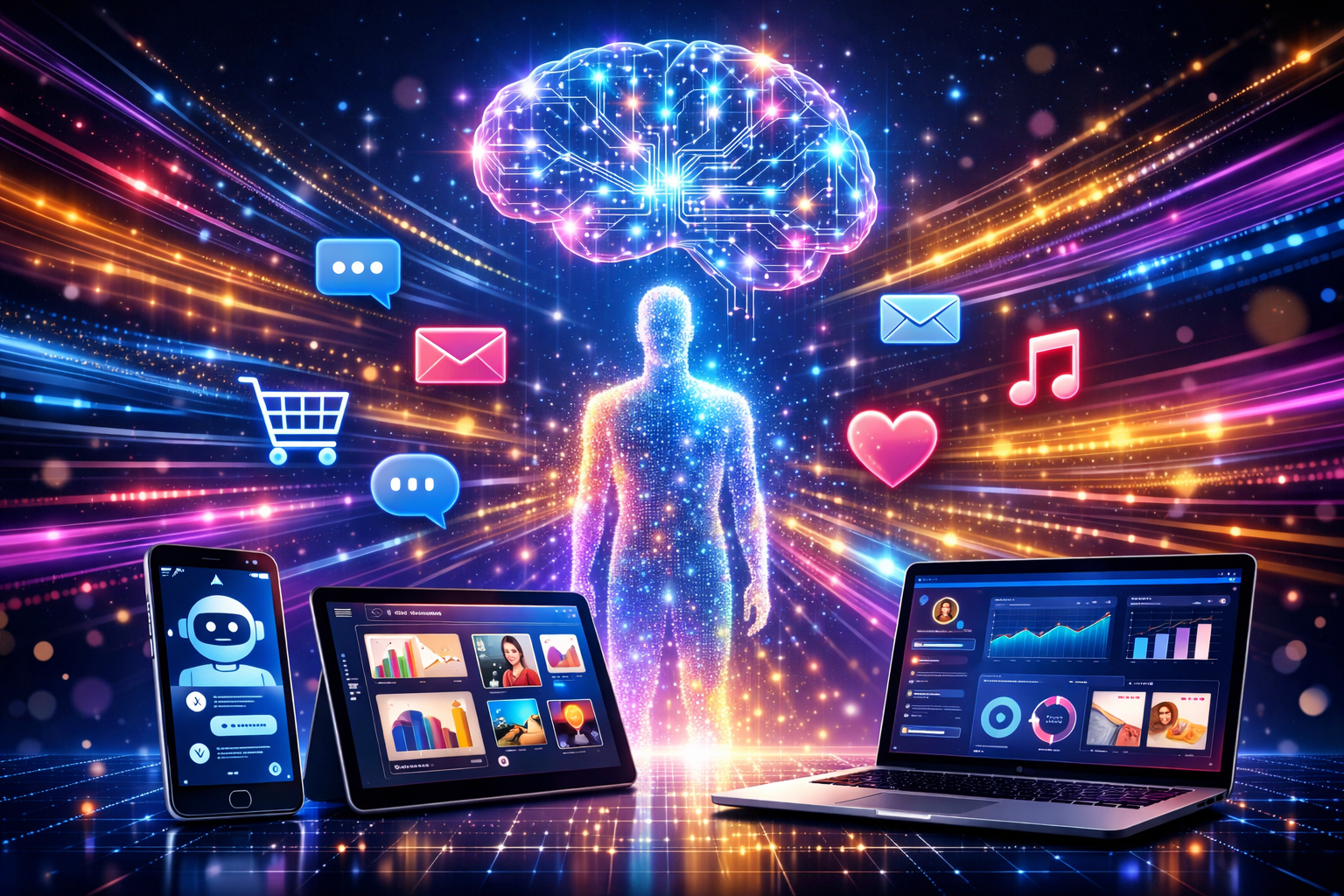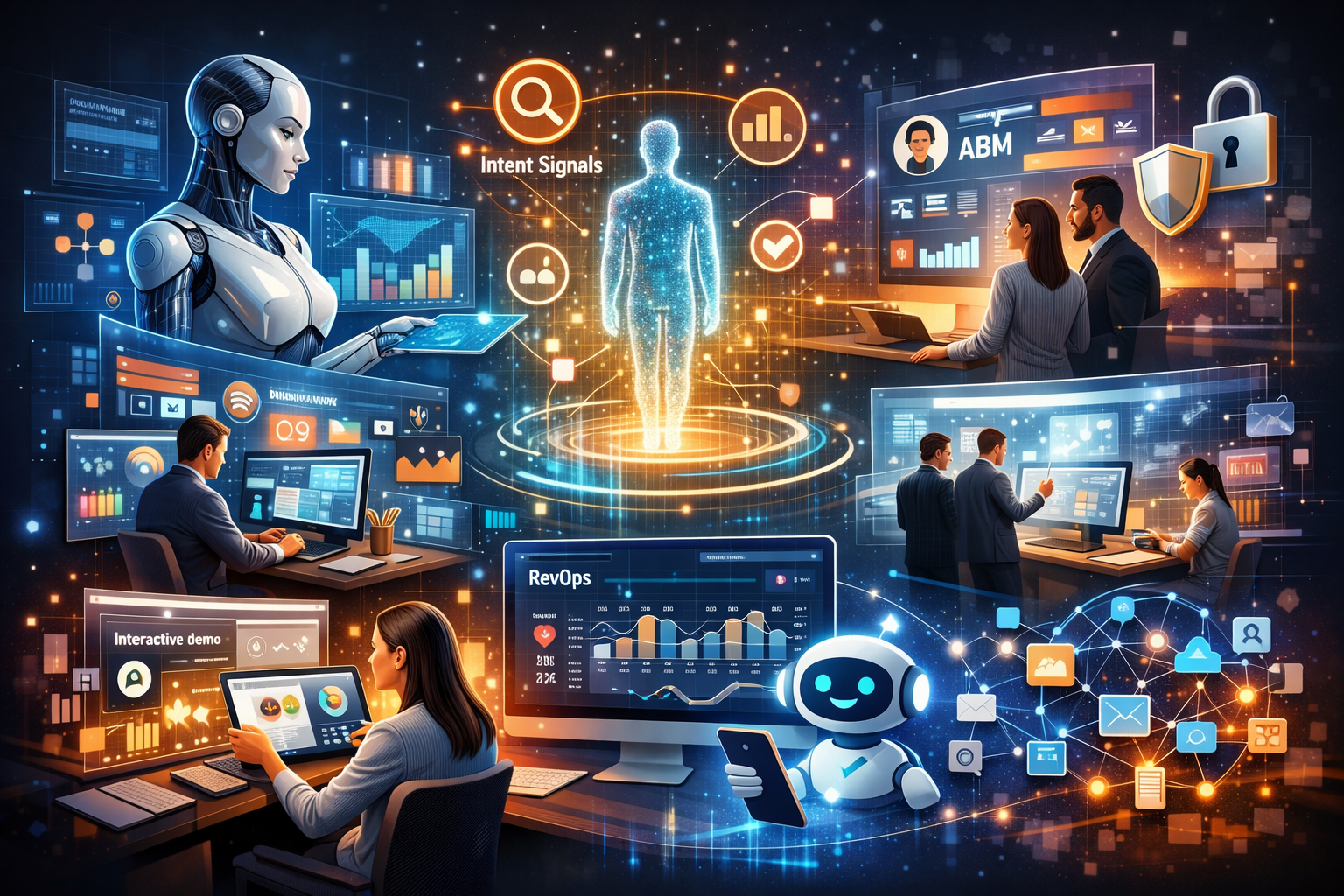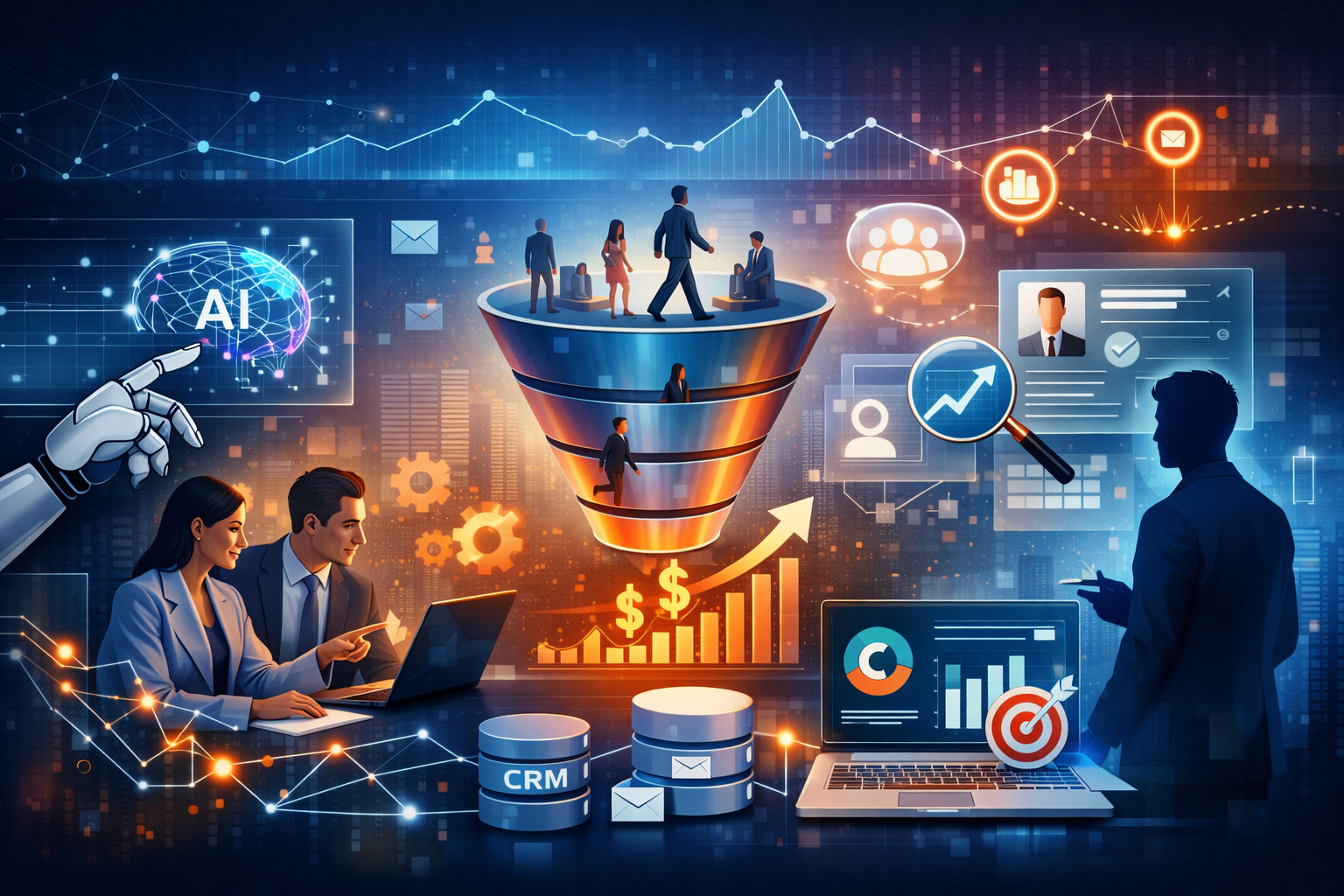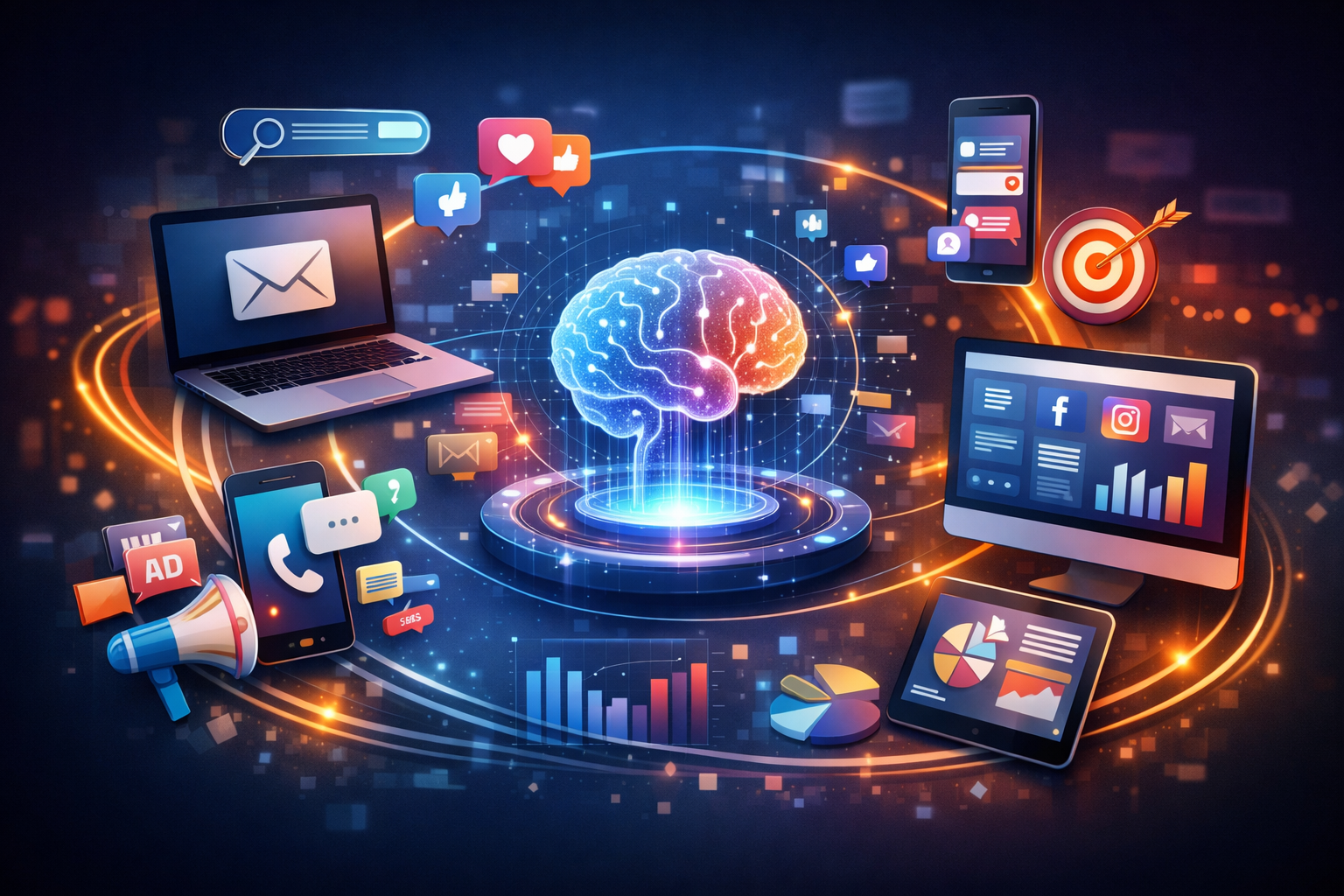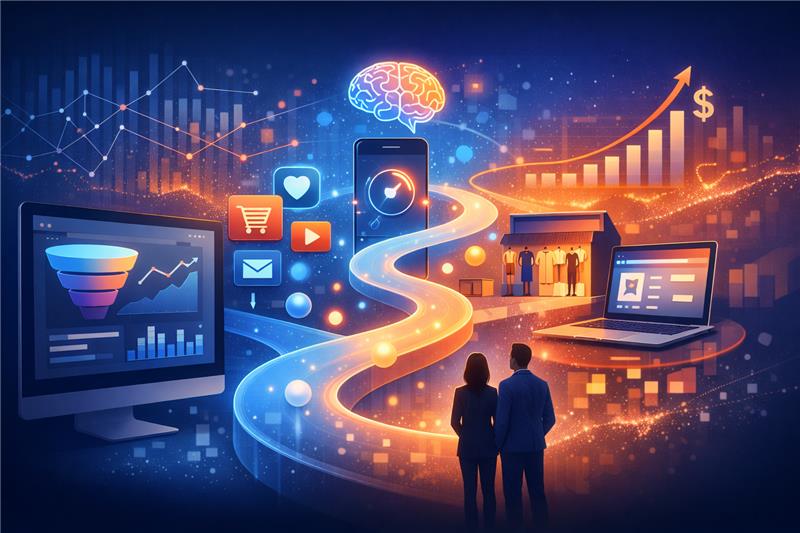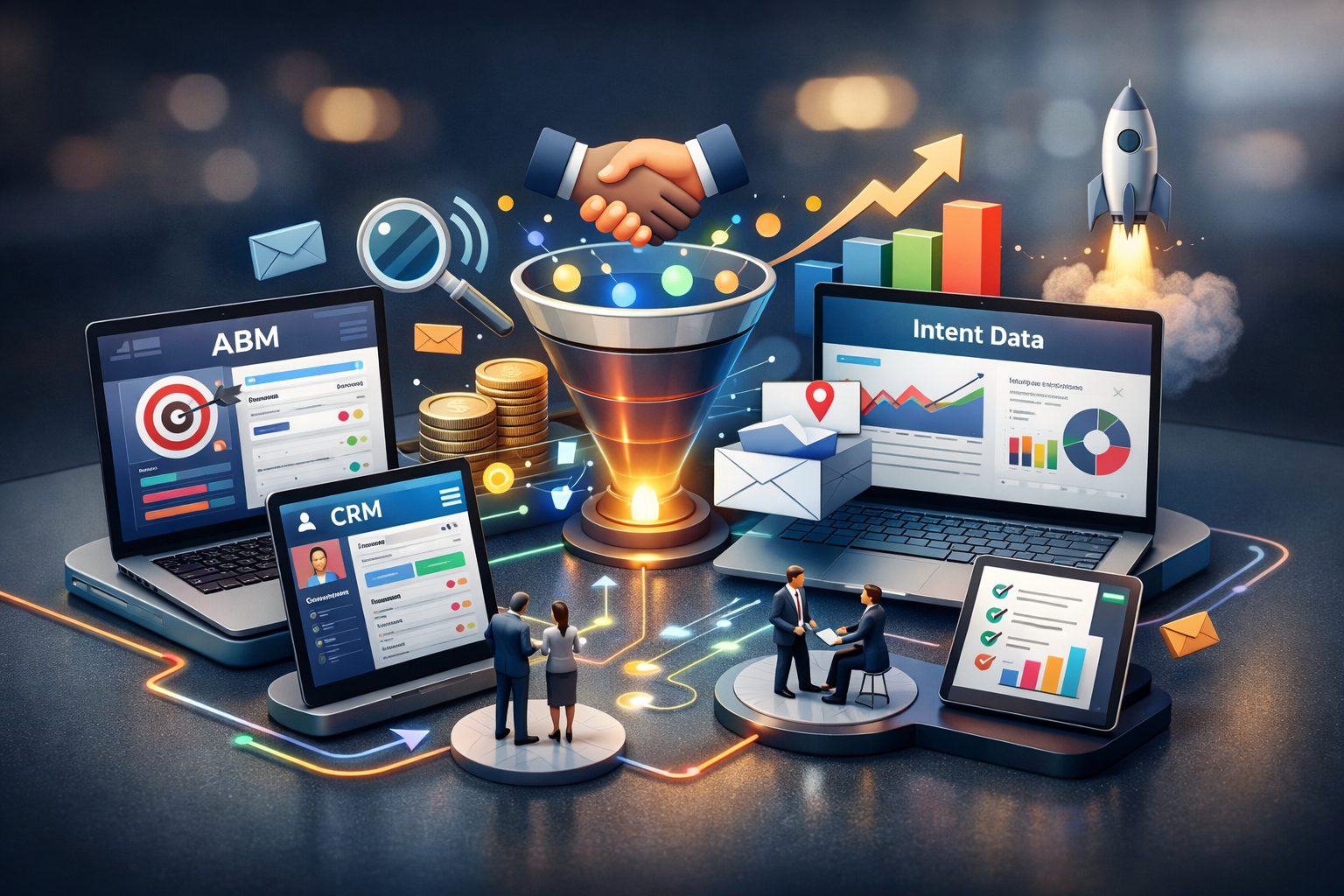
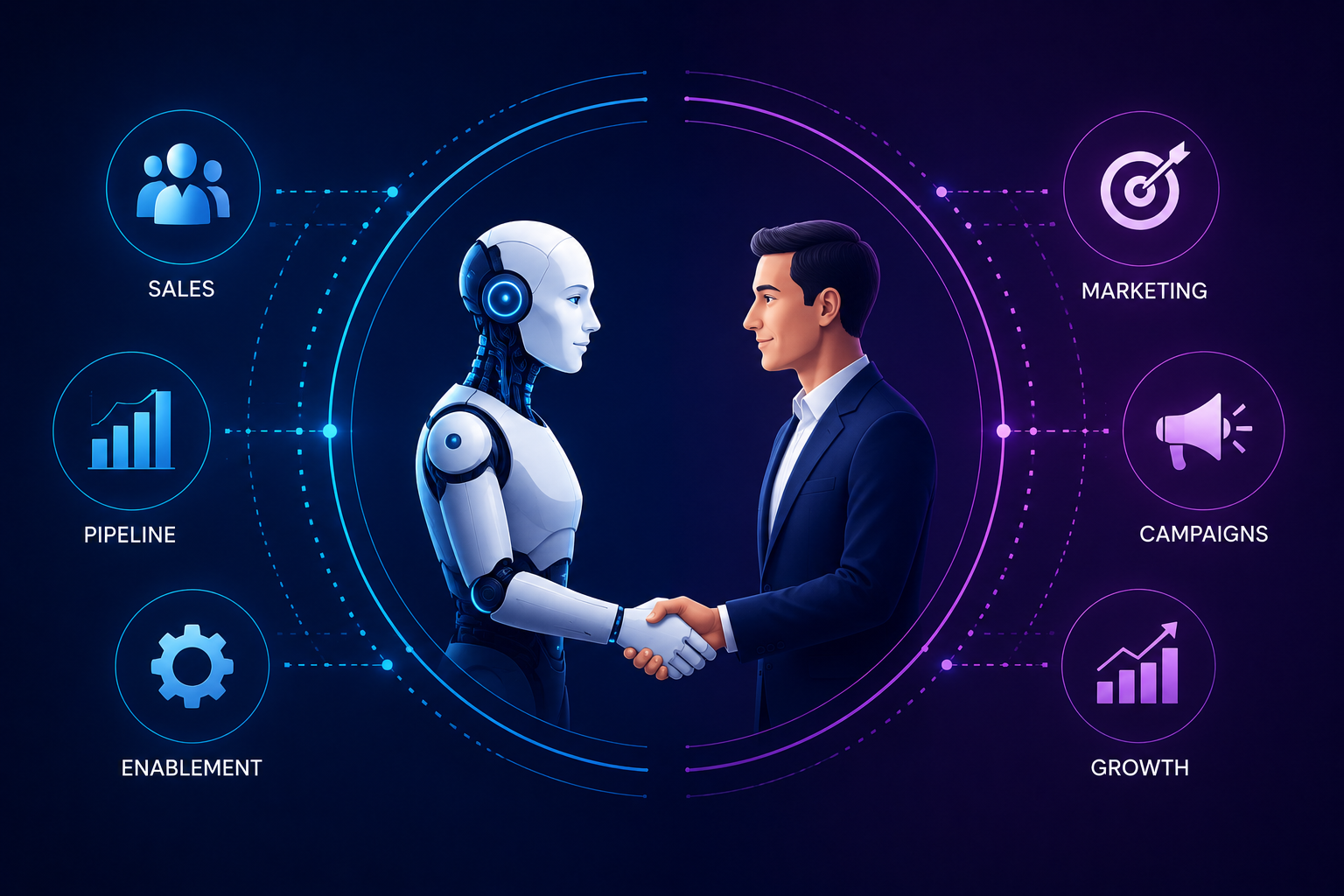
Artificial Intelligence (AI) is rapidly changing how businesses align their sales and marketing teams. Traditionally, these departments often worked separately, leading to communication gaps, inconsistent customer experiences, and lost revenue opportunities. Today, AI-powered tools and analytics are helping organizations create stronger collaboration, improve customer targeting, and drive higher conversions.
The Growing Need for Sales and Marketing Alignment
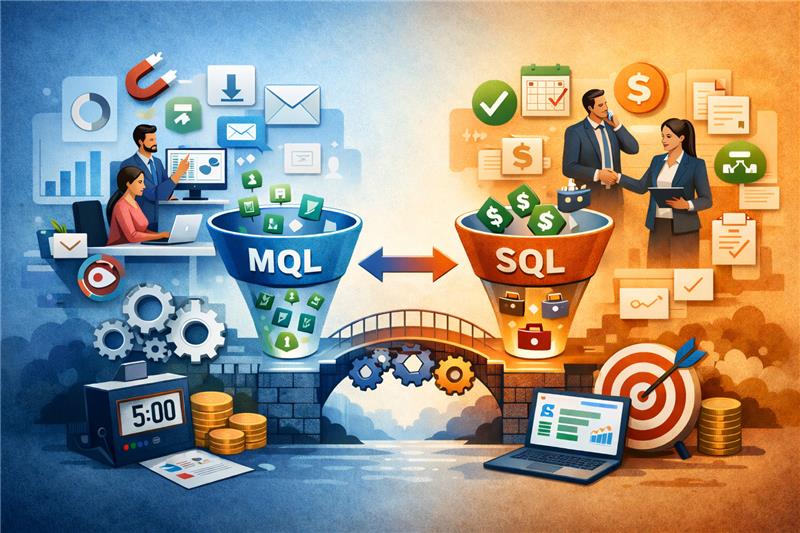
Sales and marketing alignment refers to the coordination between both teams to achieve shared business goals. Marketing generates leads and brand awareness, while sales converts those leads into customers. When alignment is weak, businesses face:
- Poor lead quality
- Delayed follow-ups
- Inconsistent messaging
- Lower conversion rates
- Reduced customer satisfaction
AI is solving many of these problems by creating a unified, data-driven approach across departments.
How AI Is Improving Sales and Marketing Collaboration
1. Smarter Lead Scoring
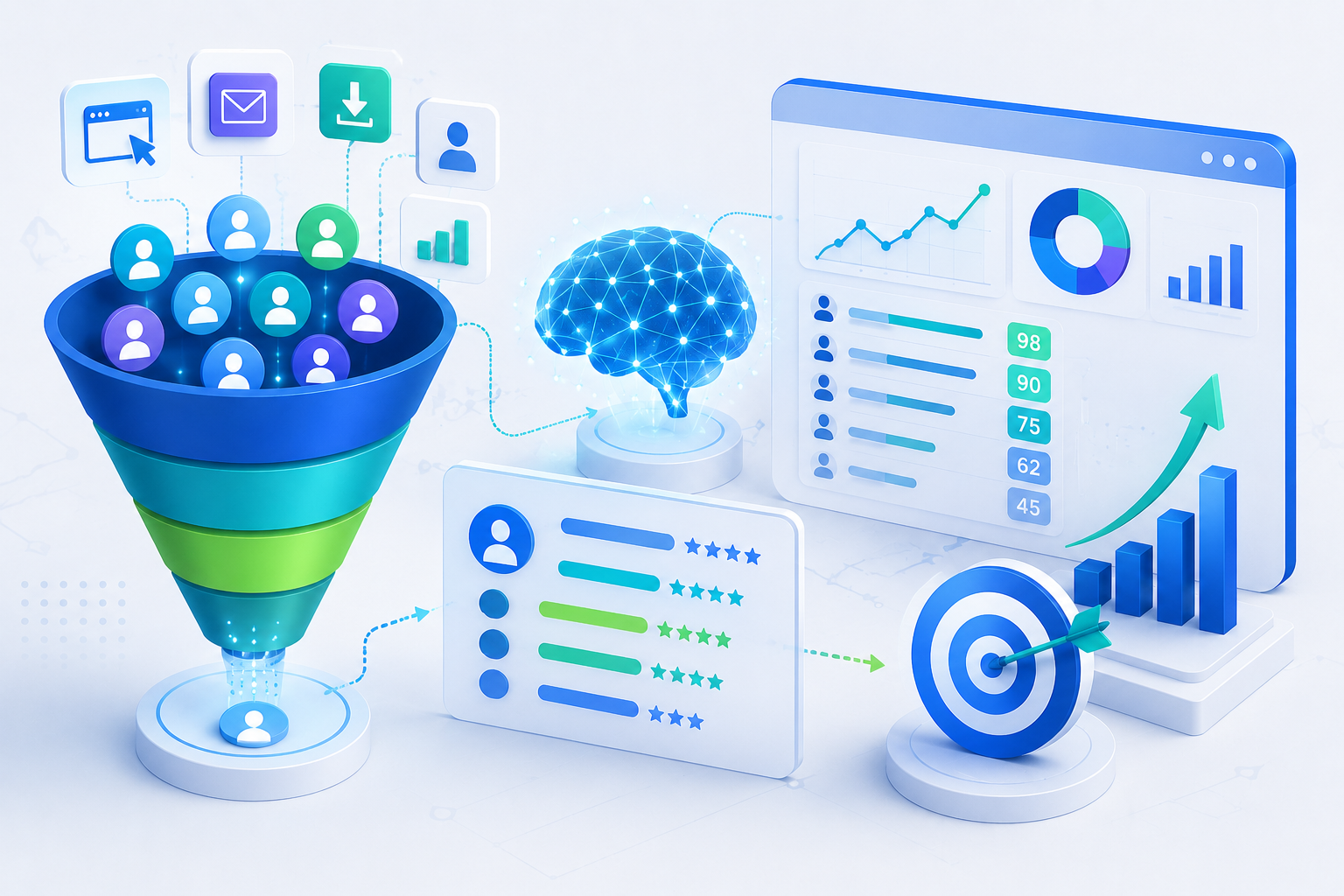
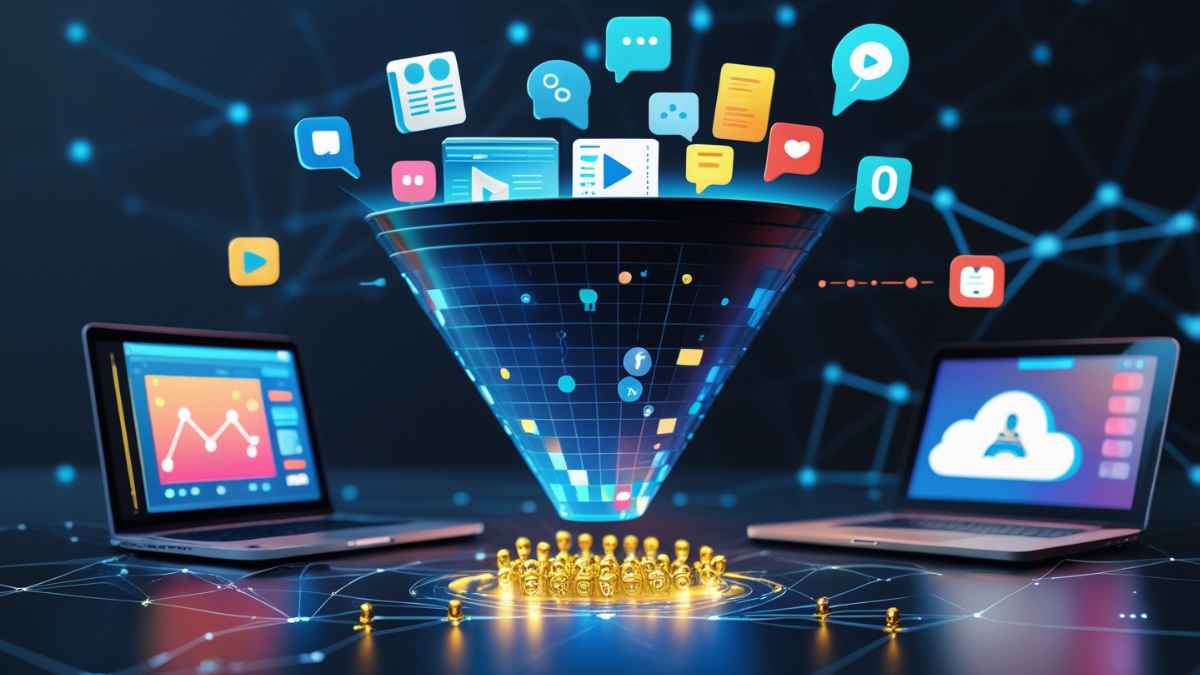
AI helps businesses identify high-quality leads by analyzing customer behavior, demographics, browsing activity, and engagement patterns.
Instead of relying on manual lead qualification, AI predicts which prospects are most likely to convert. This allows:
- Marketing teams to focus on better targeting
- Sales teams to prioritize valuable prospects
Companies using AI-powered lead scoring are seeing improved conversion rates and more efficient sales pipelines.
2. Personalized Customer Experiences
Modern customers expect personalized communication across every touchpoint. AI enables hyper-personalization by analyzing customer preferences and behavior in real time.
AI can personalize:
- Email campaigns
- Product recommendations
- Website experiences
- Ad targeting
- Sales outreach messages
This creates a smoother customer journey from marketing engagement to sales conversion.
3. Predictive Analytics for Better Decision-Making
AI-powered predictive analytics helps businesses forecast:
- Customer behavior
- Buying intent
- Revenue opportunities
- Campaign performance
- Churn risk
With predictive insights, sales and marketing teams can make proactive decisions instead of reactive ones.
For example:
- Marketing can launch campaigns at the right time
- Sales can engage leads before competitors do
This improves efficiency and shortens the sales cycle.
4. Automation of Repetitive Tasks
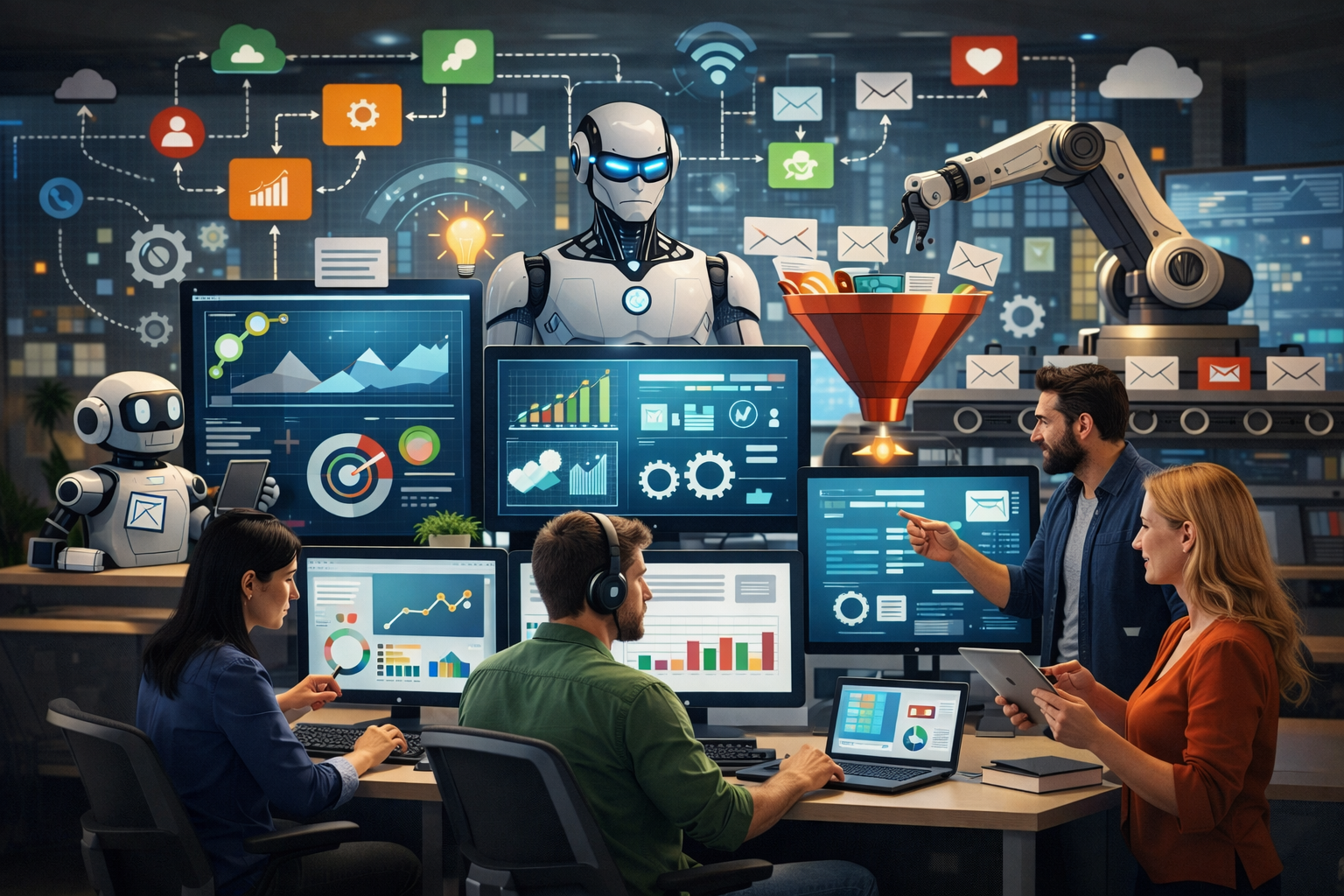
AI automates repetitive tasks such as:
- Email scheduling
- CRM updates
- Follow-up reminders
- Data entry
- Lead nurturing workflows
This gives both teams more time to focus on strategy, creativity, and customer relationships.
Research shows AI is significantly improving productivity across sales and marketing functions.
5. Unified Customer Data and Insights
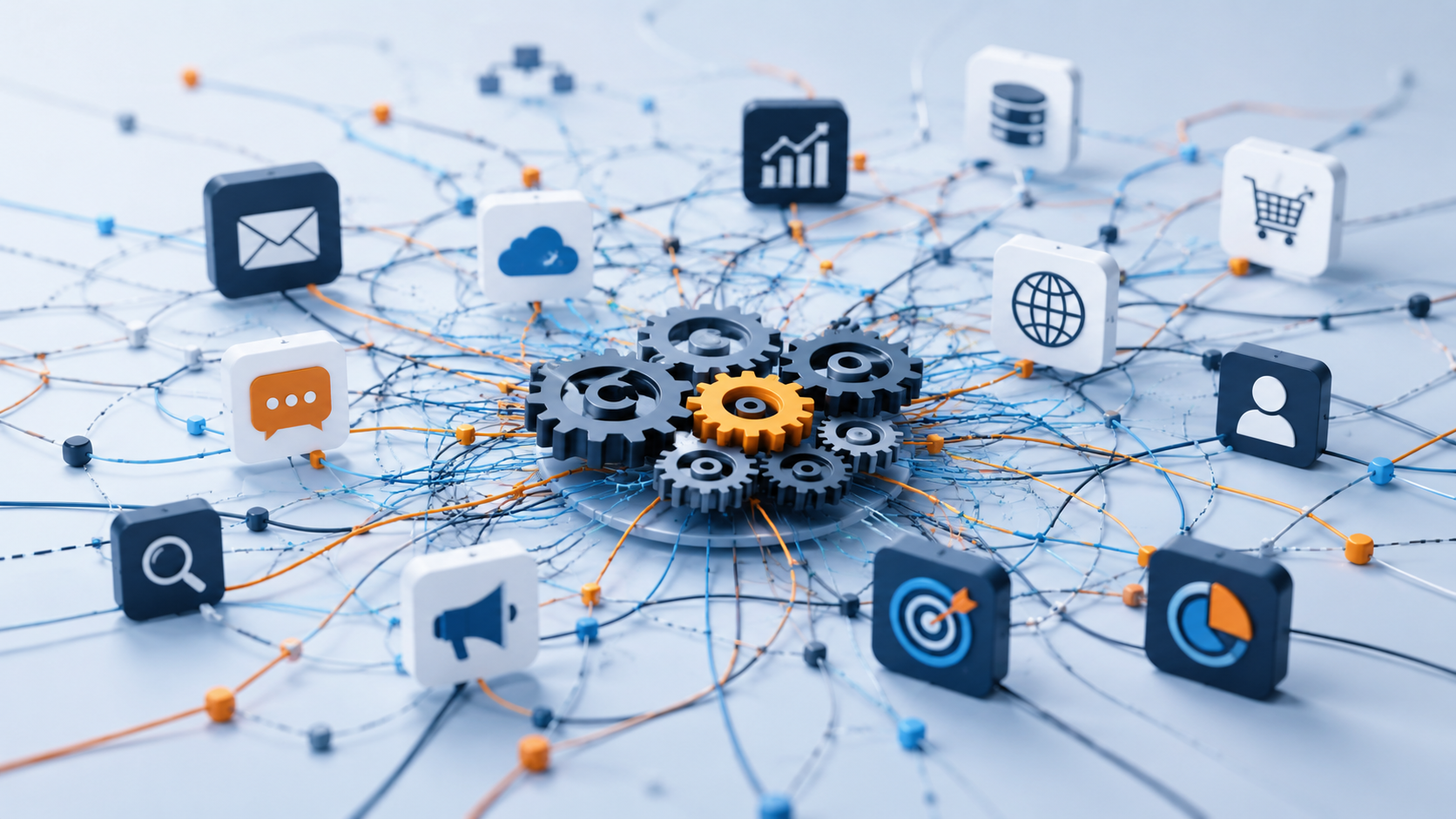
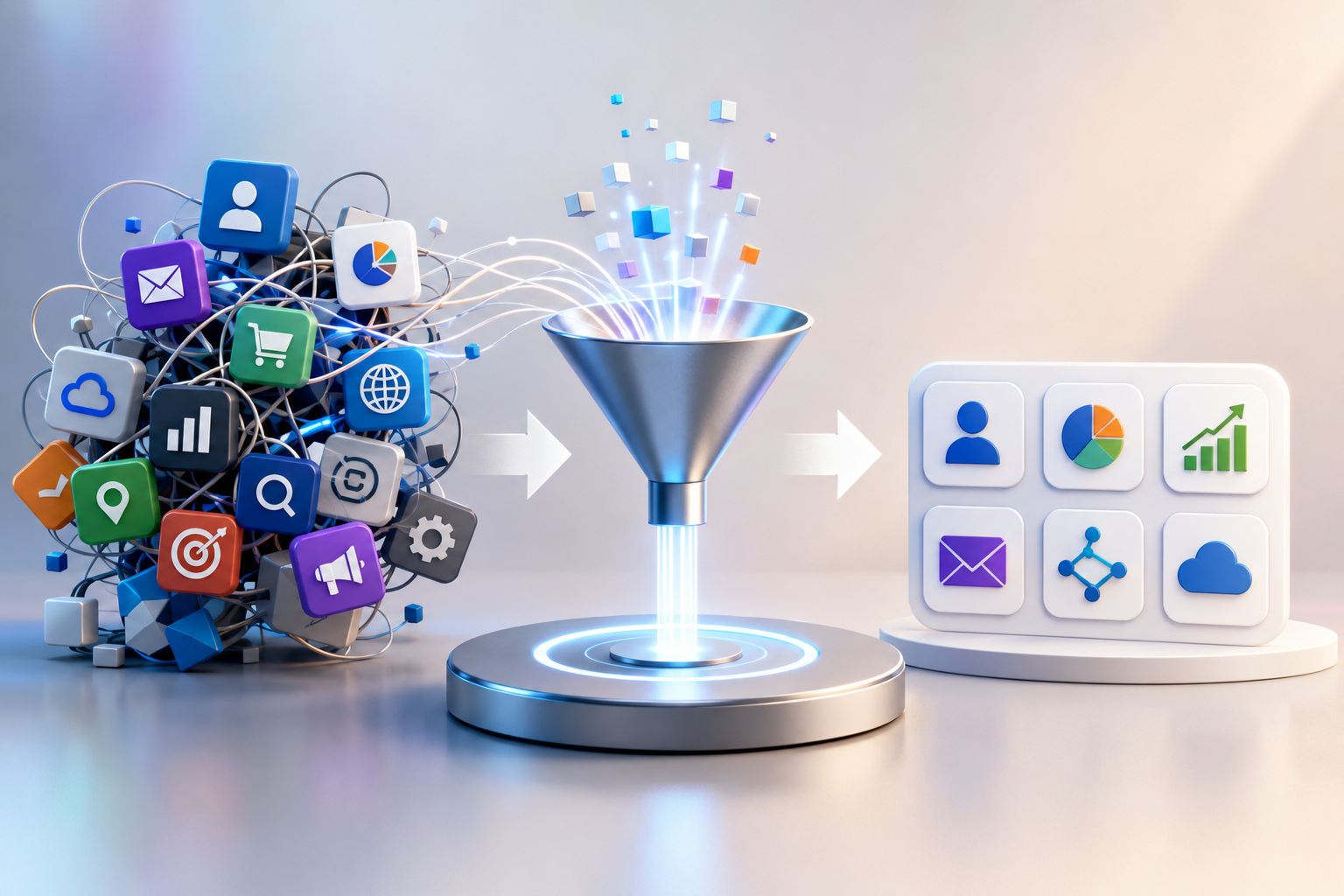
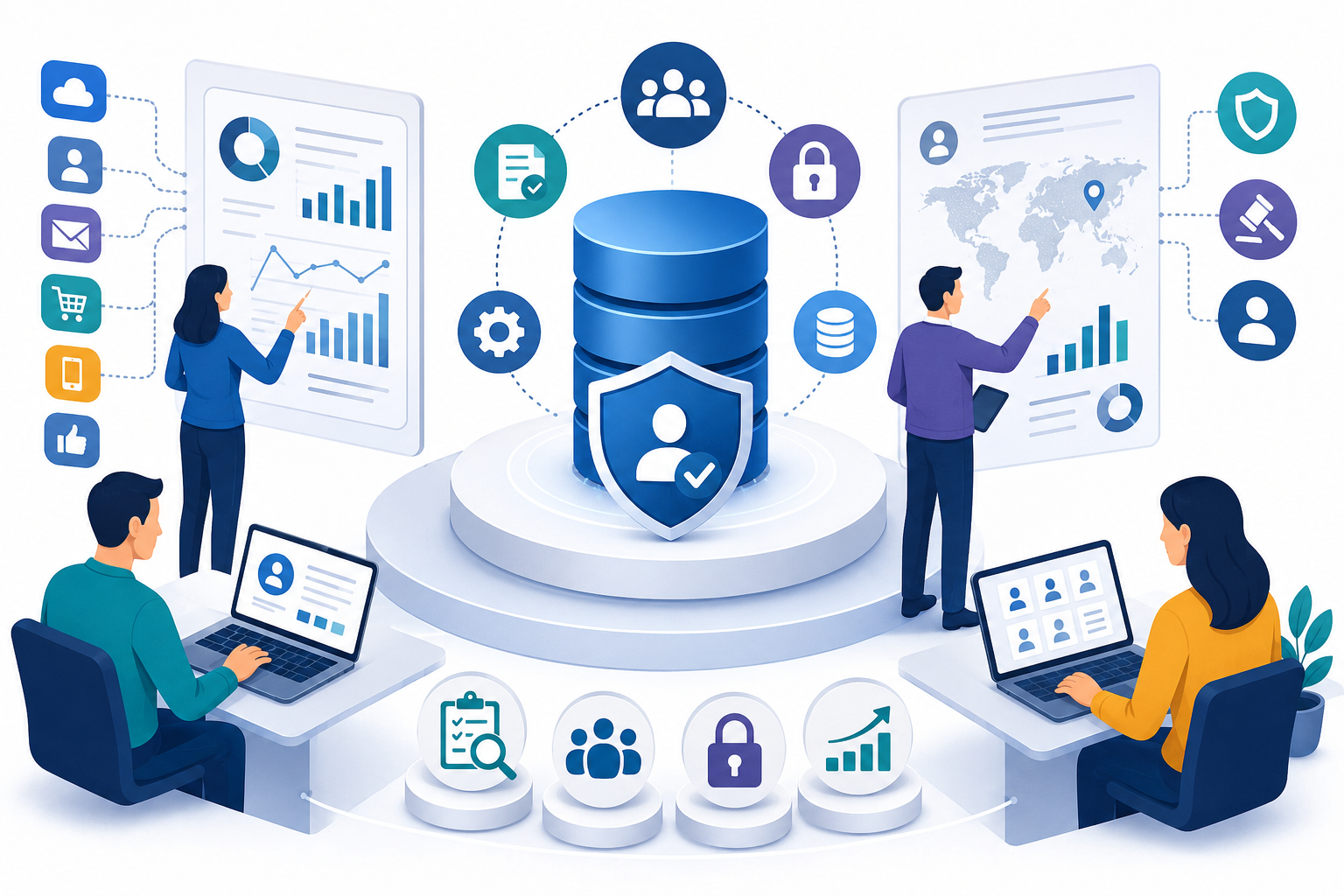
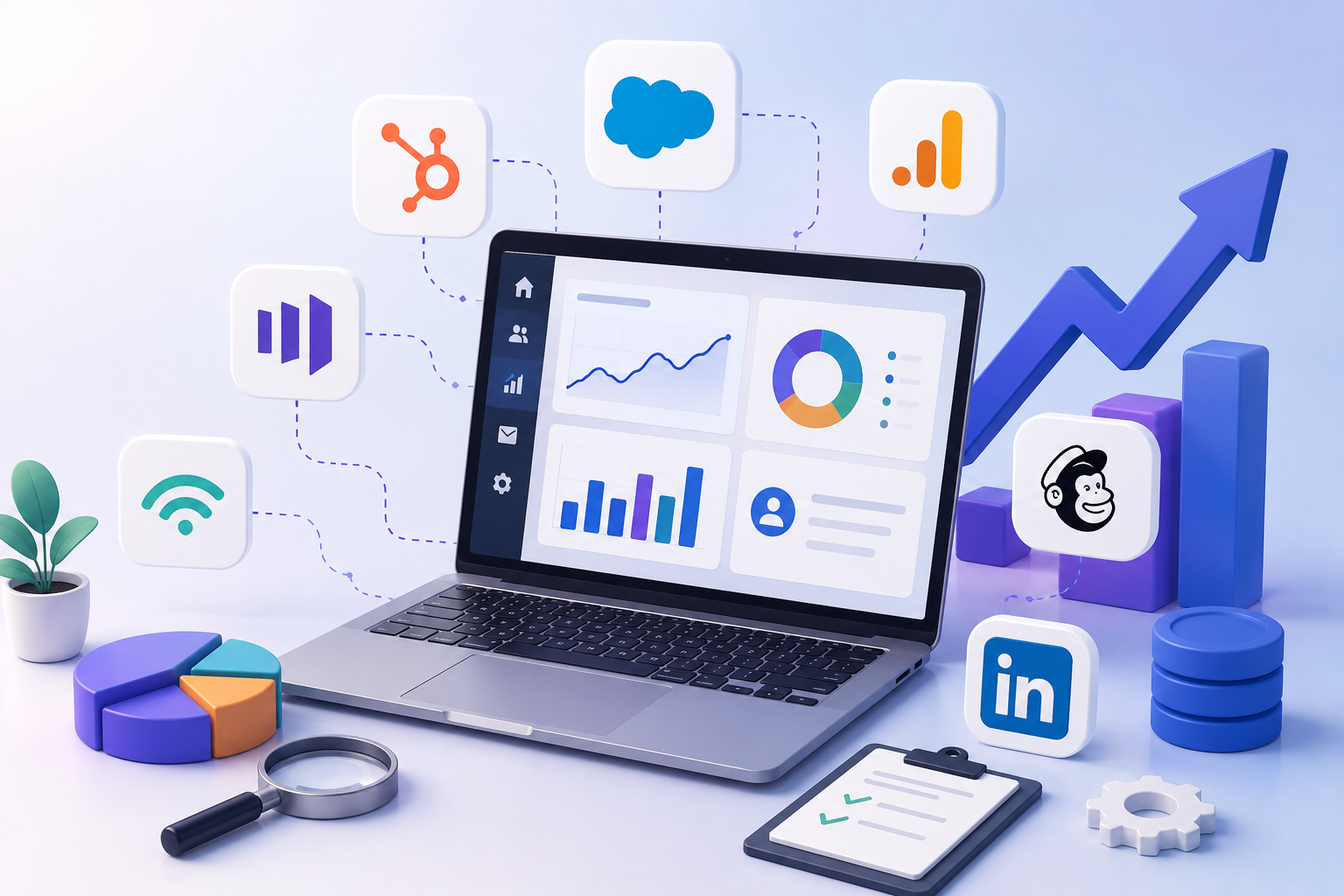
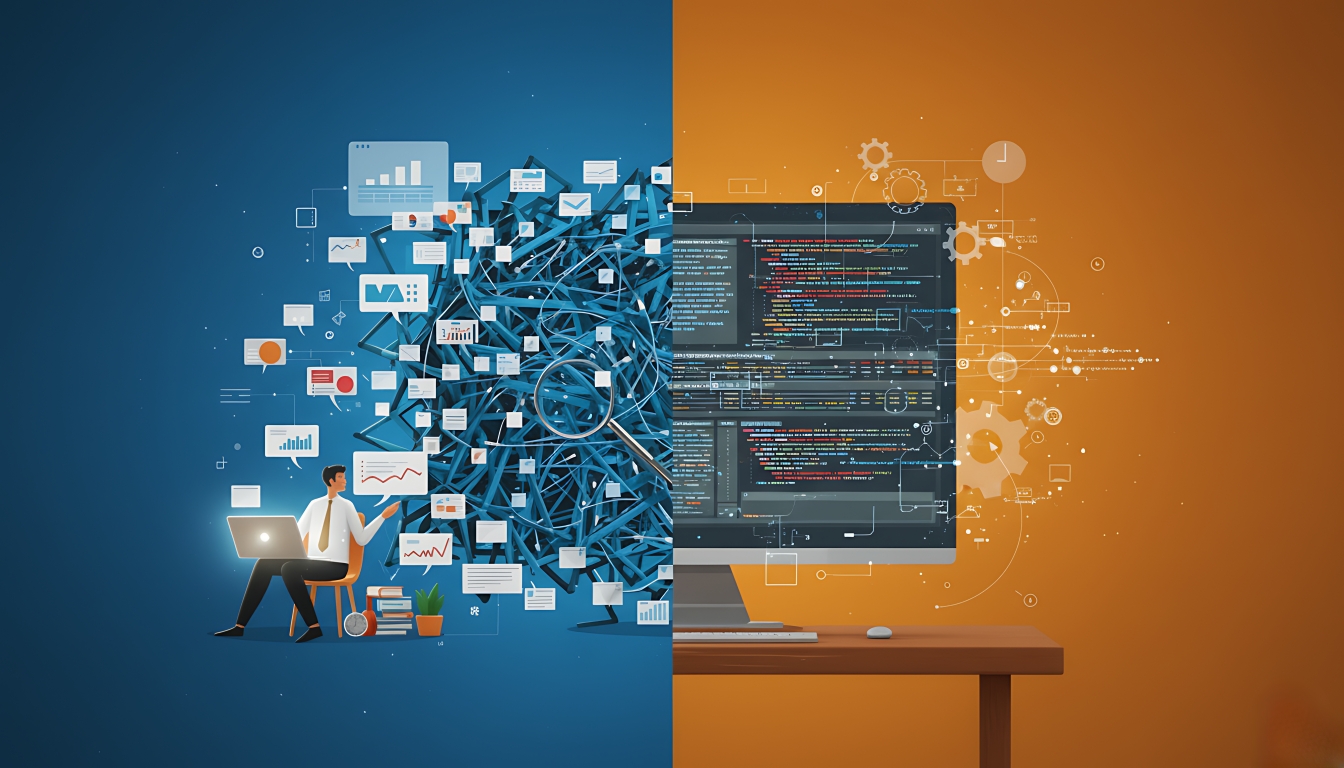
One major challenge businesses face is data silos between departments. AI platforms integrate data from:
- CRM systems
- Social media
- Email campaigns
- Website analytics
- Customer support tools
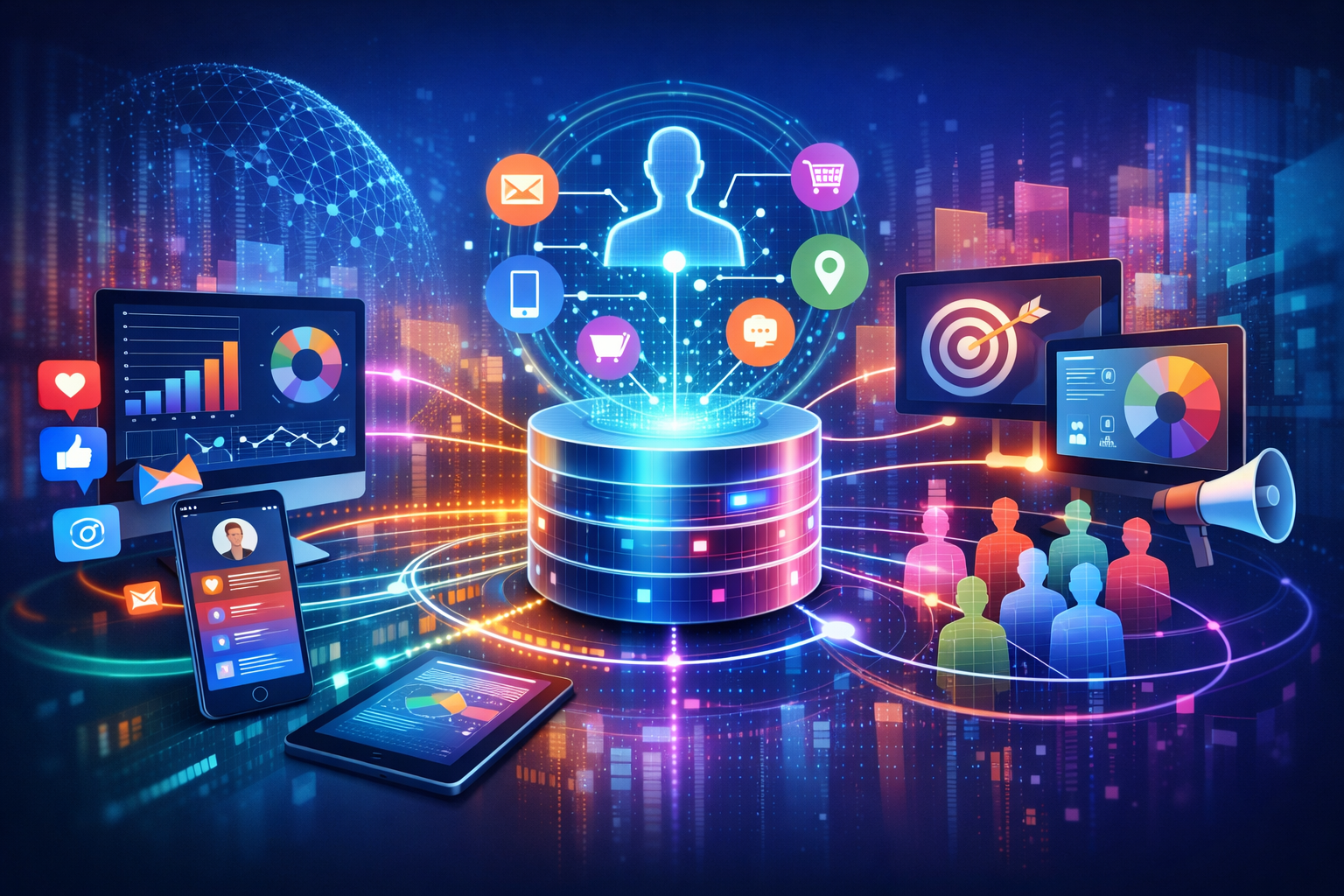
This creates a centralized view of the customer journey, helping sales and marketing teams work with the same information.
As a result:
- Messaging becomes more consistent
- Customer interactions improve
- Teams collaborate more effectively
Benefits of AI-Driven Alignment
Businesses adopting AI for sales and marketing alignment are experiencing several benefits, including:
- Better lead quality
- Higher conversion rates
- Faster response times
- Improved customer experience
- Personalized communication
- Increased engagement
- Predictive insights for smarter decision-making
- Workflow automation
- Higher productivity
- Shared analytics and stronger collaboration
Many organizations report major productivity improvements when AI is strategically integrated into workflows.
Challenges of AI Adoption
Despite its advantages, AI adoption also comes with challenges:
- Poor data quality
- Employee resistance
- Privacy concerns
- Overdependence on automation
- Lack of AI expertise
Experts emphasize that AI should support human decision-making rather than replace it entirely. Human creativity, emotional intelligence, and relationship-building remain critical in sales and marketing.
The Future of AI in Sales and Marketing
The future of sales and marketing alignment will become increasingly AI-driven. Emerging technologies such as generative AI, conversational AI, and intelligent automation are expected to further transform:
- Customer engagement
- Content creation
- Sales forecasting
- Real-time personalization
- Revenue operations
Businesses that successfully combine AI capabilities with human expertise will likely gain a major competitive advantage.
Read Also: Building a Modern Martech Stack for SaaS Companies