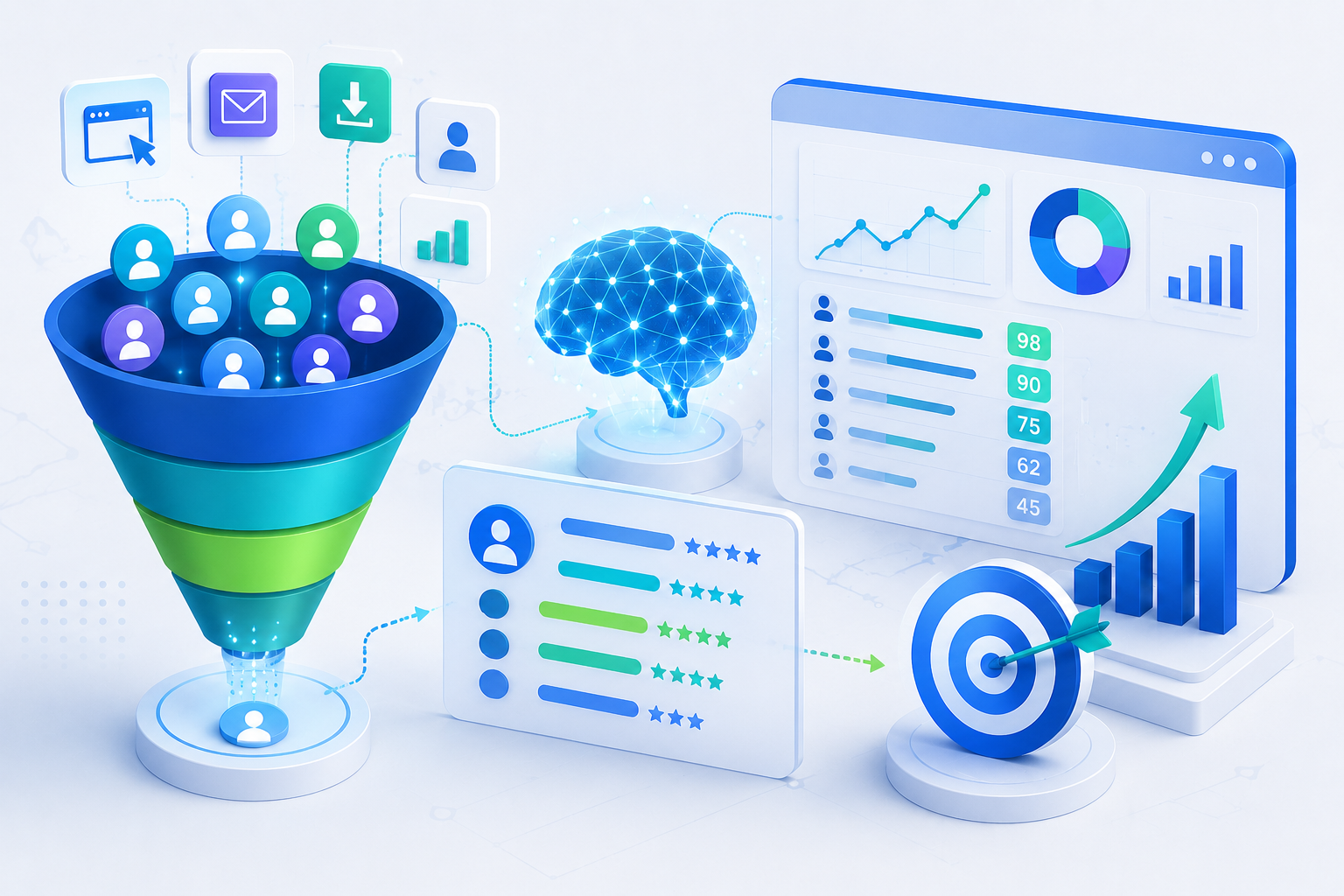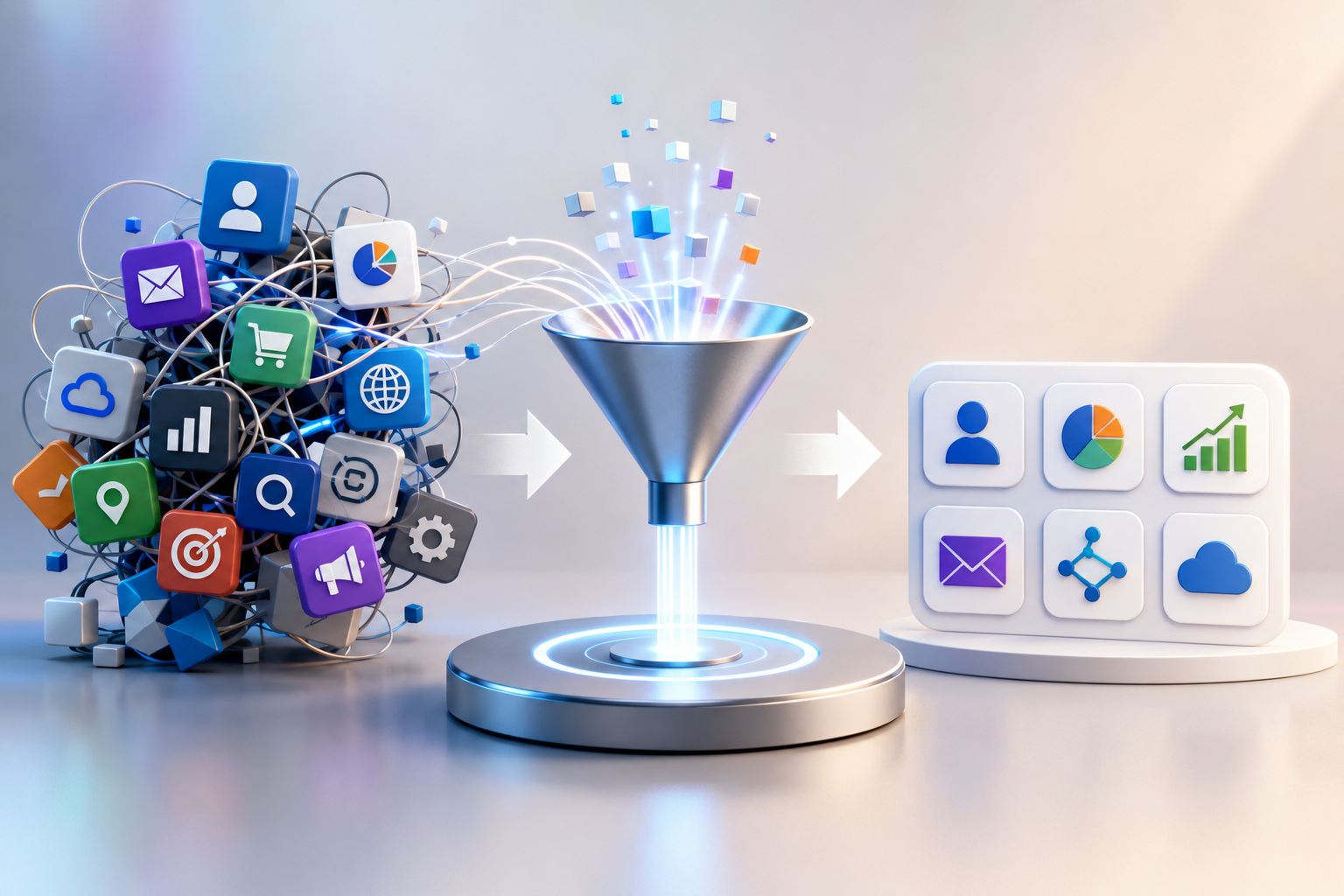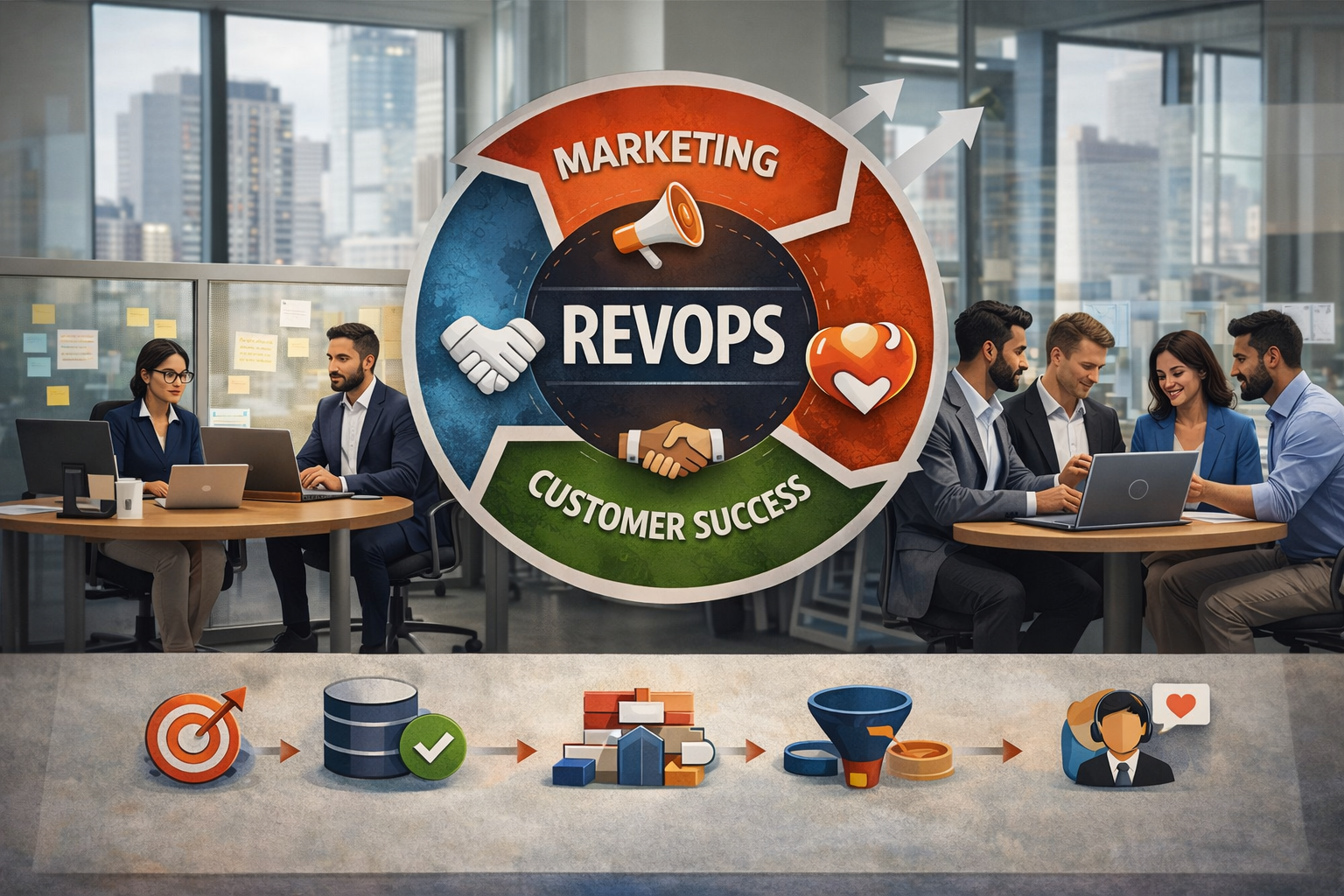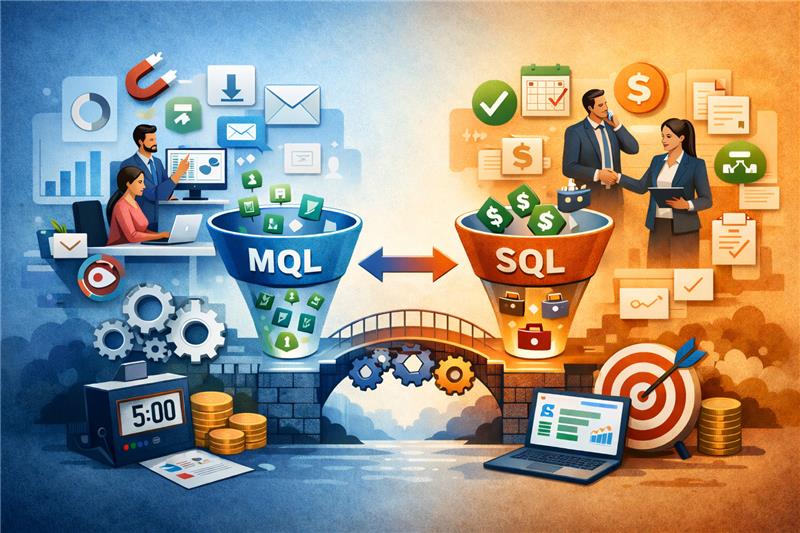

Sales and marketing alignment has been a leadership priority for years. Yet many organizations still operate with disconnected data, inconsistent definitions, fragmented workflows and technology systems that make collaboration harder rather than easier.
The problem isn’t always a lack of communication between teams. Often, it’s the technology underneath them.
Marketing may work from one view of the customer while sales operates from another. Leads can move between systems without complete context. Campaign engagement may not be visible to sales representatives. Sales activity may never make its way back into marketing systems. And when these gaps accumulate, both teams end up optimizing different parts of the customer journey.
Better technology integration can change that.
When sales and marketing systems are connected around shared data, processes and goals, organizations can create a more continuous revenue engine—from first interaction through opportunity, purchase and retention.
Why Sales and Marketing Technology Becomes Disconnected
Most organizations don’t intentionally create technology silos.
They emerge gradually.
Marketing adopts a marketing automation platform. Sales implements a CRM. Customer success adds another system. The website collects behavioral data. Advertising platforms maintain their own audiences. Revenue operations adds analytics and workflow tools.
Each system may work well independently.
The problem appears when they need to work together.
A disconnected stack can create several familiar problems:
- Duplicate customer records
- Inconsistent account and contact information
- Conflicting lead statuses
- Delayed lead handoffs
- Poor visibility into customer interactions
- Manual data entry
- Incomplete attribution
- Confusion over pipeline ownership
- Difficulty measuring marketing’s contribution to revenue
Technology integration is therefore not simply an IT initiative. It is a revenue strategy.
Start With a Shared Revenue Process
Before integrating platforms, align the teams around the process.
Technology cannot solve disagreement about what constitutes a qualified lead, when an opportunity should be created or who owns an account.
Sales and marketing should jointly define the customer journey.
For example:
Awareness → Engagement → Marketing Qualified Lead → Sales Qualified Lead → Opportunity → Customer → Expansion
For every stage, define:
- Entry criteria
- Exit criteria
- Owner
- Required data
- Triggered actions
- Service-level expectations
- Success metric
Once this process is agreed upon, technology can be configured to support it.
Without this foundation, organizations often end up automating inconsistent processes faster.
Create a Shared Customer Data Foundation
Sales and marketing alignment depends on a shared understanding of the customer.
That requires more than simply connecting two applications.
Organizations should establish a common customer data model covering:
- Accounts
- Contacts
- Leads
- Opportunities
- Campaigns
- Products
- Customer interactions
- Lifecycle stages
- Consent and preferences
A unified data model allows teams to answer basic questions consistently:
Who is this customer?
What has this customer done?
Where are they in the buying journey?
Who owns the relationship?
What should happen next?
This becomes particularly important in account-based marketing, where marketing and sales need a shared view of multiple stakeholders within the same organization.
Integrate the CRM and Marketing Automation Platform
The CRM and marketing automation platform are often the most important systems to connect.
A good integration should enable bidirectional information flow.
Marketing should be able to see relevant sales activity, such as:
- Opportunity stage
- Sales engagement
- Meetings
- Calls
- Closed-lost reasons
- Customer status
Sales should be able to see relevant marketing activity, such as:
- Content engagement
- Campaign participation
- Website behavior
- Webinar attendance
- Email interactions
- Lead scores
- Account engagement
The objective is not to expose every piece of data to everyone.
It is to make the right context available at the right moment.
Establish One Definition of a Qualified Lead
Few things damage sales and marketing alignment more than competing definitions of lead quality.
Marketing might define a lead as qualified because it downloaded content and reached a scoring threshold.
Sales may disagree because the prospect has no budget, authority or current need.
Technology can help enforce a shared definition—but the definition must come first.
A useful qualification framework might consider:
- Firmographic fit
- Behavioral engagement
- Buying intent
- Problem relevance
- Timing
- Existing relationship
- Account potential
Instead of relying on a single score, organizations can combine these signals into a qualification model.
For example:
Fit + Intent + Engagement = Sales-readiness
The specific formula will vary by business. The important principle is that sales and marketing agree on what the signals mean.
Automate the Handoff
Once a lead meets agreed qualification criteria, technology should make the handoff as frictionless as possible.
An automated workflow can:
- Identify a qualified lead.
- Assign the appropriate salesperson.
- Create or update the CRM record.
- Transfer relevant engagement history.
- Notify the salesperson.
- Start an SLA timer.
- Trigger follow-up if no action occurs.
- Return the lead to marketing when appropriate.
This eliminates unnecessary manual work and reduces the chance that qualified opportunities disappear between systems.
But automation should not mean “send everything to sales.”
The objective is to improve signal quality, not simply increase lead volume.
Give Sales Context, Not Just Leads
One of the most valuable outcomes of integration is context.
Imagine a salesperson receives a notification that an account has become highly engaged.
A weak notification says:
“New lead assigned.”
A stronger one provides context:
“Three people from the account attended the product webinar, visited the pricing page twice and downloaded the implementation guide in the last seven days.”
The second version gives the salesperson a reason to act and a starting point for the conversation.
This is where integrated technology can make sales outreach more relevant without requiring salespeople to manually research every interaction.
Close the Feedback Loop
Integration shouldn’t stop when marketing sends a lead to sales.
The flow needs to go in both directions.
Sales feedback can help marketing understand:
- Why leads are being rejected
- Which industries convert best
- Which objections appear most often
- Which campaigns produce pipeline
- Which content influences opportunities
- Why deals are being lost
- Which accounts show genuine buying intent
This information can then improve targeting, scoring, content and campaign strategy.
A closed-loop system creates a continuous learning cycle:
Marketing generates demand → Sales engages → Sales provides feedback → Marketing improves targeting → Better demand is generated.
That is far more valuable than simply passing leads from one system to another.
Connect Technology Around the Account
For B2B organizations, account-level integration is becoming increasingly important.
A single contact rarely represents the entire buying process.
Multiple stakeholders may interact with marketing content, attend events, engage with sales and influence the final decision.
Technology should therefore allow teams to view engagement at both the individual and account level.
For example:
Account engagement score
- 5 stakeholders identified
- 3 active in the last 30 days
- 2 high-intent behaviors
- 1 open opportunity
- 4 relevant content interactions
This gives sales and marketing a common picture of account momentum.
It also supports coordinated account-based marketing programs where both teams target the same strategic accounts.
Use Automation to Remove Friction
Integration creates the foundation. Automation turns that foundation into operational efficiency.
Useful automation opportunities include:
- Lead assignment
- Account routing
- Lead enrichment
- Data synchronization
- Lifecycle-stage updates
- Follow-up reminders
- Sales alerts
- Campaign enrollment
- Lead recycling
- Opportunity notifications
- Customer handoffs
The best automation isn’t necessarily the most sophisticated.
It is the automation that removes repetitive work while preserving human judgment where it matters.
Don’t Integrate Everything
A common mistake is assuming that better integration means connecting every system to every other system.
It doesn’t.
Every integration creates dependencies, governance requirements and potential failure points.
Instead, prioritize integrations based on business value.
Ask:
- Does this data affect revenue decisions?
- Is the information needed by both teams?
- How frequently does it change?
- Can the process be automated?
- What happens if the systems remain disconnected?
This helps organizations avoid building an unnecessarily complicated technology architecture.
Measure Alignment With Revenue Metrics
Sales and marketing alignment should ultimately be measured through shared outcomes.
Useful metrics include:
Pipeline contribution
How much qualified pipeline is generated or influenced by marketing?
Conversion rates
How effectively do prospects move from one stage to another?
Lead response time
How quickly does sales act on qualified opportunities?
Sales acceptance rate
What percentage of marketing-qualified leads are accepted by sales?
Opportunity velocity
How quickly do qualified opportunities progress?
Win rate
Are better-qualified opportunities producing better conversion?
Customer acquisition cost
Is the integrated process improving the economics of growth?
Revenue efficiency
How much revenue or gross profit is produced relative to sales and marketing investment?
These metrics create shared accountability.
Instead of marketing optimizing for leads and sales optimizing for closed deals, both teams can optimize for profitable revenue growth.
Build a Technology Governance Model
Integration is not a one-time technical project.
Data structures change. Platforms evolve. New applications are introduced. Teams modify workflows.
Organizations therefore need clear governance.
Define:
- System owners
- Data owners
- Integration owners
- Data-quality standards
- Naming conventions
- Lifecycle definitions
- Access permissions
- Change-management procedures
- Reporting standards
A revenue operations or marketing operations function can often serve as the connective layer between business teams and technology teams.
The Role of AI in Sales and Marketing Alignment
AI adds another layer of opportunity—and complexity.
Integrated customer data can support AI applications such as:
- Lead prioritization
- Account scoring
- Next-best-action recommendations
- Personalized content
- Sales research
- Forecasting
- Conversation intelligence
- Campaign optimization
But AI is only as useful as the data and processes underneath it.
If sales and marketing systems contain duplicate records, outdated information and inconsistent lifecycle stages, AI can amplify those problems rather than solve them.
The lesson is straightforward:
Data integration comes before intelligent automation.
A Practical Roadmap for Leaders
Organizations don’t need to rebuild their entire technology stack to improve alignment.
A phased approach is usually more effective.
Phase 1: Diagnose
Map the customer journey, systems, data flows and major friction points.
Phase 2: Align
Agree on lifecycle stages, qualification criteria, ownership and shared KPIs.
Phase 3: Integrate
Connect the CRM, marketing automation platform and highest-value data sources.
Phase 4: Automate
Automate handoffs, routing, alerts and repetitive data-management processes.
Phase 5: Optimize
Use performance data and sales feedback to improve scoring, campaigns, workflows and customer experiences.
Phase 6: Scale
Extend the operating model across regions, products, channels and customer lifecycle stages.
The Bottom Line
Sales and marketing alignment isn’t achieved by putting more technology into the stack.
It happens when technology creates a shared operating system for revenue.
That means common data, common definitions, connected workflows, visible customer context and shared accountability.
The most effective organizations don’t ask whether sales and marketing are using the same tools.
They ask a more important question:
Can both teams see the same customer, act on the same signals and work toward the same business outcome?
When the answer is yes, technology stops being a source of friction and becomes a force multiplier for revenue growth.
Read Also: Building a High-Performing Martech Stack on a Budget