
For years, large B2B purchases followed a familiar pattern: a buyer identified a need, contacted a sales representative, attended product demonstrations, negotiated pricing, and eventually signed a contract.
That model is changing.
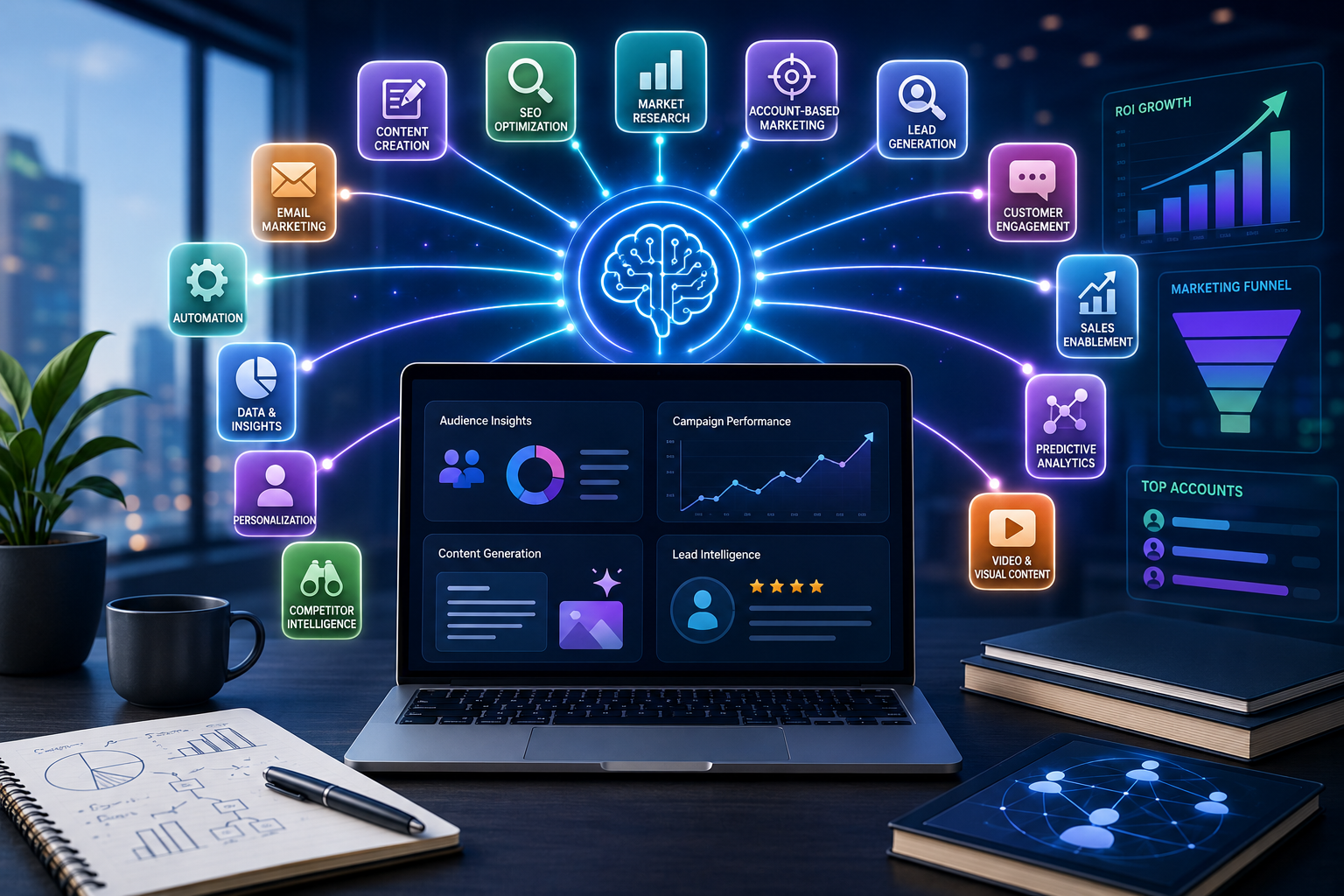
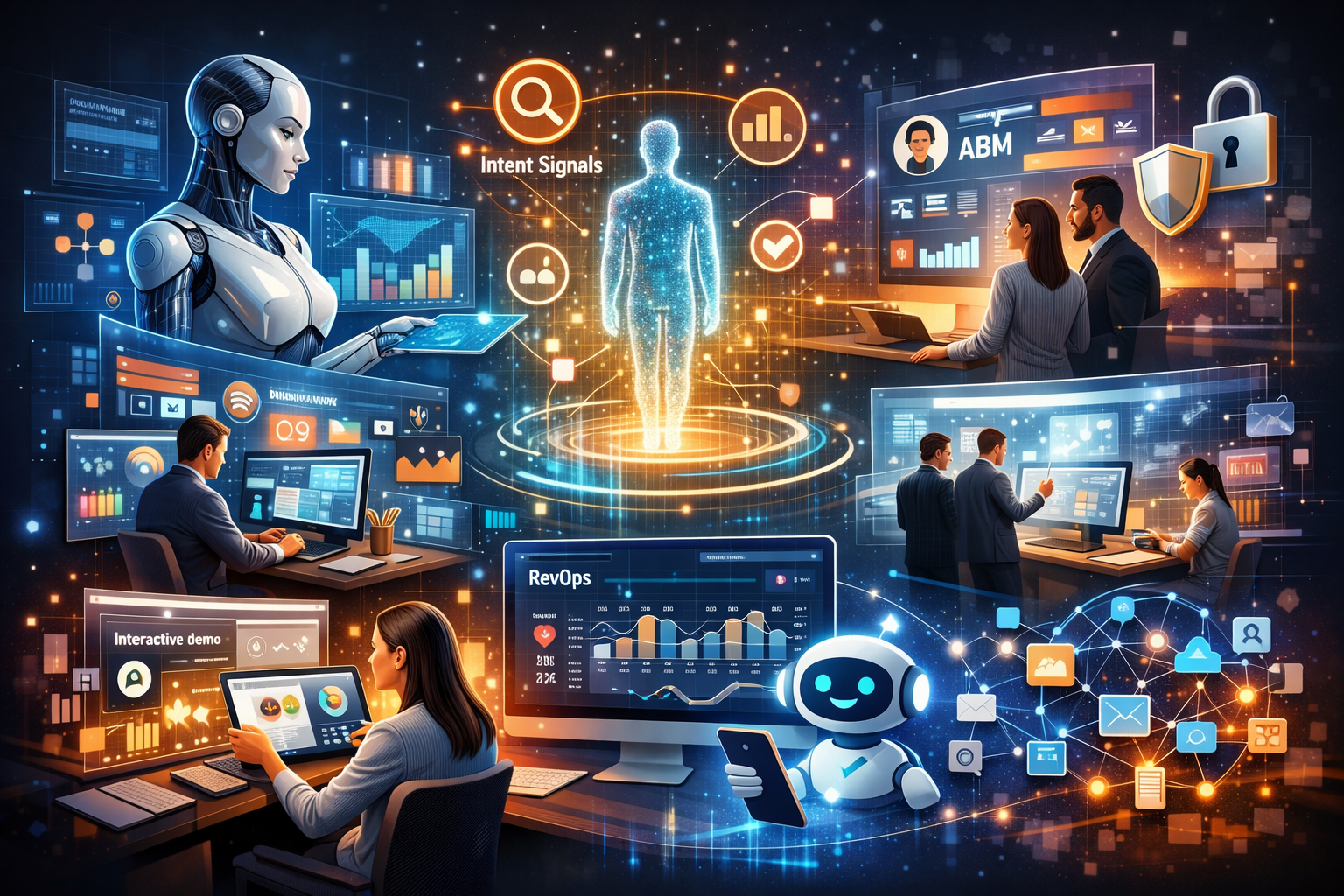
Today, even buyers making complex, high-value purchases increasingly want to research, compare, evaluate, and build internal consensus before speaking with a salesperson. Digital content, AI tools, online product information, customer reviews, interactive demos, and self-service platforms are allowing buyers to take control of more of the purchasing journey.
According to Gartner research published in 2026, 67% of B2B buyers prefer a sales-rep-free experience, while 70% prefer a completely digital, self-service buying experience. The same research found that 45% of buyers had used generative AI during a recent purchase.
The important point is that self-service does not mean salespeople are disappearing. Instead, the role of sales is moving from information provider to trusted advisor, validator, and risk reducer.
What Is Driving the Shift Toward Self-Service?
1. Buyers Have More Information Than Ever
B2B buyers no longer need to depend entirely on vendors to understand a product.
A prospective customer can research competitors, read reviews, watch product demonstrations, compare pricing models, explore case studies, and ask AI tools for recommendations—all before contacting a sales team.
IDC describes this new environment as one where buyers are increasingly overwhelmed by the amount of information available rather than struggling to find information. The challenge is determining which vendors and solutions are actually relevant to their situation.
This makes the quality and accessibility of a company’s digital information increasingly important.
2. AI Is Accelerating Independent Research
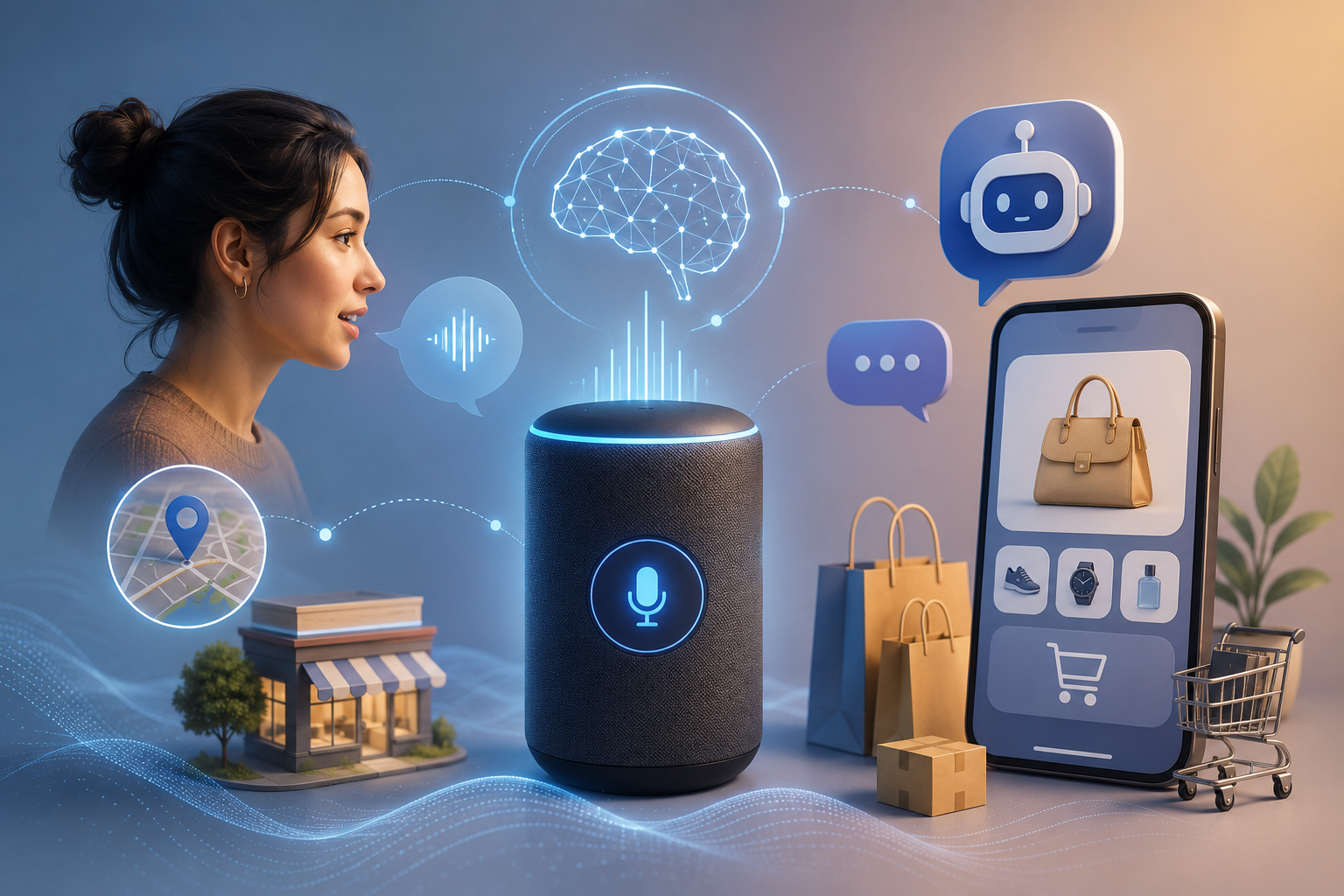
Generative AI has made self-directed B2B research significantly easier.
Instead of visiting dozens of websites, buyers can ask AI tools questions such as:
- Which platforms are best for my industry?
- How does one vendor compare with another?
- What are the implementation risks?
- What features should we prioritize?
- What questions should we ask during a vendor evaluation?
Gartner found that 45% of B2B buyers surveyed had used GenAI during a recent purchase, primarily to research vendors and products.
Research from Semrush similarly found that B2B professionals are using AI to define categories, compare solutions, and create vendor shortlists before engaging with sales teams.
As AI becomes better at research and comparison, buyers can enter conversations with salespeople already knowing the basics.
3. Buyers Want Less Friction
Large purchases involve significant risk, but that does not mean buyers want a complicated purchasing experience.
In fact, complexity can make buyers more likely to look for self-service tools.
A buyer may want to:
- Explore the product independently
- Understand use cases
- Calculate potential ROI
- Compare plans
- Review integrations
- Read customer stories
- Test the product
- Invite colleagues to evaluate it
- Request pricing or a proposal only when necessary
This approach allows the buying team to move at its own pace instead of coordinating every step around a sales representative’s availability.
4. Buying Committees Are Becoming More Complex
Large B2B purchases rarely involve just one decision-maker.
Forrester’s 2026 research found that the typical B2B buying decision involves 13 internal stakeholders and nine external influencers, with even more people involved in complex or strategic purchases.
That creates an important challenge.
A salesperson cannot realistically have a separate conversation with every person involved in a purchase.
Instead, organizations need digital experiences that allow multiple stakeholders to independently access the information they need.
One person may care about pricing. Another may focus on security. IT may investigate integrations. Finance may evaluate ROI. Executives may want business outcomes.
Self-service content can support all of them simultaneously.
Self-Service Does Not Mean “No Salespeople”
This is perhaps the biggest misconception about the trend.
Large B2B purchases still require human interaction—particularly when the decision involves significant financial investment, organizational change, security concerns, or implementation risk.
Gartner’s 2026 research illustrates this clearly: while buyers increasingly prefer digital and self-service experiences, 69% said they turn to sales representatives to validate AI-generated insights.
The sales conversation is therefore changing.
Instead of:
“Let me explain what our product does.”
The conversation increasingly becomes:
“Let’s help you determine whether this is the right solution for your specific situation.”
That is a much more consultative role.
The New B2B Buying Journey
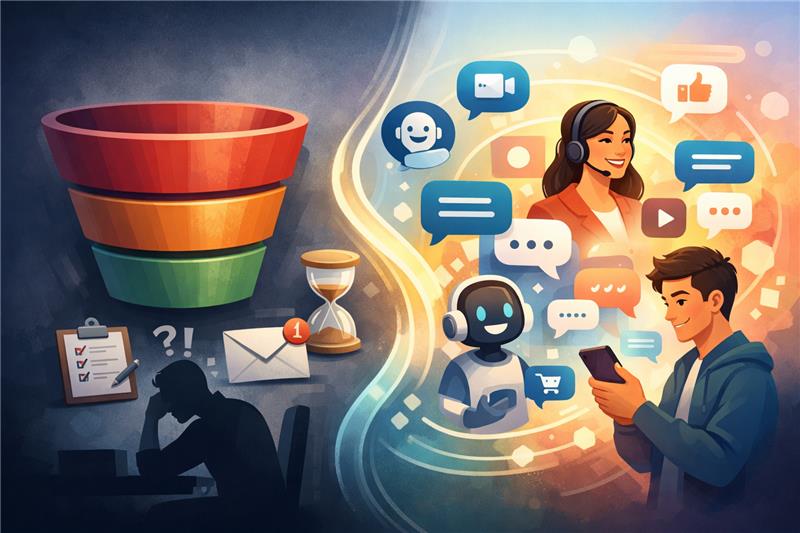
The traditional journey looked something like this:
Marketing → Sales → Demo → Proposal → Negotiation → Purchase
The modern journey is increasingly:
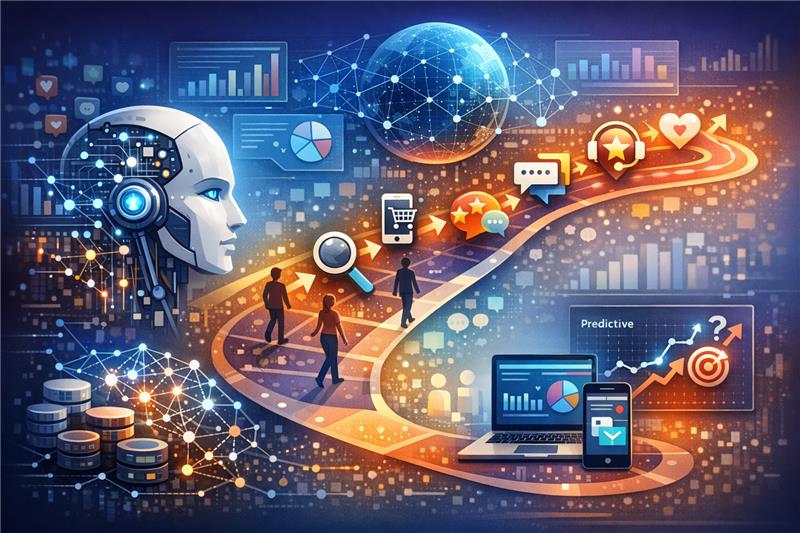
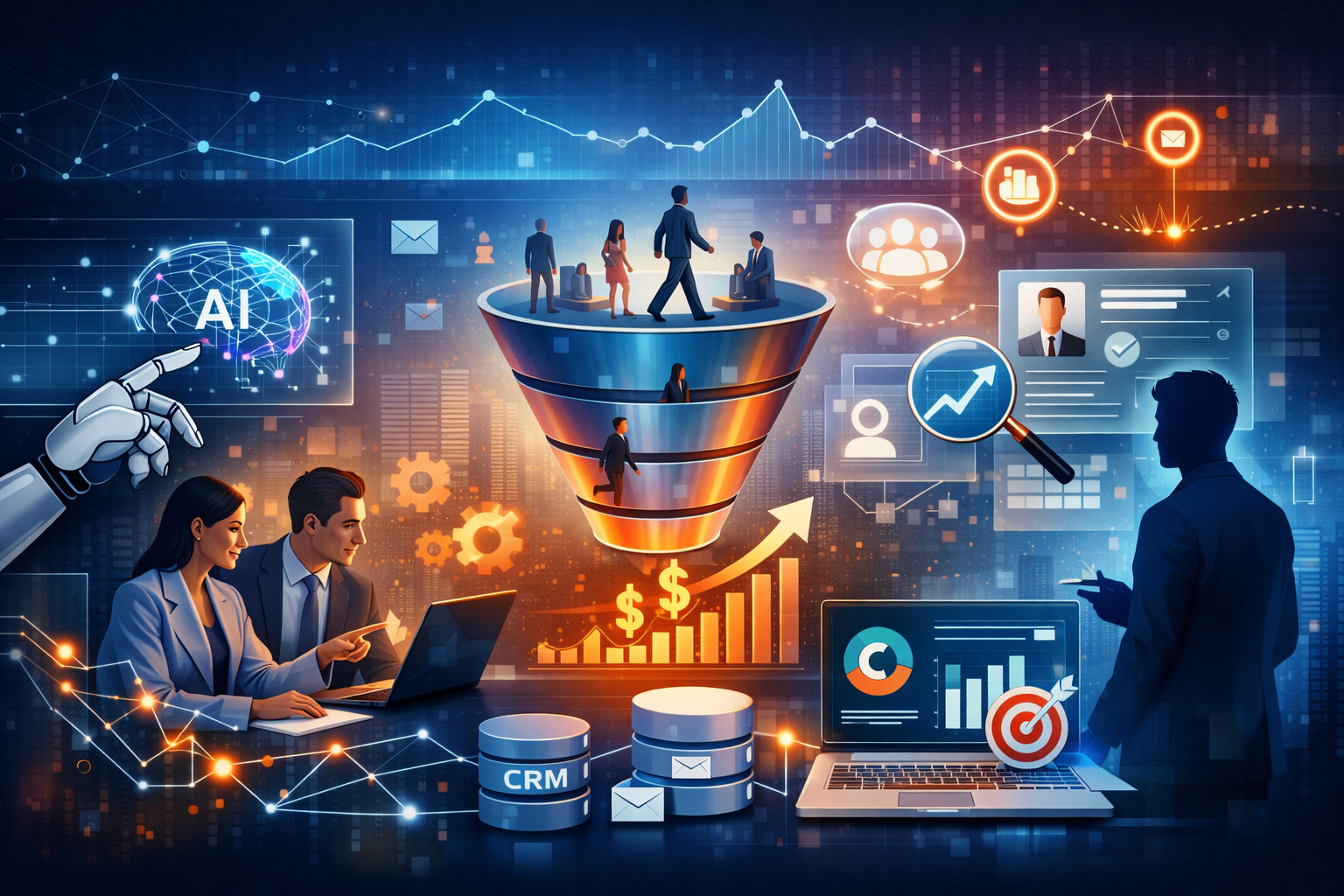
Problem recognition → AI/search research → Vendor comparison → Internal discussion → Shortlist → Self-service evaluation → Sales validation → Purchase
Sales may enter the journey later than before.
That means companies cannot assume that generating a lead is the first opportunity to influence a buyer.
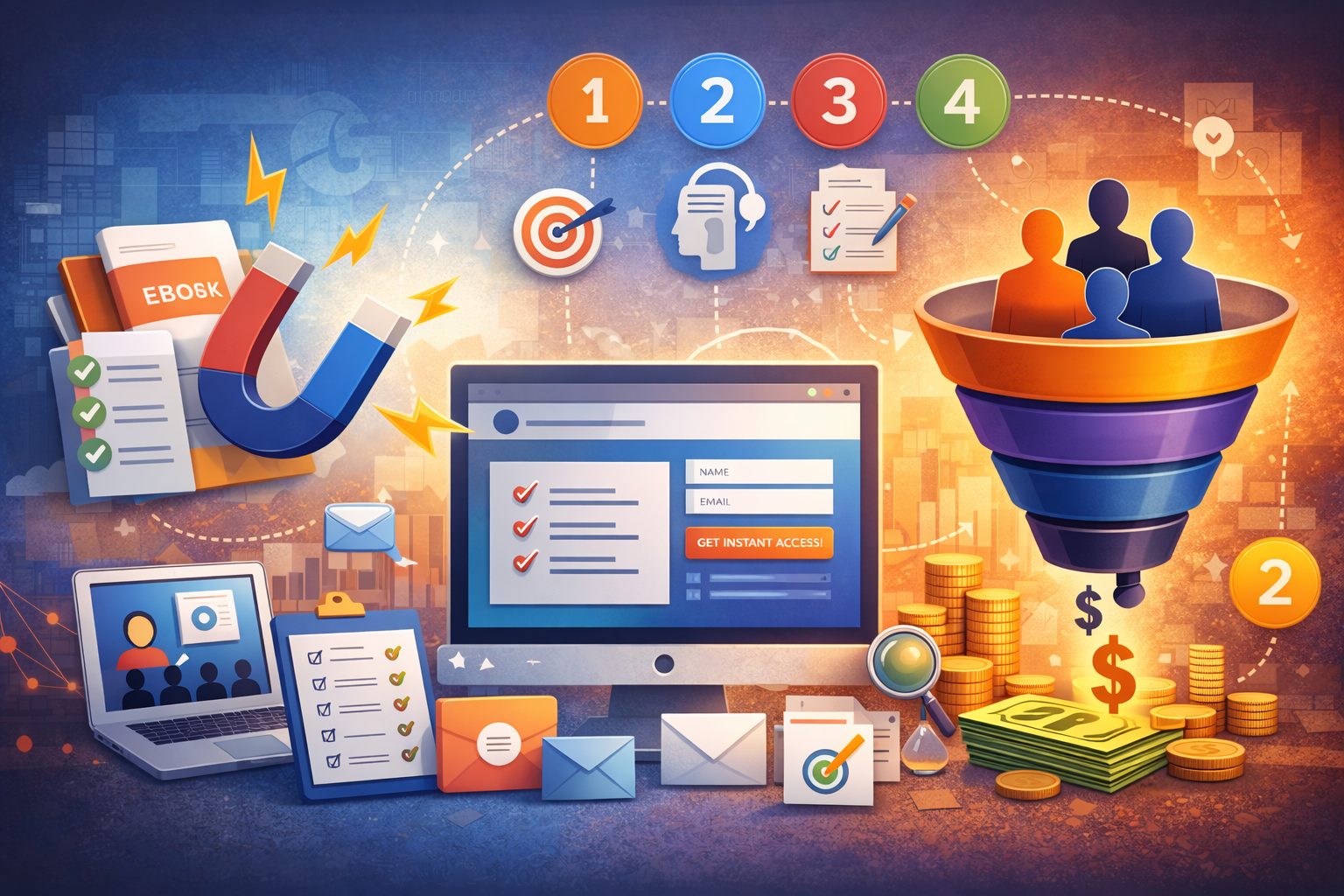
Influence increasingly happens before the buyer ever fills out a form.
What Companies Need to Do Differently
Build a Strong Self-Service Content Experience
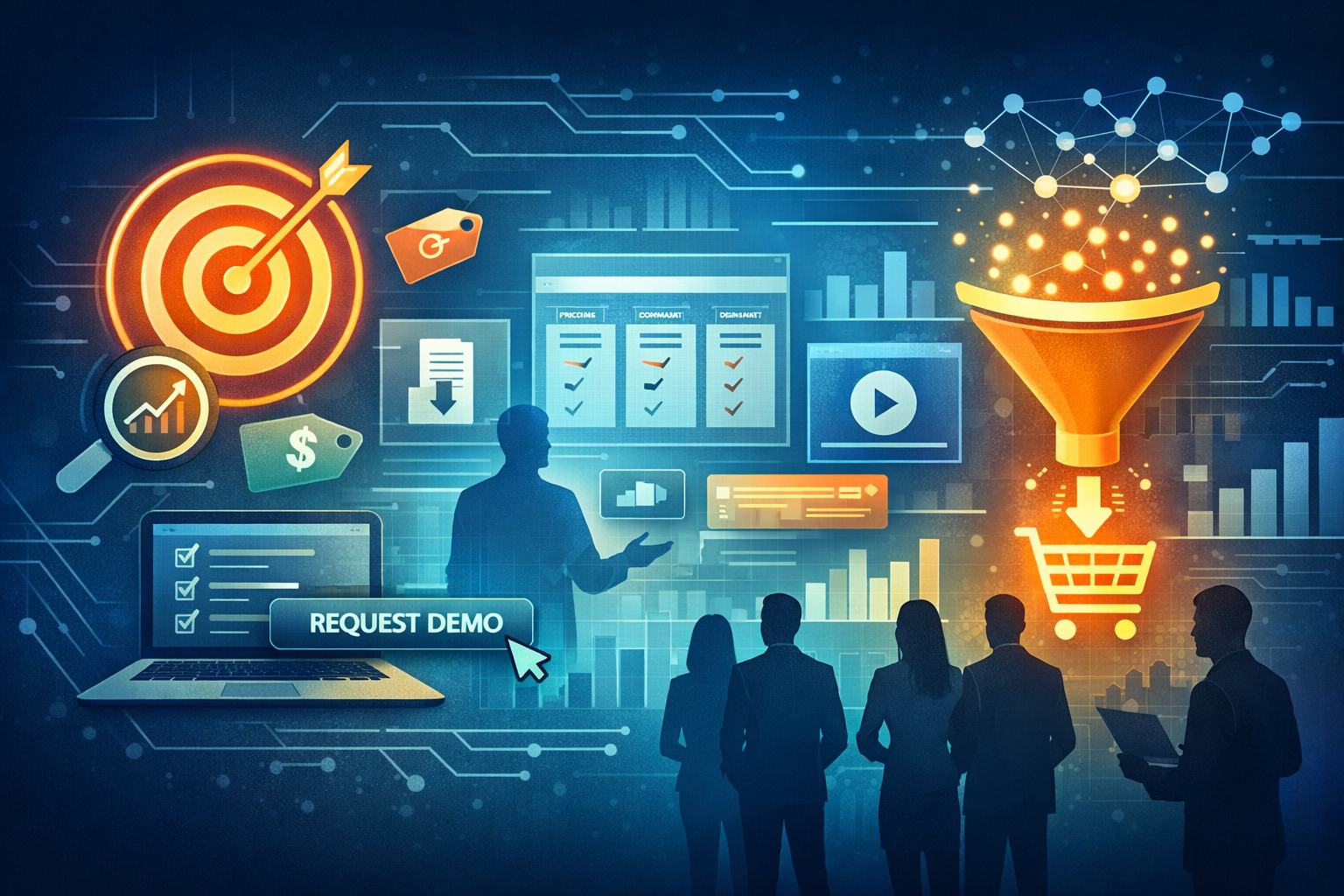
Companies should make it easy for buyers to answer common questions without contacting sales.
Important resources include:
- Detailed product pages
- Pricing information where appropriate
- ROI calculators
- Comparison pages
- Customer case studies
- Product documentation
- Security information
- Implementation guides
- FAQs
- Interactive demos
- Industry-specific use cases
The objective is simple: help buyers make progress without waiting for a salesperson.
Optimize Content for AI Discovery
As buyers increasingly use AI for research, companies also need to think beyond traditional search engines.
Information should be structured, accurate, specific, and easy for AI systems to understand.
Generic marketing claims such as “industry-leading solution” are unlikely to help a buyer determine whether a product is right for them.
Specific evidence is more valuable:
- Who is the product designed for?
- What problems does it solve?
- How does implementation work?
- What integrations are available?
- What results have customers achieved?
- What are the limitations?
- How does it compare with alternatives?
The more useful the information, the easier it is for buyers—and AI systems—to evaluate the company.
Sales Teams Need to Become Validators
If buyers are doing more research themselves, sales teams need to provide something buyers cannot easily get from a website or AI assistant.
That could include:
- Industry expertise
- Personalized recommendations
- Implementation guidance
- Risk assessment
- Business-case development
- Negotiation
- Stakeholder alignment
- Complex technical discussions
In other words, salespeople need to focus on high-value moments rather than repeating information already available online.
The Biggest Opportunity for B2B Marketers
The rise of self-service buying creates an important opportunity for marketing teams.
Marketing is no longer simply responsible for generating leads that sales can pursue.
It increasingly needs to create the digital buying environment itself.
That means asking:
Can a potential customer understand our solution without speaking to us?
Can they compare us with competitors?
Can they build an internal business case?
Can they demonstrate our value to their CFO, CIO, procurement team, or executive leadership?
Can they get enough information to confidently take the next step?
If the answer is no, the company may be creating unnecessary friction in its own sales process.
The Future Is Hybrid, Not Fully Self-Service
The future of B2B purchasing is unlikely to be completely human or completely automated.
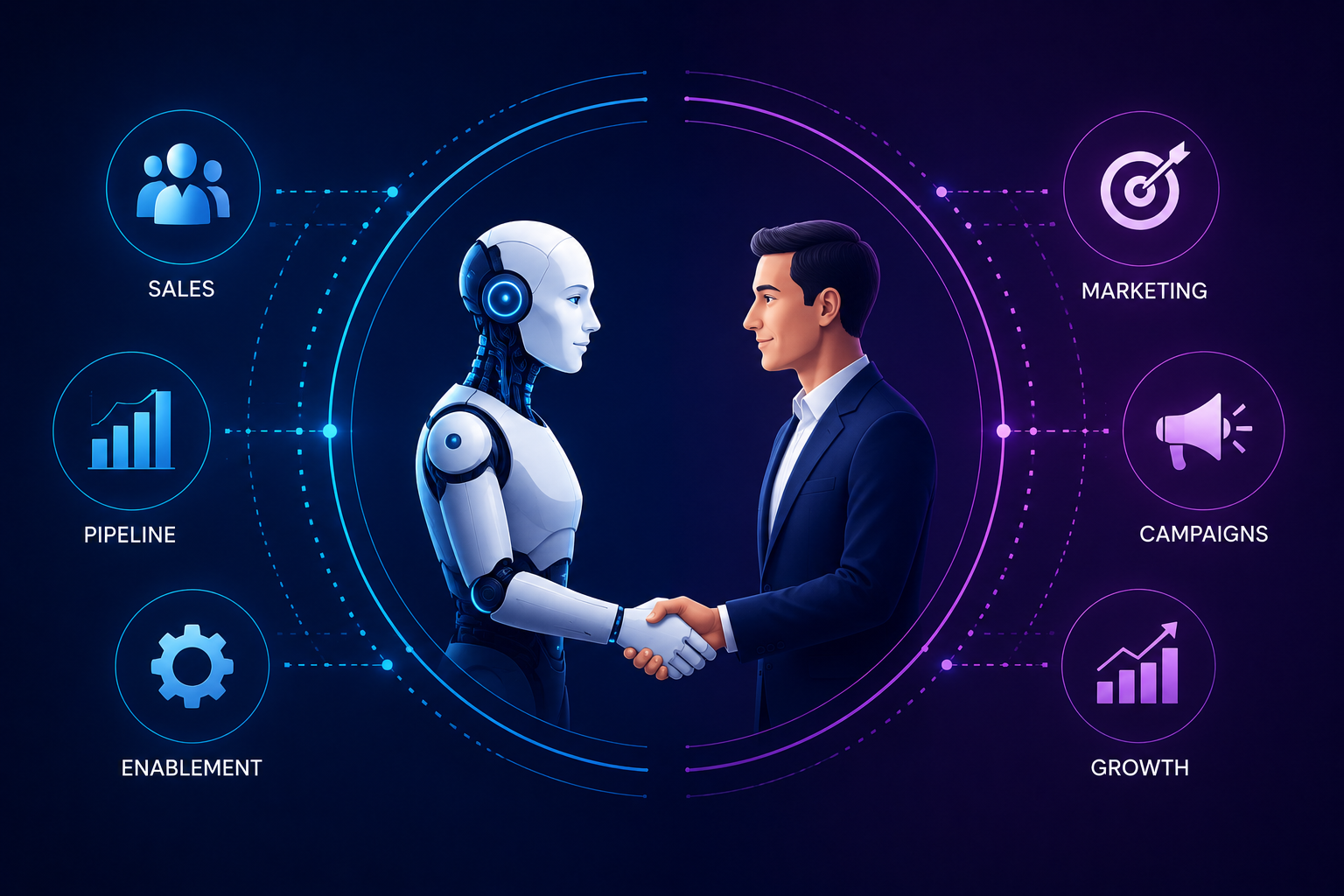
Instead, it will be a hybrid buying model.
AI and digital channels will handle more research, discovery, comparison, education, and routine transactions.
Salespeople will increasingly handle complex decisions, relationship building, validation, negotiation, and situations where trust matters.
The companies that succeed will not necessarily be those that eliminate sales involvement.
They will be the companies that make sales involvement more valuable.
Large B2B purchases are becoming more self-service because buyers have better information, better digital tools, and increasingly capable AI assistants. But as the buying journey becomes more autonomous, trust becomes even more important.
The winning B2B strategy is therefore not simply to sell less.
It is to make it easier for buyers to buy—and make human interaction count when it matters most.
Read Also: