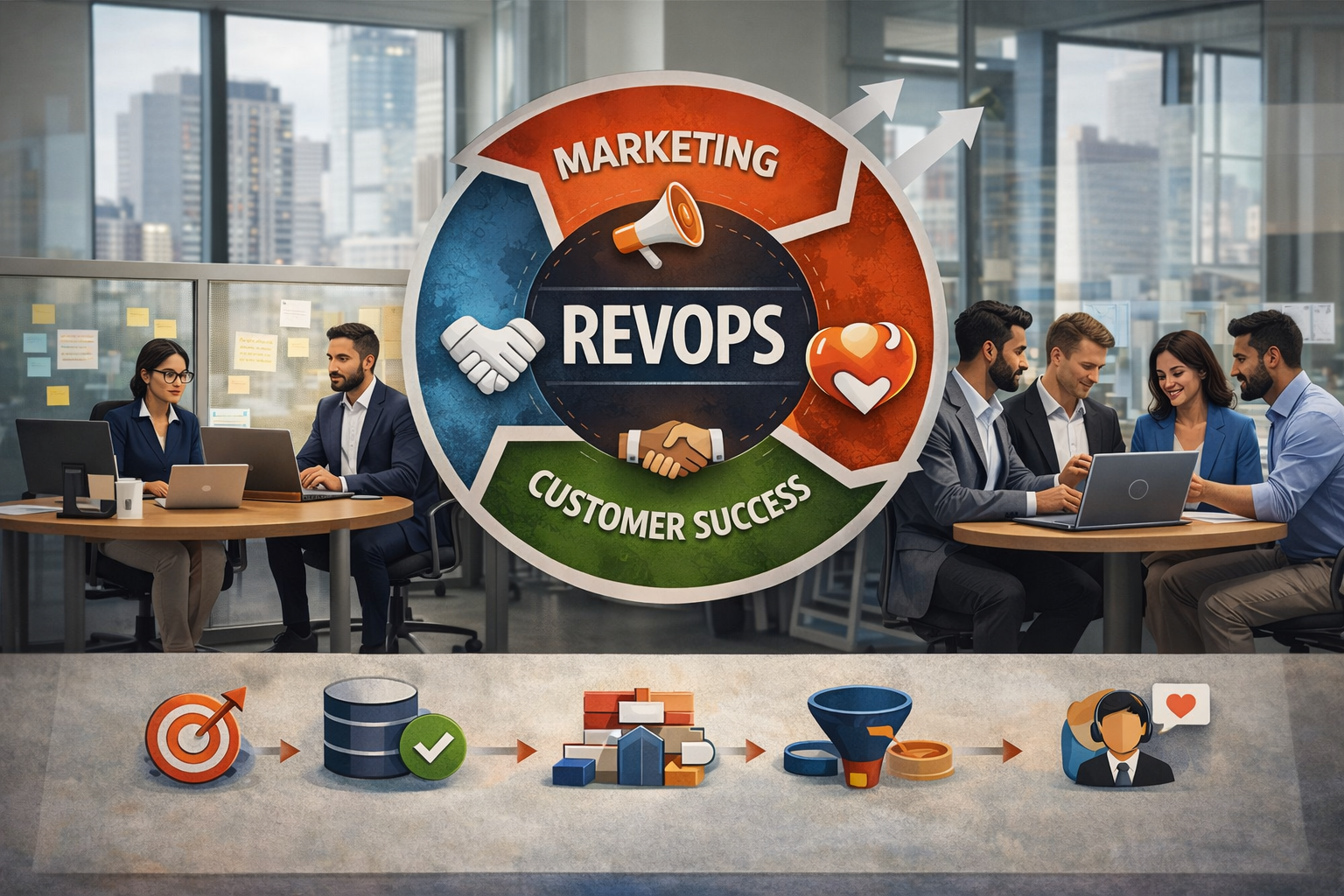

Account-Based Marketing (ABM) has moved far beyond simply running targeted ads at a list of companies. Modern B2B teams need to identify the right accounts, understand when those accounts are showing buying signals, personalize engagement, coordinate sales and marketing activity, and connect every interaction back to revenue.
That makes the ABM technology stack an important part of the strategy—not just a collection of software subscriptions.
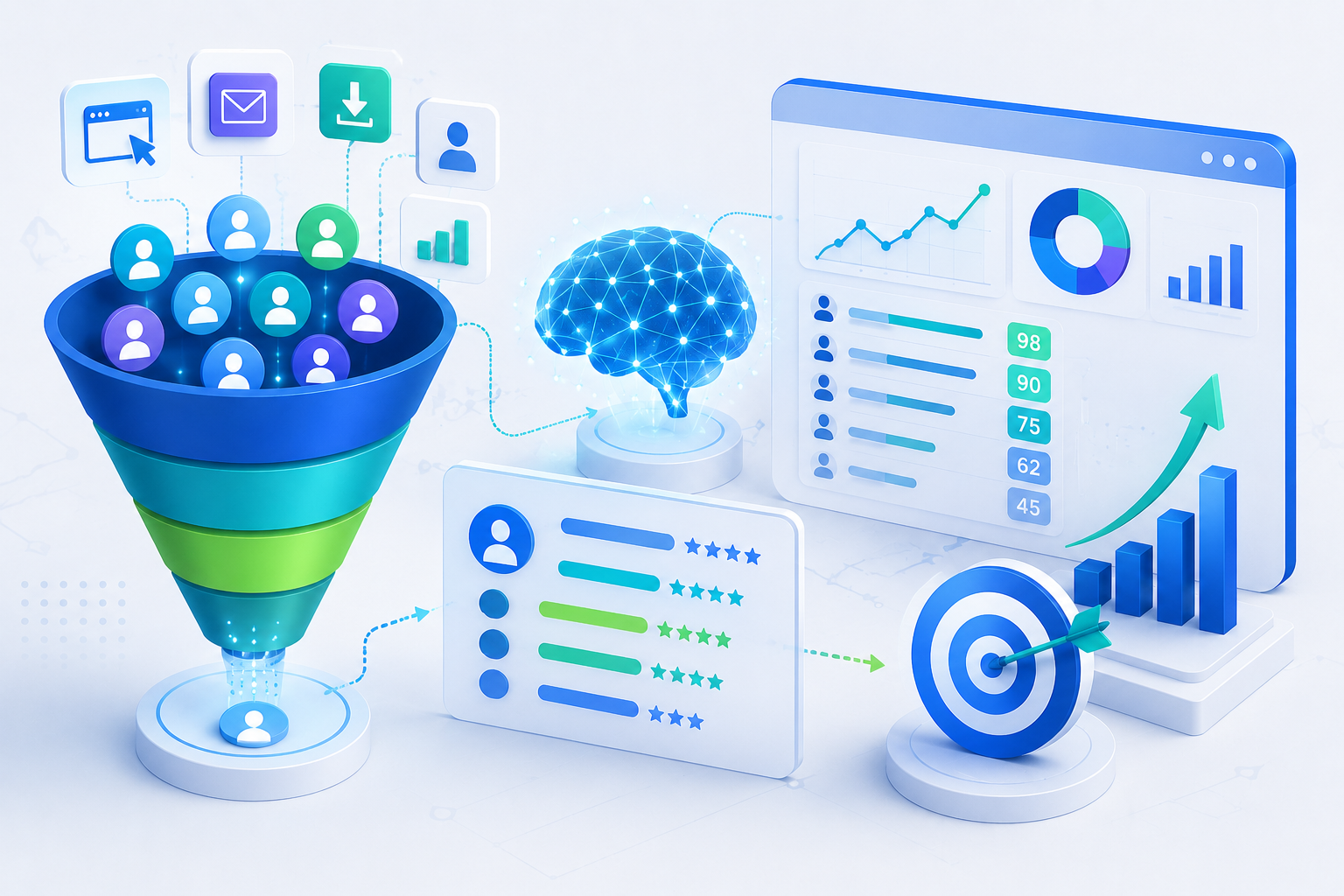
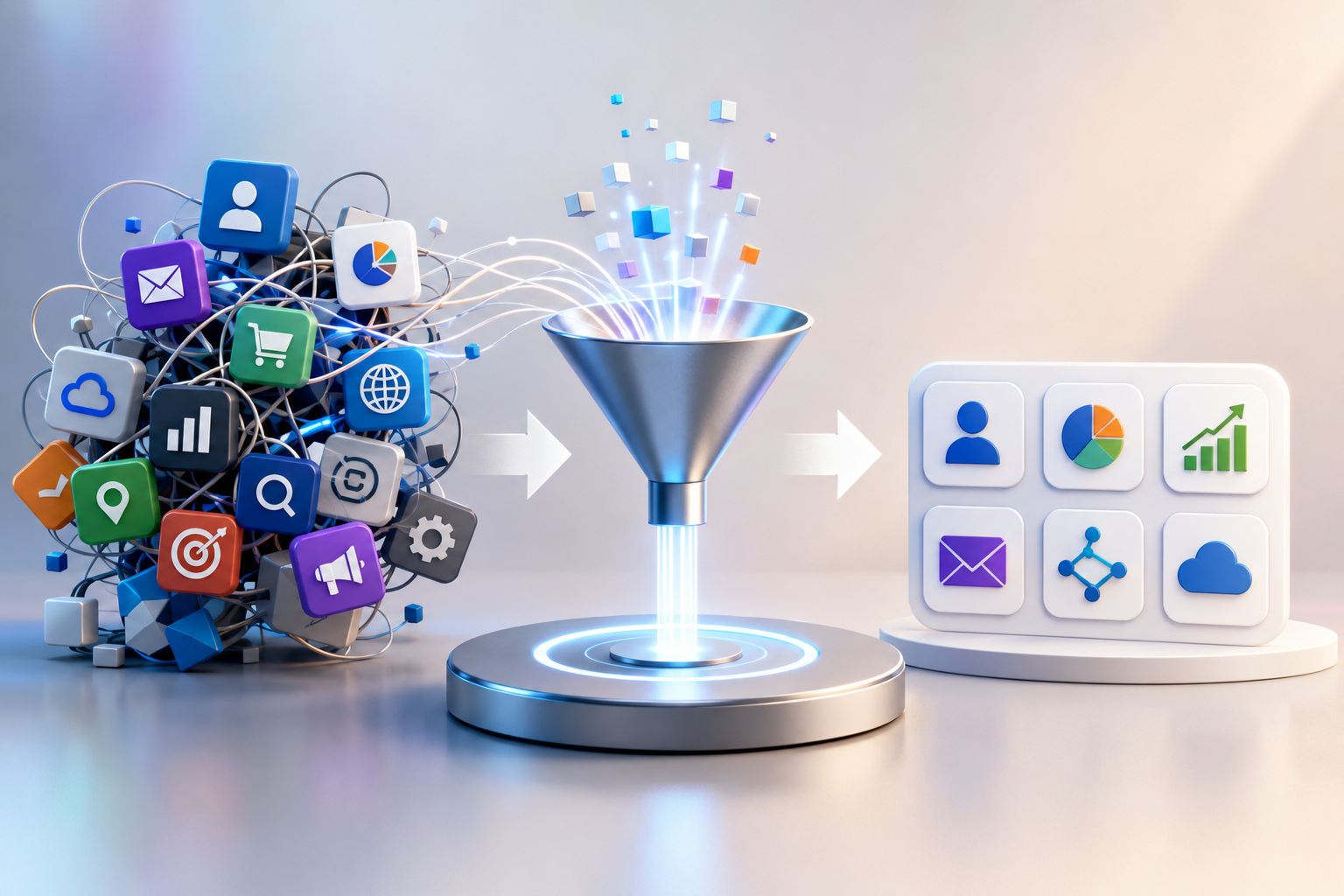
A modern ABM stack can be viewed across six core layers: data, identity, intent, orchestration, execution, and measurement.
The key is not to buy every tool available. It is to build an integrated stack around the specific gaps in your revenue process.
What Is an ABM Technology Stack?
An ABM technology stack is the collection of platforms B2B marketing and sales teams use to execute account-based campaigns.
Instead of focusing primarily on individual leads, ABM technology helps teams work at the account level—identifying organizations that fit the ideal customer profile (ICP), tracking engagement across multiple stakeholders, detecting intent, and coordinating personalized campaigns.
A typical stack includes:
- CRM and account management
- Contact and company data
- Intent and buying signals
- Marketing automation
- Account-based advertising
- Sales engagement
- Website personalization
- Content personalization
- Analytics and attribution
The exact combination depends on company size, sales cycle, CRM, budget, and ABM maturity.
1. CRM: The Foundation of Your ABM Stack
Every ABM program needs a central source of truth.
Your CRM should contain information about target accounts, contacts, opportunities, activities, pipeline stages, and customer relationships. More importantly, it should allow marketing and sales teams to look at engagement at both the contact and account level.
Popular choices include Salesforce and HubSpot.
A CRM gives your ABM program the foundation to answer questions such as:
- Which accounts are currently in the pipeline?
- Which target accounts have engaged with marketing?
- How many contacts are active within an account?
- Which accounts have gone cold?
- Which campaigns are influencing opportunities?
- Where are marketing and sales activities concentrated?
Without reliable CRM data, even sophisticated ABM platforms can struggle.
What to Look For
When selecting a CRM, consider:
- Account hierarchies
- Contact-to-account mapping
- Custom account fields
- Lead and opportunity management
- Marketing automation integrations
- Reporting and attribution
- Bi-directional integrations with other ABM tools
2. Account & Contact Data: Know Who You’re Targeting
ABM depends on accurate account data.
Your team needs to know which companies fit your ICP and who the relevant decision-makers, influencers, and buying committee members are.
Data and enrichment platforms can help identify:
- Company size
- Industry
- Revenue
- Technology used
- Geography
- Job titles
- Contact information
- Organizational structure
- Firmographic characteristics
Tools such as ZoomInfo, Apollo, and similar data providers can support this layer.
But data volume shouldn’t be the goal.
The real goal is usable account intelligence.
For example, having 100,000 contacts isn’t particularly valuable if your sales team only needs to engage 500 high-fit accounts.
What to Evaluate
When selecting a data provider, consider:
- Data accuracy
- Geographic coverage
- Industry coverage
- Contact coverage
- CRM integration
- Enrichment capabilities
- Compliance requirements
- Frequency of data updates
3. Intent Data: Know Who Is Ready to Buy
One of the biggest advantages of modern ABM technology is the ability to identify buying intent.
Intent data attempts to identify accounts that are actively researching a topic, category, problem, or solution.
For example, suppose your company sells cybersecurity software.
An account that repeatedly researches topics related to:
- Zero-trust security
- Endpoint protection
- Security compliance
- SIEM platforms
may deserve more attention than an otherwise similar account showing no relevant activity.
Platforms such as 6sense, Demandbase, and Bombora operate in the account intelligence and intent space.
Intent shouldn’t automatically mean “contact this account.”
Instead, combine:
ICP fit + intent + engagement + sales context
That produces a much stronger signal.
4. ABM Orchestration: Coordinate Marketing and Sales
Once you’ve identified your target accounts, you need a way to coordinate activity.
ABM orchestration connects signals to actions.
For example:
High-fit account shows increased intent → account score increases → SDR receives alert → account enters advertising audience → personalized email sequence begins → website experience changes → engagement is tracked in CRM.
Your orchestration layer should help answer:
- What happens when an account becomes high intent?
- Who gets notified?
- Which campaign should start?
- Which accounts should be excluded?
- How does sales activity affect marketing?
- How are account stages updated?
The best orchestration isn’t necessarily the one with the most automation. It’s the one that makes the right action happen at the right time.
5. Account-Based Advertising: Reach the Buying Committee
Advertising is still an important component of ABM, particularly for creating awareness across multiple stakeholders.
Platforms such as LinkedIn, RollWorks, Terminus, and other advertising platforms can help teams reach defined account audiences.
The advantage of account-based advertising is that you don’t necessarily need to advertise to everyone.
You can build audiences around:
- Target accounts
- Industry
- Company size
- Job function
- Seniority
- Geographic market
- Account stage
- Engagement level
For example:
Tier 1 accounts: Highly personalized advertising and content
Tier 2 accounts: Scaled personalized campaigns
Tier 3 accounts: Automated programs focused on awareness and qualification
This approach helps align advertising spend with account value.
6. Marketing Automation: Turn Signals Into Campaigns
ABM doesn’t eliminate marketing automation. It makes automation more account-centric.
Marketing automation platforms can manage:
- Email campaigns
- Lead nurturing
- Account scoring
- Forms
- Campaign workflows
- Event follow-up
- Lead routing
- Notifications
- Lifecycle management
HubSpot and Adobe Marketo Engage are common options.
The important distinction is that traditional automation might say:
“This person downloaded an ebook, so send them an email.”
ABM automation asks:
“This person belongs to a strategic account that has recently shown buying intent. What should happen across the entire account?”
That shift—from lead automation to account orchestration—is central to effective ABM.
7. Sales Engagement: Give Sales the Right Next Action
ABM fails when marketing identifies promising accounts but sales doesn’t know what to do with them.
Sales engagement platforms help SDRs and account executives coordinate outreach through:
- Email sequences
- Call tasks
- LinkedIn touches
- Follow-ups
- Account prioritization
- Activity tracking
- Automated reminders
The goal isn’t to automate every sales interaction.
It is to reduce the administrative work surrounding outreach so salespeople can spend more time on meaningful conversations.
A strong ABM workflow might look like:
Intent signal → account prioritized → buying committee identified → sales alert → personalized outreach → engagement captured in CRM
This creates a bridge between marketing intelligence and sales execution.
8. Website Personalization: Make the Experience Account-Aware
Your website is often one of the most important ABM touchpoints.
If a strategic account arrives on your website, showing exactly the same experience as an anonymous visitor may be a missed opportunity.
Website personalization tools can adapt experiences based on factors such as:
- Industry
- Company
- Campaign
- Account segment
- Previous engagement
- Buyer stage
For example, a financial-services prospect could see financial-services case studies, compliance messaging, and relevant customer stories rather than generic content.
Personalization is particularly useful for high-value accounts where the potential revenue justifies the additional effort.
9. Content Personalization: Deliver the Right Message
ABM requires content that speaks to the priorities of specific accounts or segments.
Content personalization platforms can help marketers dynamically customize landing pages, microsites, sales materials, and other experiences.
The personalization can range from simple:
“Solutions for SaaS companies”
to highly specific:
“How companies like [Account] can reduce cloud infrastructure costs.”
However, personalization should have a purpose.
Changing a company name on a landing page isn’t necessarily meaningful personalization.
Effective personalization connects the message to:
- The account’s industry
- Business challenges
- Buying stage
- Strategic priorities
- Relevant use cases
- Stakeholder concerns
10. Analytics & Attribution: Prove ABM’s Impact
ABM measurement is different from traditional demand-generation reporting.
Instead of focusing only on:
- Leads generated
- Cost per lead
- Form submissions
ABM teams should track account-level outcomes.
Important metrics include:
Account Engagement
- Target account engagement rate
- Number of engaged stakeholders
- Website engagement
- Content consumption
- Campaign engagement
Pipeline
- Accounts entering pipeline
- Pipeline velocity
- Opportunity creation
- Pipeline influenced by ABM
- Win rate
Revenue
- Revenue from target accounts
- Average contract value
- Customer acquisition cost
- Expansion revenue
- Account retention
Analytics and attribution tools can help connect marketing activity to account progression and revenue.
How to Build an ABM Stack Without Overspending
The biggest ABM technology mistake is buying software before defining the operating model.
Start with the problem.
Step 1: Define Your ICP
Identify the accounts most likely to become valuable customers.
Step 2: Create Account Tiers
For example:
- Tier 1: 25 strategic accounts
- Tier 2: 100 high-value accounts
- Tier 3: 500+ scalable accounts
Step 3: Identify Your Biggest Gap
Is it:
- Poor account data?
- Weak intent signals?
- Lack of sales alignment?
- Low engagement?
- Poor personalization?
- Inability to measure ROI?
Step 4: Build Around Your Existing Systems
If your CRM and marketing automation already work well, don’t replace them just because a new ABM platform has overlapping features.
Step 5: Integrate Before Adding More Tools
Your stack should allow data to move between systems.
For example:
CRM → intent platform → automation → advertising → sales → CRM
If every tool operates in a silo, you don’t have an ABM engine—you have a collection of subscriptions.
What Every B2B Team Actually Needs
Not every B2B company needs an enterprise ABM platform.
A smaller team might start with:
CRM + data enrichment + marketing automation + LinkedIn + analytics
A growing B2B organization might add:
Intent data + orchestration + sales engagement + personalization
An enterprise ABM program may benefit from:
CRM + data + intent + orchestration + advertising + personalization + sales engagement + advanced attribution
The right stack depends on your sales cycle, ACV, target account volume, GTM maturity, and RevOps capabilities.