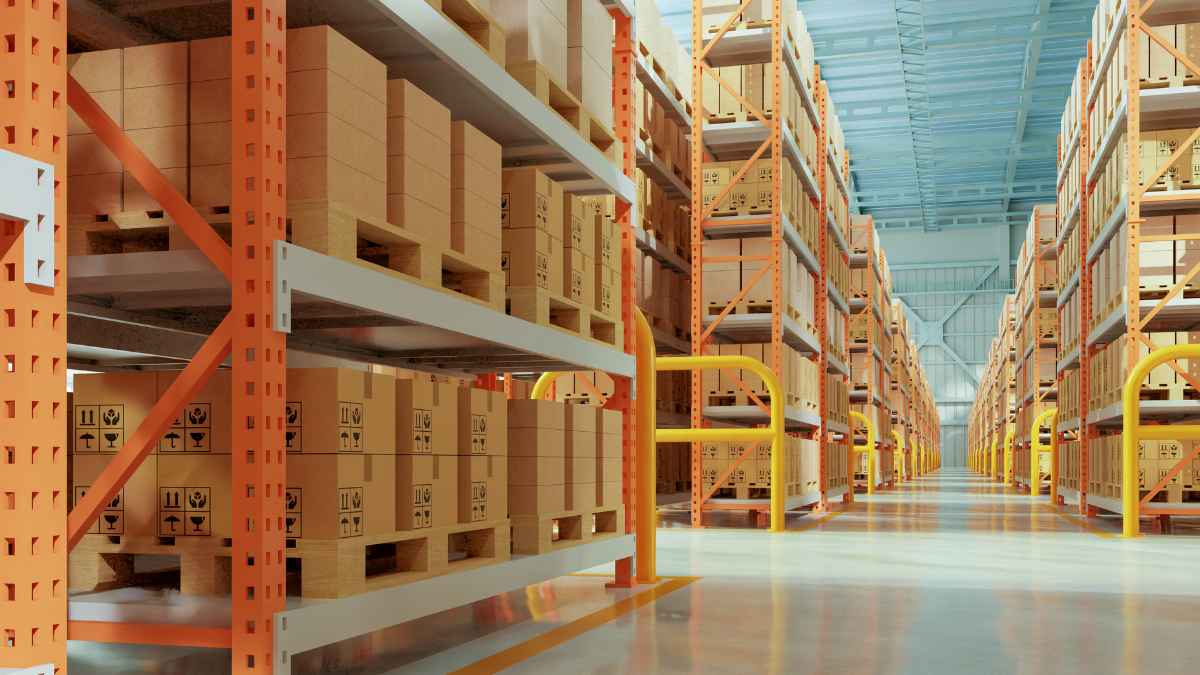
Increasing operational complexity and rising customer expectations are placing new demands on warehouse performance, yet many manufacturers still operate with disconnected environments, inconsistent processes, and limited data visibility that restrict their ability to respond to disruptions and shifts in demand. According to recent insights from Info-Tech Research Group, warehouse management systems are no longer just operational tools but critical enablers of supply chain coordination and business agility, increasingly serving as a real-time execution layer within the digital supply chain. The global IT research and advisory firm’s newly released blueprint, Future-Proof Your Warehouse Operations With Modern Warehouse Management Systems, outlines a structured approach to help CIOs assess current capabilities, prioritize improvements, and build a scalable, integrated warehouse ecosystem.
“Warehouses can’t operate as isolated functions within the enterprise anymore,” says Shreyas Shukla, principal research director at Info-Tech Research Group. “When they remain disconnected, organizations lose the coordination and real-time awareness needed to respond to disruptions effectively. CIOs need to treat warehouse platforms as part of a connected supply chain ecosystem, where integration and standardization drive faster, more informed decisions.”
Info-Tech’s Five-Phase Methodology for Warehouse Modernization
To address fragmented warehouse operations and limited visibility, Info-Tech emphasizes an approach that moves from assessment to execution. The firm’s blueprint introduces a five-phase framework to help organizations evaluate current capabilities, identify gaps, and build a practical modernization roadmap.
A key component of this model is the 4R WMS Capability Quadrant, which enables IT leaders to systematically evaluate warehouse capabilities and determine whether they should be replaced, reconfigured, retooled, or retained based on business value and IT effectiveness.
Building on this model, the Future-Proof Your Warehouse Operations With Modern Warehouse Management Systems blueprint outlines the following phases to guide warehouse transformation:
- Establish the current warehouse landscape: Organizations document systems, workflows, and integration points to build a clear view of how operations function today and where fragmentation exists.
- Assess capability maturity and satisfaction: Business and IT stakeholders evaluate how effectively each capability supports operational needs and where performance gaps remain.
- Analyze gaps and prioritize needs using the 4R WMS capability quadrant: CIOs and enterprise architects classify capabilities as replace, reconfigure, retool, or retain to focus investment where it delivers the greatest impact.
- Define improvement actions and opportunities: Cross-functional teams align on targeted initiatives, including integration, automation, and data enablement.
- Design a phased modernization roadmap: Leadership sequences initiatives into practical waves that balance quick wins with longer-term transformation.
By following Info-Tech’s approach, organizations can transition from fragmented, reactive warehouse operations to an integrated, intelligence-driven model where real-time data enables coordinated execution across production, inventory, and distribution.
Read Also: Build AI brilliance at SAS Innovate 2026