
For the last decade, marketing technology stacks have grown horizontally. New tools promised incremental gains—better attribution, smarter personalization, faster execution. The result? Dozens of disconnected systems stitched together by brittle integrations, manual workflows, and heroic effort.
AI is often positioned as just another layer in this stack—an add-on for copy generation, chatbots, or media optimization. That framing misses the real opportunity.
AI is not another tool.
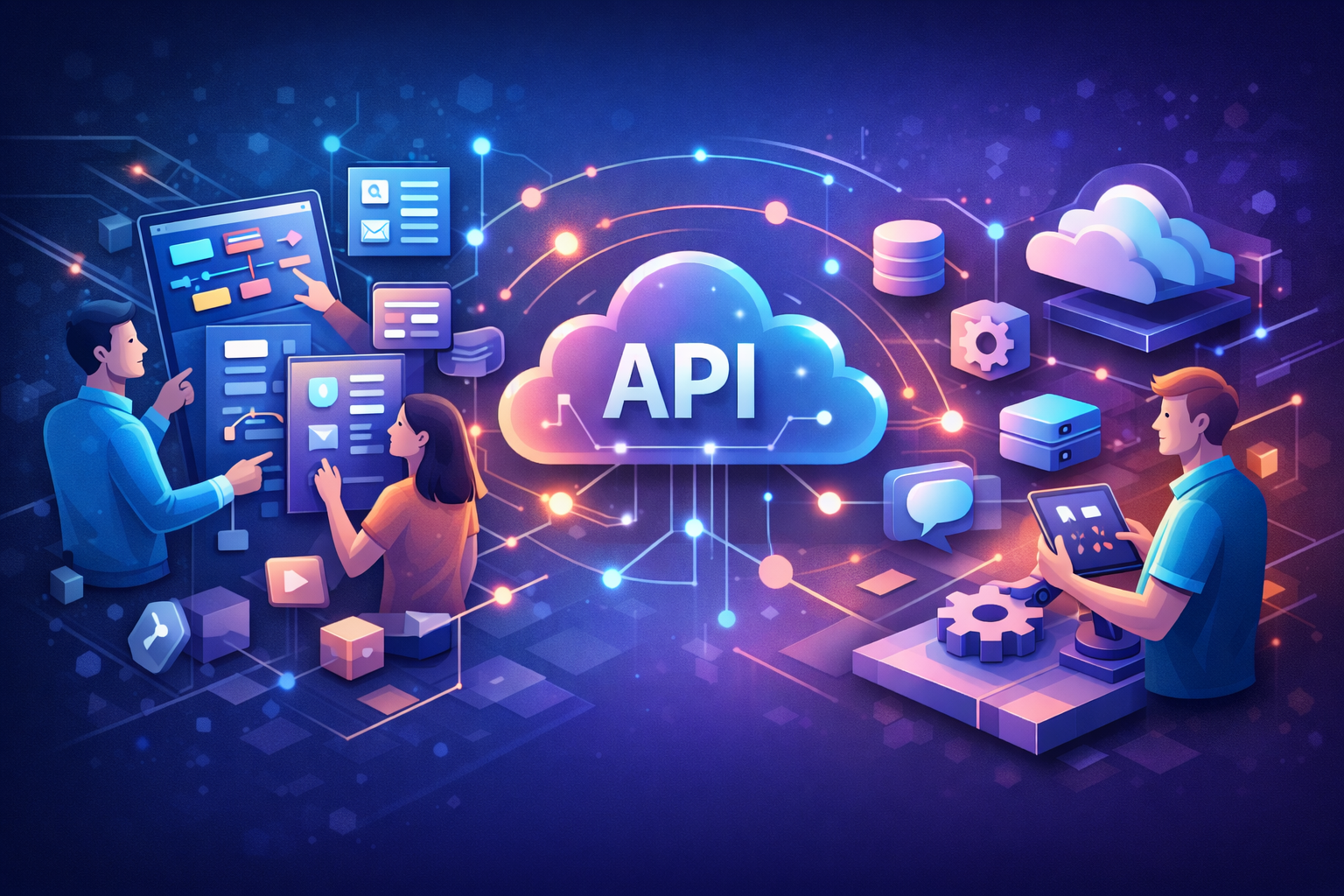
AI is the operational backbone that can finally unify the martech stack.
From Tool Sprawl to System Intelligence
Traditional martech stacks are built around functions:
- CRM for customer data
- CDP for identity resolution
- MAP for campaigns
- Analytics for measurement
- CMS for content
Each system optimizes its own domain, but none truly understand the end-to-end marketing system. Humans are left to:
- Translate insights into actions
- Coordinate across tools
- Maintain logic, rules, and workflows
This is where complexity explodes—and velocity dies.
An AI operational backbone shifts the stack from tool-centric to system-centric.
Instead of asking, “Which tool does this?”
We ask, “How does the system decide, act, and learn?”
What Is an AI Operational Backbone?
An AI operational backbone is the intelligence layer that:
- Understands business goals
- Interprets signals across the stack
- Orchestrates actions across tools
- Learns continuously from outcomes
It does not replace your CRM, CDP, or ad platforms.
It coordinates them.
Think of it as:
- The brain (decision-making)
- The nervous system (signal flow)
- The operating system (orchestration)
The Core Capabilities of an AI Backbone
- Unified Decision Intelligence
Most martech decisions today are rule-based:
- If lead score > X, send email Y
- If CAC increases, reduce spend
AI replaces static rules with probabilistic decisioning:
- Which audience is most likely to convert right now?
- Which message will move this user closer to revenue?
- Which channel mix optimizes lifetime value, not just ROAS?
The backbone continuously weighs tradeoffs across:
- Revenue
- Cost
- Experience
- Long-term value
This is not optimization in silos—it’s system-wide intelligence.
- Orchestration Across the Stack
Today’s orchestration is fragile:
- Point integrations
- Custom scripts
- Manual handoffs
An AI backbone acts as a control plane:
- Pulling data from multiple systems
- Triggering actions across platforms
- Coordinating timing, sequencing, and dependencies
Campaigns become adaptive flows, not fixed journeys.
Instead of launching and monitoring:
- The system observes
- Decides
- Adjusts in real time
- Continuous Learning Loops
Most stacks are reactive:
- Reports explain what happened
- Humans decide what to change
An AI backbone closes the loop:
- Every interaction becomes training data
- Every outcome updates future decisions
- Every experiment compounds learning
Marketing evolves from:
Execute → Measure → React
to
Sense → Decide → Act → Learn
At machine speed.
Why Point AI Solutions Aren’t Enough
Many organizations already “use AI”:
- AI copy tools
- AI bid optimization
- AI personalization engines
These are local optimizations.
Without a backbone:
- Each AI optimizes its own metric
- Conflicts emerge (CTR vs. LTV, speed vs. quality)
- No system-level learning occurs
It’s the difference between:
- Smart organs
- And a functioning brain
Architectural Implications for Martech Leaders
Building an AI operational backbone doesn’t mean ripping and replacing your stack. It means re-architecting how intelligence flows.
Key shifts include:
- From Data Pipelines to Decision Pipelines
Data is no longer just stored and visualized—it feeds real-time decisions.
- From Workflow Automation to Autonomous Execution
Automation executes instructions.
AI executes intent.
- From Dashboards to Control Systems
Dashboards inform humans.
Backbones act on the system.
Organizational Impact: The Quiet Revolution
The biggest change isn’t technical—it’s operational.
With an AI backbone:
- Teams shift from execution to supervision
- Strategy focuses on constraints and objectives
- Creativity moves upstream (concepts, narratives, positioning)
Marketers stop managing tools and start managing outcomes.
This also changes how martech teams are structured:
- Fewer tool specialists
- More systems thinkers
- Stronger collaboration between marketing, data, and revenue ops
The Competitive Advantage Is Compounding
Early adopters of AI backbones don’t just get efficiency gains. They get learning velocity.
Their systems:
- Adapt faster to market changes
- Discover patterns humans can’t see
- Compound insight across campaigns, channels, and years
Late adopters won’t just be slower—they’ll be structurally disadvantaged.
Read also: Consent-Driven Personalization and Transparent Data Practices