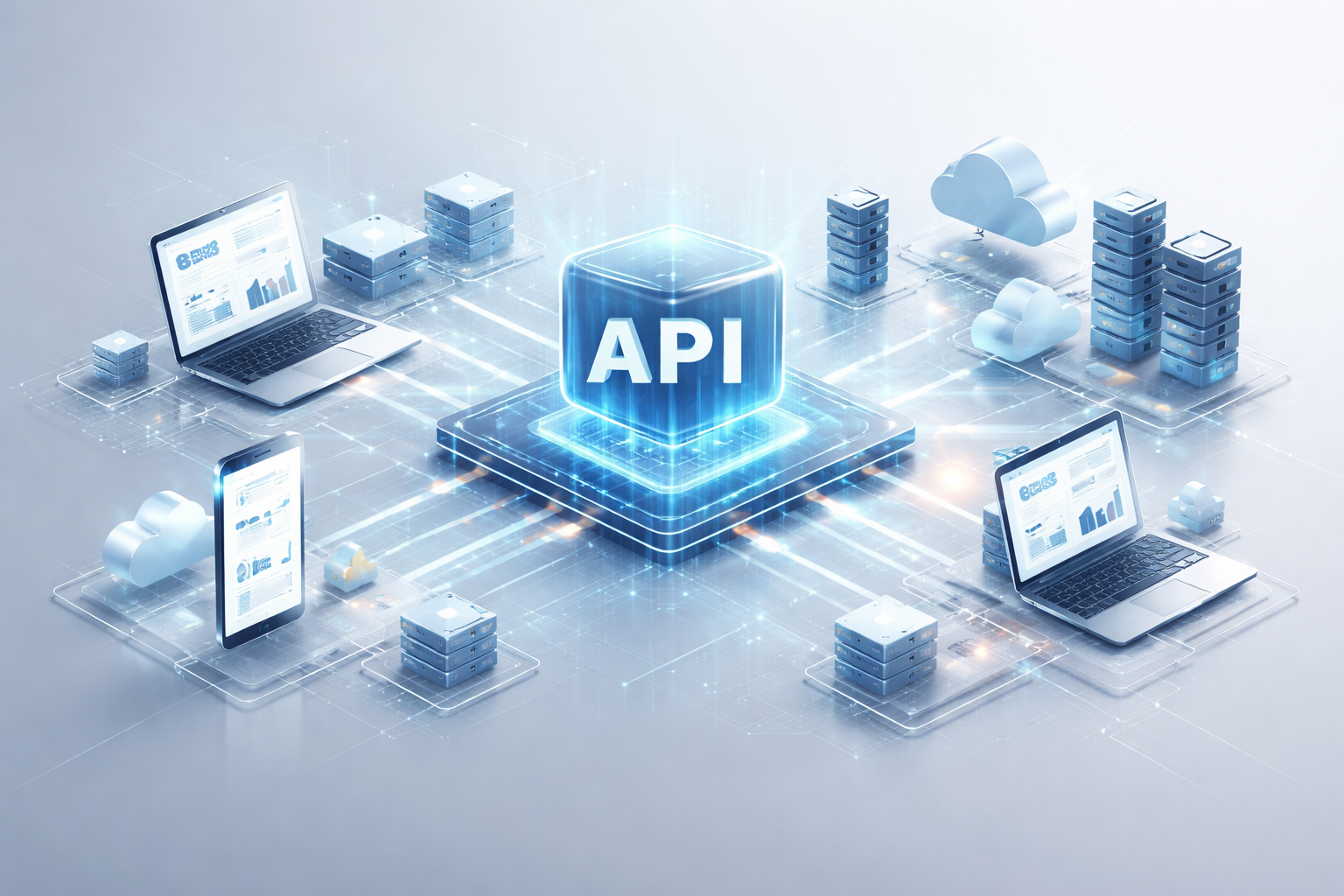
The way software is built and connected is undergoing a fundamental shift. What once required large engineering teams, long development cycles, and custom-built integrations can now be achieved with visual tools, reusable components, and well-documented APIs. At the center of this transformation are no-code/low-code platforms and API-first ecosystems—two forces that are redefining how businesses innovate, scale, and compete.
From Custom Code to Composable Systems
Traditionally, system integrations were brittle and expensive. Each new connection—CRM to ERP, payment gateway to analytics, marketing tools to customer support—required bespoke code and ongoing maintenance. As systems grew, so did technical debt.
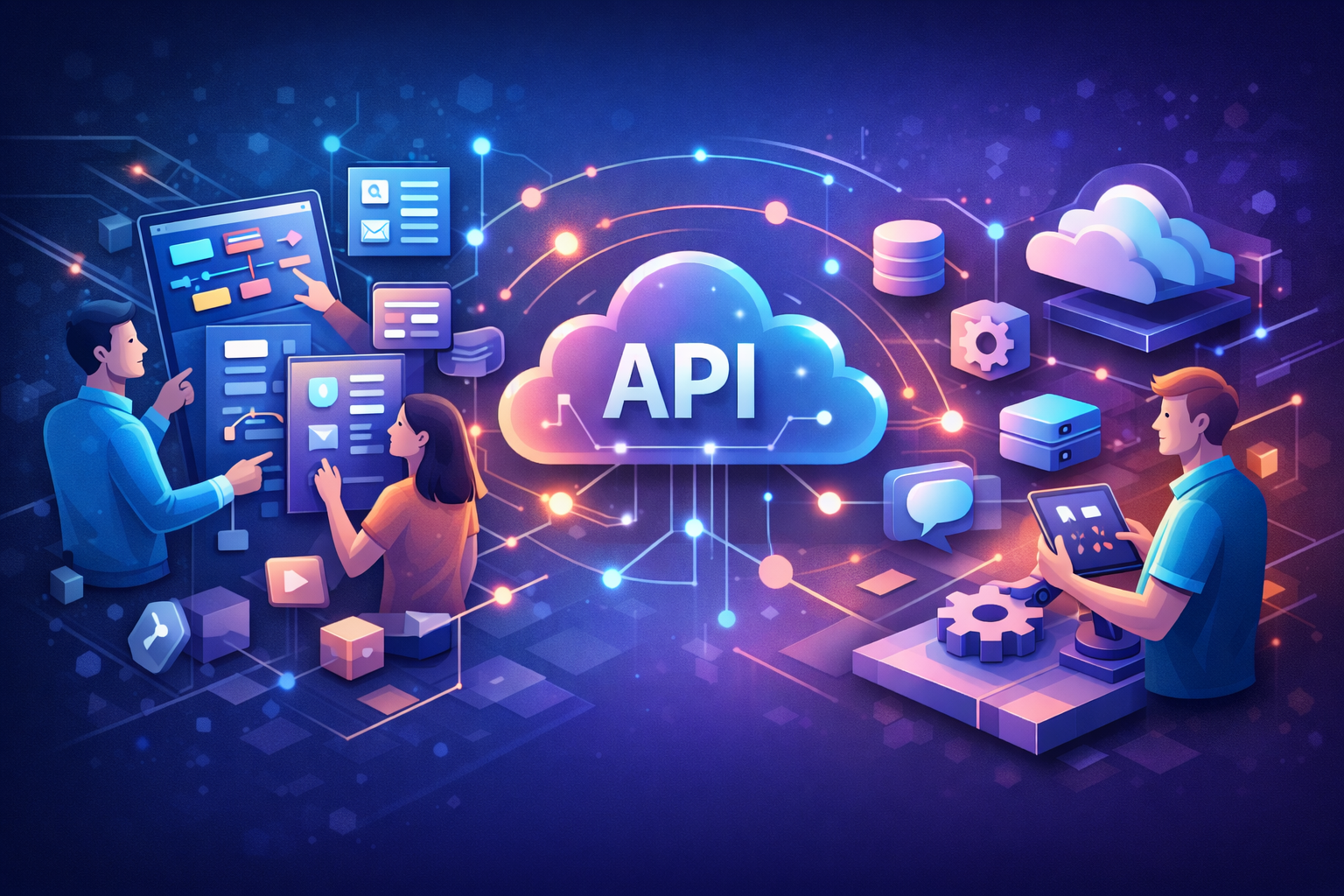
No-code and low-code platforms flip this model. Instead of writing glue code, teams can assemble workflows using prebuilt connectors, logic blocks, and triggers. These platforms thrive because modern software products increasingly expose their functionality through APIs. In other words, no-code works because APIs work.
This shift has given rise to composable systems—applications built by stitching together best-in-class services rather than developing everything in-house.
What Does “API-First” Really Mean?
An API-first approach means designing APIs as first-class products, not afterthoughts. Before a user interface is built, the API is defined, documented, and tested. This has several important implications:
- Consistency: Internal teams, partners, and third-party developers all interact with the same interface.
- Scalability: New use cases—mobile apps, integrations, automations—can be added without re-architecting the core system.
- Speed: Products can plug into ecosystems quickly, accelerating time to market.
For no-code and low-code platforms, API-first products are ideal building blocks. Clean, predictable APIs enable visual tools to reliably orchestrate complex workflows without exposing users to underlying complexity.
The Democratization of Integrations
One of the most profound impacts of no-code/low-code integrations is the democratization of software development.
Business users—operations managers, marketers, analysts—can now:
- Automate repetitive processes
- Sync data across tools
- Build internal dashboards and workflows
- Experiment rapidly without waiting on engineering backlogs
This doesn’t eliminate the need for developers. Instead, it changes their role. Engineers focus on building robust core systems, designing secure APIs, and enabling extensibility, while non-technical users handle configuration and iteration at the edges.
The result is faster innovation with fewer bottlenecks.
Why API-First Ecosystems Are Winning
Companies that embrace API-first thinking often evolve into platforms rather than standalone products. Their value grows as more tools integrate with them, creating network effects.
Key benefits include:
- Faster Partner Integrations
Partners can self-serve using documentation and sandbox environments, reducing onboarding friction.
- Ecosystem Innovation
Third parties build new use cases the original product team may never have envisioned.
- No-Code Compatibility
Products become instantly usable within tools like workflow automators, integration hubs, and internal app builders.
In many cases, being “integratable” is no longer a nice-to-have—it’s a buying decision.
Challenges Beneath the Surface
Despite their promise, no-code/low-code integrations and API-first ecosystems are not without challenges.
- Governance: Unchecked automations can create data inconsistencies or security risks.
- Scalability limits: Some no-code platforms struggle with high-volume or complex logic.
- Hidden complexity: Visual abstractions can obscure performance issues or error handling.
- API quality matters: Poorly designed APIs quickly become bottlenecks, regardless of tooling.
Organizations that succeed treat no-code as a layer on top of a strong technical foundation, not a replacement for it.
Best Practices for Building No-Code–Friendly APIs
If you’re designing APIs with an ecosystem mindset, consider these principles:
- Clear, consistent naming conventions
- Strong documentation with real-world examples
- Versioning and backward compatibility
- Webhooks for event-driven workflows
- Thoughtful rate limits and error messages
These practices don’t just help developers—they make your product more usable in visual, no-code environments.
Read Also: AI search assistants are transforming the buyer journey