In B2B marketing, a landing page isn’t just a digital brochure — it’s a conversion engine. Whether you’re running paid campaigns on LinkedIn, Google Ads, or nurturing leads through email automation tools like HubSpot, your landing page determines whether traffic becomes revenue.
Unlike B2C, B2B buyers are rational, research-driven, and often part of a decision-making committee. That means your landing page must do more than “look good” — it must build trust, demonstrate ROI, and reduce friction.
Let’s break down how to optimize B2B landing pages for maximum impact.
- Align Messaging with Campaign Intent
Your landing page should mirror the exact promise made in your ad or email.
If your campaign promotes:
- A whitepaper → The headline must reinforce the value of that resource.
- A demo → Focus on product capabilities and outcomes.
- A case study → Highlight measurable results upfront.
Consistency increases conversions. When visitors see the same message from ad to page, bounce rates decrease and trust increases.
- Craft a Clear, Outcome-Driven Headline
B2B buyers care about business impact.
Avoid vague headlines like:
“Innovative Solutions for Modern Businesses”
Instead, use:
“Reduce IT Infrastructure Costs by 32% in 90 Days”
Strong headlines:
- Mention a measurable outcome
- Target a specific role or industry
- Address a clear pain point
Clarity beats cleverness in B2B marketing.
- Focus on Value, Not Features
Executives don’t buy features — they buy results.
Instead of:
- “AI-powered analytics dashboard”
Say:
- “Identify revenue leaks and improve forecast accuracy by 25%”
Tie every feature to:
- Cost savings
- Efficiency gains
- Revenue growth
- Risk reduction
If possible, quantify results using real customer data.
- Use Social Proof Strategically
Trust is critical in B2B.
Add:
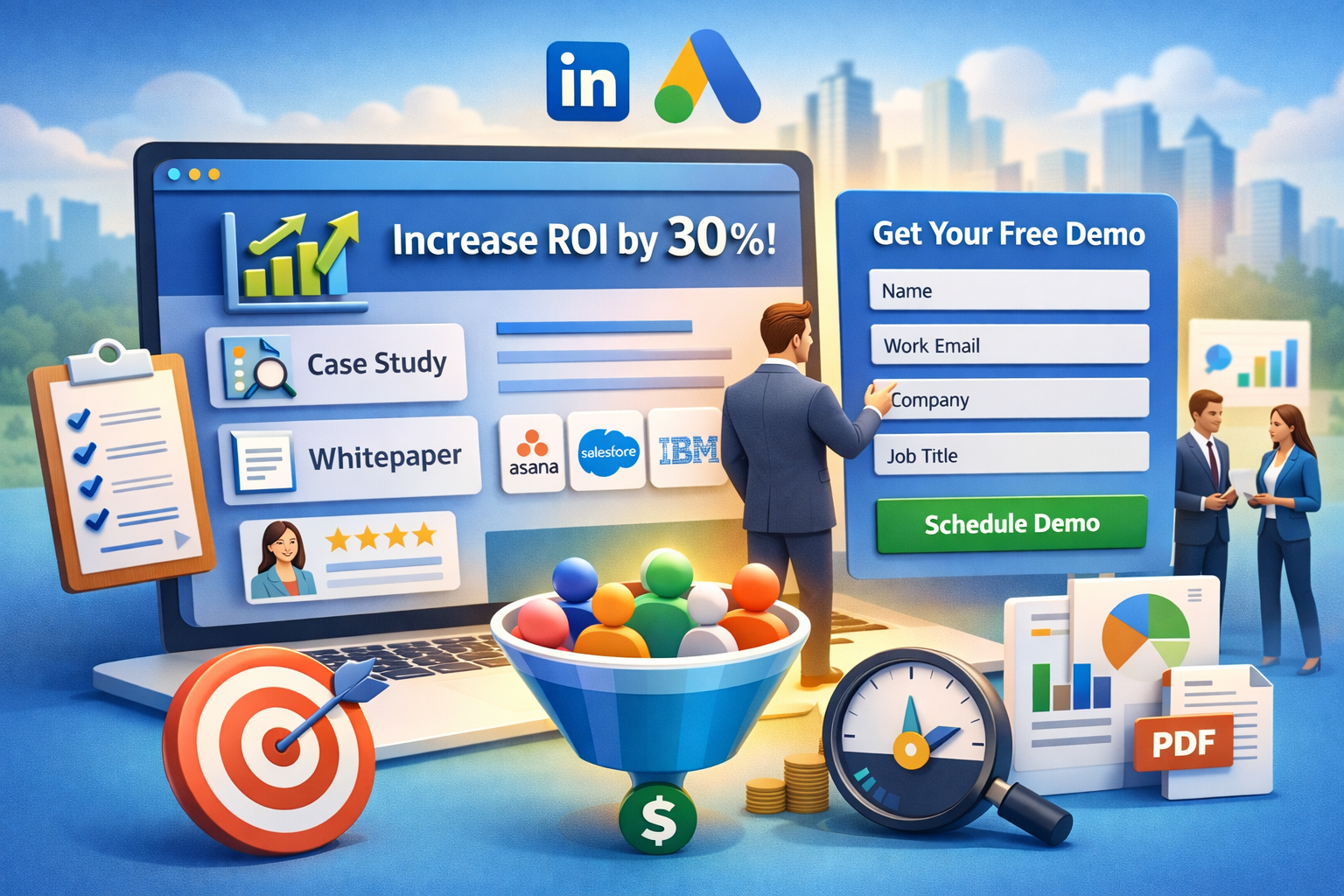
- Client logos
- Testimonials from decision-makers
- Case studies
- Industry certifications
- Review platform ratings (e.g., G2)
If recognizable brands use your solution, highlight them prominently. Enterprise buyers look for reassurance that others like them have already made the decision.
- Optimize Forms for Lead Quality (Not Just Quantity)
B2B lead forms should balance friction and qualification.
Short form = more leads
Long form = better-qualified leads
Consider:
- Name
- Work email
- Company
- Job title
- Company size
For high-value offers (e.g., enterprise demo), longer forms are acceptable.
You can also:
- Use progressive profiling
- Include conditional fields
- Auto-fill with CRM integrations
- Create a Strong, Clear CTA
Your call-to-action should be:
✔ Action-oriented
✔ Specific
✔ Benefit-focused
Instead of:
“Submit”
Use:
“Get My Free Assessment”
“Schedule My Strategy Call”
“Download the Full Report”
Buttons should stand out visually and appear multiple times on longer pages.
- Design for Decision-Making Committees
In B2B, your visitor may not be the final buyer.
Include content that helps them:
- Share internally
- Justify budget
- Present ROI
Add:
- Downloadable PDFs
- ROI calculators
- Comparison charts
- Security documentation
Make it easy for your champion to advocate for you.
- Improve Page Speed and Mobile Experience
Even B2B buyers browse on mobile.
Ensure:
- Page loads under 3 seconds
- Forms are easy to complete on mobile
- CTAs are thumb-friendly
- No unnecessary pop-ups
Speed impacts both conversions and ad quality scores — especially in platforms like Google search campaigns.
- A/B Test Continuously
Optimization is ongoing.
Test:
- Headlines
- CTA wording
- Form length
- Social proof placement
- Hero images vs. video
Use experimentation tools such as Optimizely or built-in testing features in your CRM.
Small improvements compound over time.
- Track What Actually Matters
Vanity metrics won’t help your revenue team.
Track:
- Cost per qualified lead (CPL)
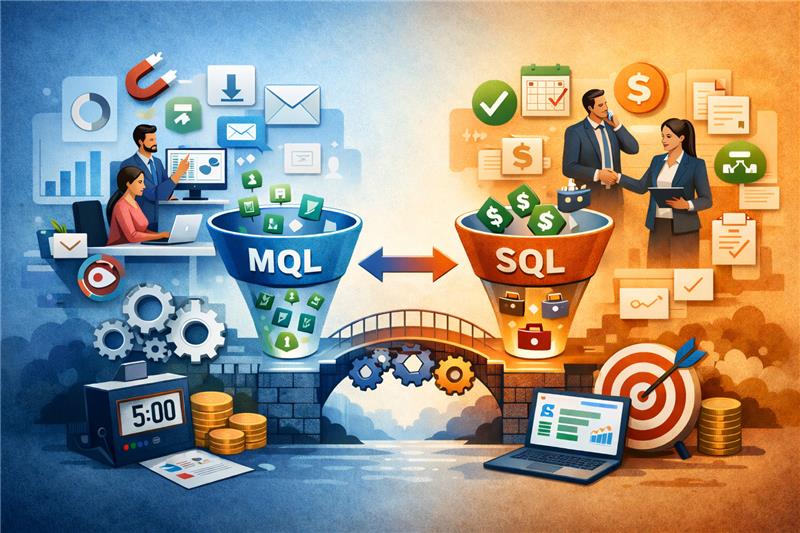
- Marketing Qualified Leads (MQLs)
- Sales Qualified Leads (SQLs)
- Pipeline generated
- Customer Acquisition Cost (CAC)
Landing page success should tie directly to pipeline contribution, not just form submissions.
Read Also: Top MarTech Trends Shaping B2B in 2026