
In today’s marketing landscape, running campaigns without data is like flying blind. Whether you’re managing paid ads, email marketing, or multi-channel demand generation, data is the difference between guessing and scaling.
But simply collecting data isn’t enough.
The real advantage comes from using data strategically—to diagnose problems, uncover opportunities, and continuously optimize performance.
Here’s how to do it effectively.
- Start with Clear, Measurable Objectives
Before diving into dashboards, define what success looks like.
Common campaign objectives include:
- Lead generation
- Revenue growth
- Brand awareness
- Customer retention
- Product adoption
Each goal requires different metrics. For example:
- Awareness campaigns focus on reach and engagement.
- Conversion campaigns focus on cost per acquisition (CPA) and return on ad spend (ROAS).
- Retention campaigns track lifetime value (LTV) and churn reduction.
If your objective isn’t clearly defined, your data won’t give you clear answers.
- Identify the Right Metrics (Not Just More Metrics)
Many marketers drown in dashboards filled with numbers that don’t drive decisions.
Instead, focus on three layers of metrics:
Leading Indicators
- Click-through rate (CTR)
- Engagement rate
- Time on page
- Video completion rate
These signal early performance trends.
Performance Metrics
- Conversion rate
- Cost per lead (CPL)
- Cost per acquisition (CPA)
- Revenue per visitor
These show direct campaign efficiency.
Business Impact Metrics
- Return on ad spend (ROAS)
- Customer acquisition cost (CAC)
- Customer lifetime value (CLV)
- Pipeline generated
These determine whether the campaign truly contributes to growth.
Data should ladder up to business outcomes—not just platform metrics.
- Segment Your Data for Deeper Insights
Raw averages hide opportunities.
Segmentation reveals them.
Analyze performance by:
- Audience segment
- Demographics
- Device type
- Geography
- Traffic source
- Campaign creative
- Time of day or day of week
For example, a campaign might appear average overall—but a specific audience segment could be delivering 2x the conversion rate at a lower CPA.
That’s where optimization lives.
- Use A/B Testing as a Growth Engine
Data becomes powerful when it drives experimentation.
Test:
- Headlines
- Calls to action
- Creative formats
- Landing page layouts
- Email subject lines
- Offer positioning
The key is structured testing:
- Change one variable at a time
- Run tests long enough to reach statistical confidence
- Document learnings
Over time, incremental improvements compound into significant performance gains.
- Diagnose the Funnel, Not Just the Outcome
If conversions are low, don’t just change the ad—analyze the funnel.
Break the campaign into stages:
- Impressions → Clicks
- Clicks → Landing page engagement
- Engagement → Form submission
- Submission → Sales conversion
Pinpoint where drop-offs occur.
For example:
- Low CTR? The creative may not resonate.
- High CTR but low conversions? The landing page may not match intent.
- High leads but low sales? The targeting may be attracting the wrong audience.
Data helps isolate the real bottleneck.
- Leverage Predictive Insights
Advanced teams go beyond historical reporting.
They use data to forecast:
- Which audience segments are likely to convert
- Which leads are most likely to close
- When customers are likely to churn
- Which products customers may purchase next
Predictive modeling and AI-driven insights allow you to prioritize budget and effort where returns are highest.
- Optimize Budget Allocation
Data should inform where to spend—and where not to.
Evaluate:
- Cost per result by channel
- Marginal return on additional spend
- Diminishing returns by audience segment
- Assisted conversions across channels
Sometimes the best-performing channel at low spend becomes inefficient at scale. Continuous budget reallocation based on performance ensures higher ROI.
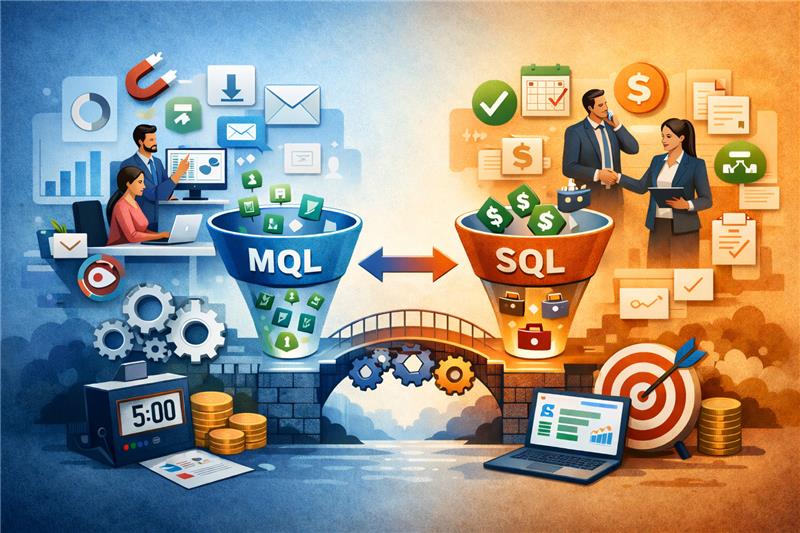
- Align Marketing and Sales Data
For B2B campaigns especially, marketing data alone isn’t enough.
Integrate:
- CRM data
- Sales conversion rates
- Deal size
- Revenue attribution
A campaign that generates many leads may look successful—until you realize those leads rarely close.
True performance measurement requires end-to-end visibility.
- Build Real-Time Dashboards
Speed matters.
Create dashboards that show:
- Campaign performance by channel
- Cost trends
- Conversion rates
- Revenue attribution
- Funnel drop-offs
Real-time visibility enables quick adjustments instead of waiting until the campaign ends.
The faster you identify issues, the less budget you waste.
- Create a Culture of Continuous Optimization
Using data effectively isn’t a one-time exercise—it’s a mindset.
High-performing teams:
- Review campaign data weekly
- Run ongoing experiments
- Document insights
- Share learnings across teams
- Use data to guide creative direction
Read Also: No-Code/Low-Code Integrations and the Rise of API-First Ecosystems