
In today’s competitive business-to-business (B2B) landscape, operational efficiency isn’t just a goal — it’s a necessity. Enterprises are under constant pressure to do more with less, drive margin improvement, and stay resilient in the face of economic uncertainty. One powerful technology making this possible is Artificial Intelligence (AI). From automating repetitive tasks to predicting costly failures before they happen, AI is reshaping how B2B enterprises operate and significantly slashing operational costs.
Let’s explore how AI is driving cost savings across key business functions and why more B2B organizations are turning to intelligent automation to stay lean and competitive.
1. Intelligent Automation of Routine Tasks
One of the most immediate cost benefits of AI comes from eliminating manual, repetitive work.
What’s Changing
Traditional processes — like data entry, invoice reconciliation, order processing, and report generation — historically rely on human effort, consuming time and increasing error risk.
How AI Helps
AI-powered tools — including Robotic Process Automation (RPA) and cognitive automation — handle these tasks faster and with higher accuracy, allowing human workers to focus on strategic activities.
Cost Impact
- Reduced labor costs associated with repetitive workflows
- Fewer errors, leading to fewer costly corrections
- Faster cycle times in back-office operations
2. Smarter Decision-Making with Predictive Analytics
Data is only as valuable as the insights it delivers. AI transforms raw data into predictive intelligence.
Key Benefits
- Demand forecasting predicts future customer needs more precisely
- Financial forecasting improves budgeting and cash-flow planning
- Supply chain forecasting anticipates disruptions and adjusts orders accordingly
By anticipating issues before they occur, enterprises can reduce waste, avoid overstocking, and manage cash flow more efficiently.
Cost Impact
- Minimized inventory holding costs
- Lowered risk of stockouts and rush orders
- Data-backed decisions that improve profitability
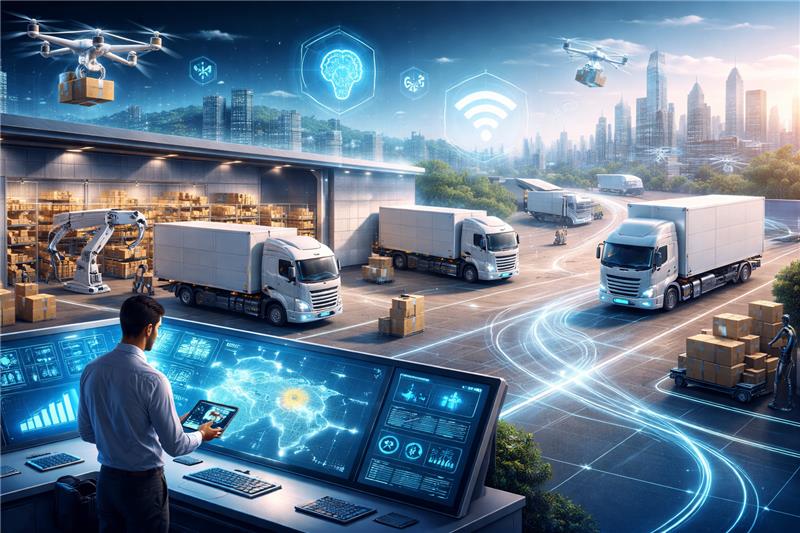
3. Optimized Supply Chain and Logistics
Supply chains are complex and costly — especially for B2B enterprises with global partners and multiple distribution points.
AI Solutions in Action
- Route optimization minimizes fuel consumption and driver hours
- Real-time tracking and visibility reduce delays and errors
- AI-driven supplier risk analysis identifies vulnerabilities before they become costly problems
AI’s ability to process massive data streams in real time empowers businesses to adapt quickly and efficiently.
Cost Impact
- Lower transportation and fuel costs
- Reduced freight inefficiencies
- Fewer penalties due to delayed deliveries
4. Predictive Maintenance in Manufacturing and Infrastructure
Unplanned equipment downtime can cripple production lines and inflate costs.
AI Advantage
AI-powered predictive maintenance systems analyze sensor and performance data to forecast equipment failures before they occur. Instead of following rigid maintenance schedules, companies maintain assets only when needed.
Cost Impact
- Reduced unplanned downtime
- Longer asset lifespan
- Lower maintenance expenses
5. Enhanced Customer Service and Support
Customer support is often one of the most resource-intensive areas for B2B enterprises.
AI-Powered Support
- Chatbots and virtual assistants handle routine inquiries 24/7
- Automated ticket triage routes complex issues to the right experts
- Sentiment analysis detects urgency and customer satisfaction trends
Rather than replace human agents, AI augments them — letting skilled professionals focus on high-touch, high-impact interactions.
Cost Impact
- Reduced support staffing costs
- Faster response times
- Higher customer satisfaction and retention
6. Better Sales and Marketing Efficiency
AI boosts efficiency across the customer acquisition lifecycle:
Sales Enablement
- Lead scoring prioritizes high-potential prospects
- AI insights guide sales reps on next-best actions
Marketing Optimization
- Personalized outreach campaigns
- Predictive models recommend the best channels and timing
Cost Impact
- Improved conversion rates
- Lower cost per acquisition
- Smarter allocation of sales and marketing budgets
7. Risk and Compliance Management
Regulatory compliance is critical — and costly when mishandled.
How AI Helps
AI systems continuously monitor transactions, contracts, and communications to detect compliance issues and flag risks. By automating these checks, businesses reduce manual audit efforts and lower the risk of fines or legal exposure.
Cost Impact
- Fewer regulatory penalties
- Reduced compliance overhead
- Improved governance and risk visibility
8. Workforce Productivity and Collaboration
AI isn’t here to replace human talent — it’s here to amplify it.
Tools That Help
- AI-assisted decision support
- Real-time collaboration tools with smart suggestions
- Automated knowledge management systems
These tools help teams work more efficiently and avoid duplicating effort.
Cost Impact
- Higher productivity per employee
- Shorter project cycles
- Better utilization of skilled labor
Key Takeaways
AI’s influence on operational costs is broad and deep. Across functions such as finance, operations, supply chain, customer support, and sales, AI:
- Reduces manual work and errors
- Improves forecasting and planning
- Optimizes logistics and maintenance
- Enhances customer engagement
- Manages risk more effectively
- Boosts workforce productivity
For B2B enterprises, these cost savings directly translate into improved profitability, faster growth, and greater resilience in turbulent markets.
Read Also: How B2B Companies Can Implement Responsible AI Without Slowing Down Innovation