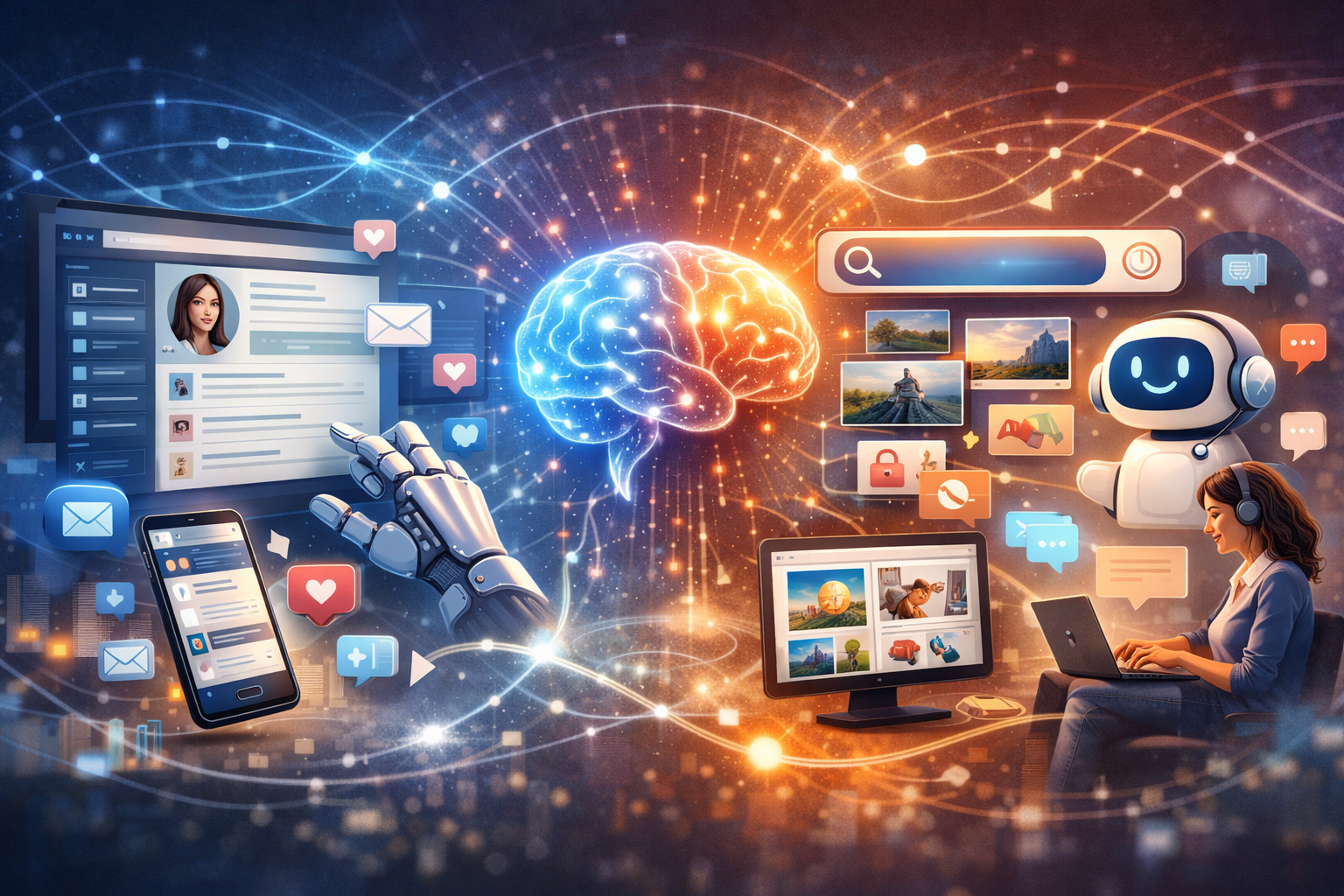

As artificial intelligence becomes increasingly sophisticated, the debate between AI-generated content and human-written content grows louder. From blogs and marketing copy to news articles and social media posts, AI tools like ChatGPT, Jasper, and Copy.ai are now capable of producing content that rivals human writers in quality and efficiency. But does AI truly outperform humans in content creation — or are there still areas where the human touch reigns supreme?
Understanding the Capabilities
AI-Generated Content
AI tools can produce large volumes of content quickly, often in multiple languages and styles. They use vast datasets and deep learning algorithms to understand context, tone, and intent. The primary strengths of AI-generated content include:
- Speed & Efficiency: AI can produce content in seconds.
- Cost-Effectiveness: Less expensive than hiring a team of writers.
- Consistency: Maintains tone and voice across large-scale campaigns.
- SEO Optimization: Many AI tools are designed to follow SEO best practices.
Human-Written Content
Human writers bring creativity, empathy, cultural nuance, and lived experience to the table. While they may not match AI’s speed, their strengths lie in:
- Original Thought: Humans can create genuinely new ideas and unique perspectives.
- Emotional Intelligence: Understanding subtle emotions, sarcasm, humor, or irony.
- Ethical Judgment: Human writers can better identify sensitive topics and approach them with care.
- Brand Authenticity: A human voice often feels more authentic and trustworthy to audiences.
Key Areas of Comparison
1. Quality
- AI: Delivers grammatically correct, coherent, and factually accurate (when up-to-date) content.
- Humans: Excel in crafting nuanced, compelling narratives with a personal or emotional touch.
Verdict: Draw. AI is good for general content; humans win for deep, creative storytelling.
2. Creativity
- AI: Can mimic creative writing styles but struggles with originality and satire.
- Humans: Thrive on creative problem-solving, abstract thinking, and emotional resonance.
Verdict: Human-written content wins.
3. Scalability
- AI: Can produce hundreds of articles or social media posts per day.
- Humans: Limited by time and cognitive bandwidth.
Verdict: AI wins.
4. SEO & Technical Writing
- AI: Excellent at keyword optimization, metadata generation, and structural consistency.
- Humans: Can match this but require more time and tools.
Verdict: AI wins, especially for routine SEO tasks.
5. Trust & Authenticity
- AI: May sometimes produce content that feels generic or lacks voice.
- Humans: More likely to gain trust with real-life experiences and emotional appeal.
Verdict: Human-written content wins.
Use Cases: When to Use Which?
| Use Case | Best Fit |
| Product descriptions | AI |
| News summaries | AI |
| Thought leadership blogs | Human |
| Email campaigns | Hybrid (AI + Human) |
| Social media captions | AI (for speed), Human (for tone) |
| Creative storytelling | Human |
| Technical documentation | AI |
| Brand manifestos | Human |
Read Also: Optimized SaaS, Better Results
The Hybrid Approach: Best of Both Worlds
For many businesses and creators, the best solution isn’t choosing between AI and humans — it’s combining their strengths. A hybrid workflow might look like this:
- AI drafts the initial content, optimizing for structure and keywords.
- A human editor revises it, adding creativity, brand voice, and emotional depth.
- The final product benefits from both efficiency and authenticity.
This approach saves time while preserving the nuance and connection that only humans can offer.
Final Verdict: It Depends on Your Goals
There’s no one-size-fits-all answer to the AI vs. human content debate. For routine, scalable, and data-driven content, AI is incredibly effective. But for brand storytelling, thought leadership, and emotionally resonant writing, humans still have the edge.
In the evolving digital landscape, the smartest strategy may be to combine AI’s power with human creativity — leveraging the best of both worlds to create content that truly works.
Read Also: The Shift to Account-Based Marketing (ABM) in B2B