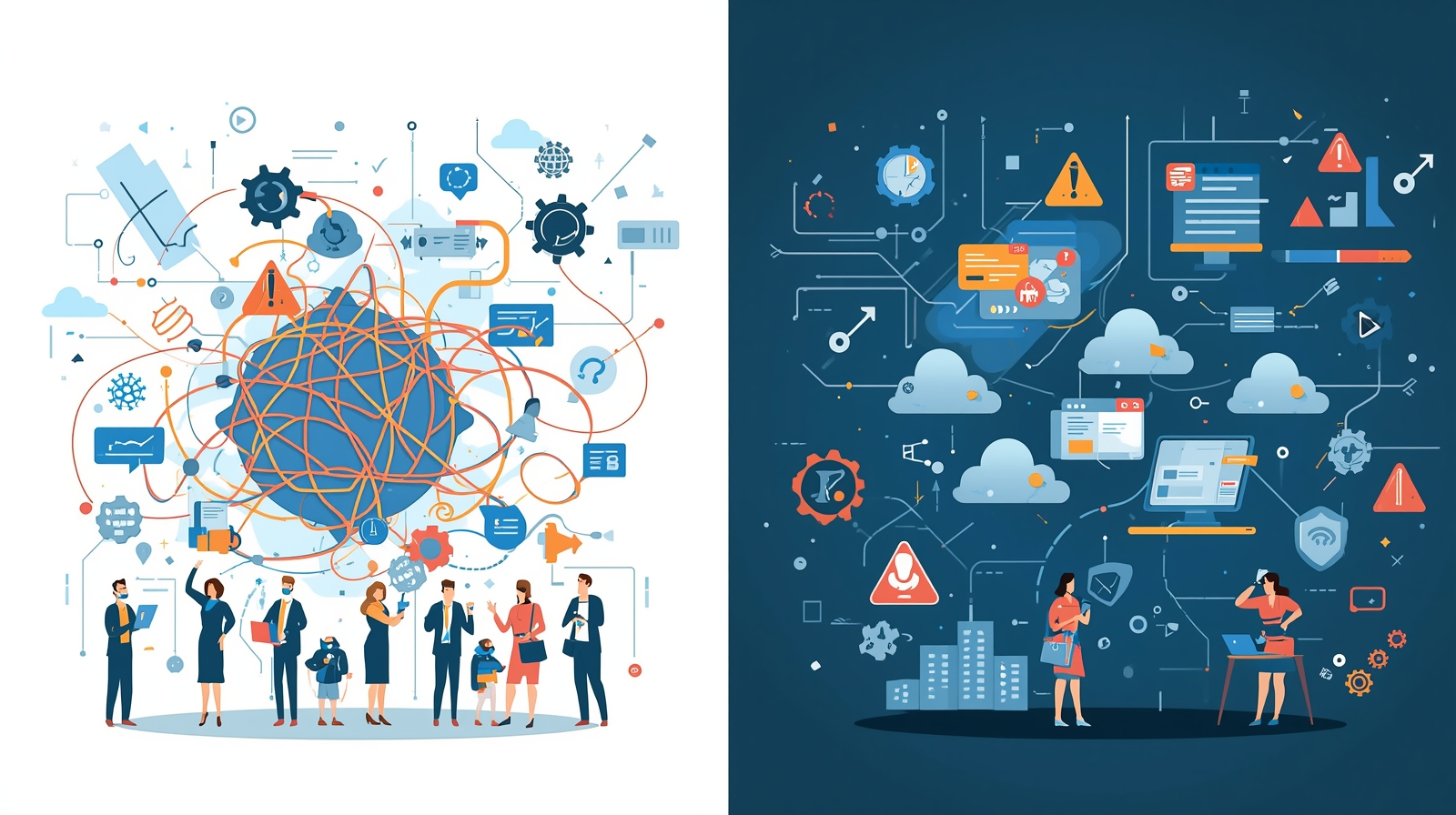

Modern marketing has a data problem — not a lack of it, but too much of it in too many places.
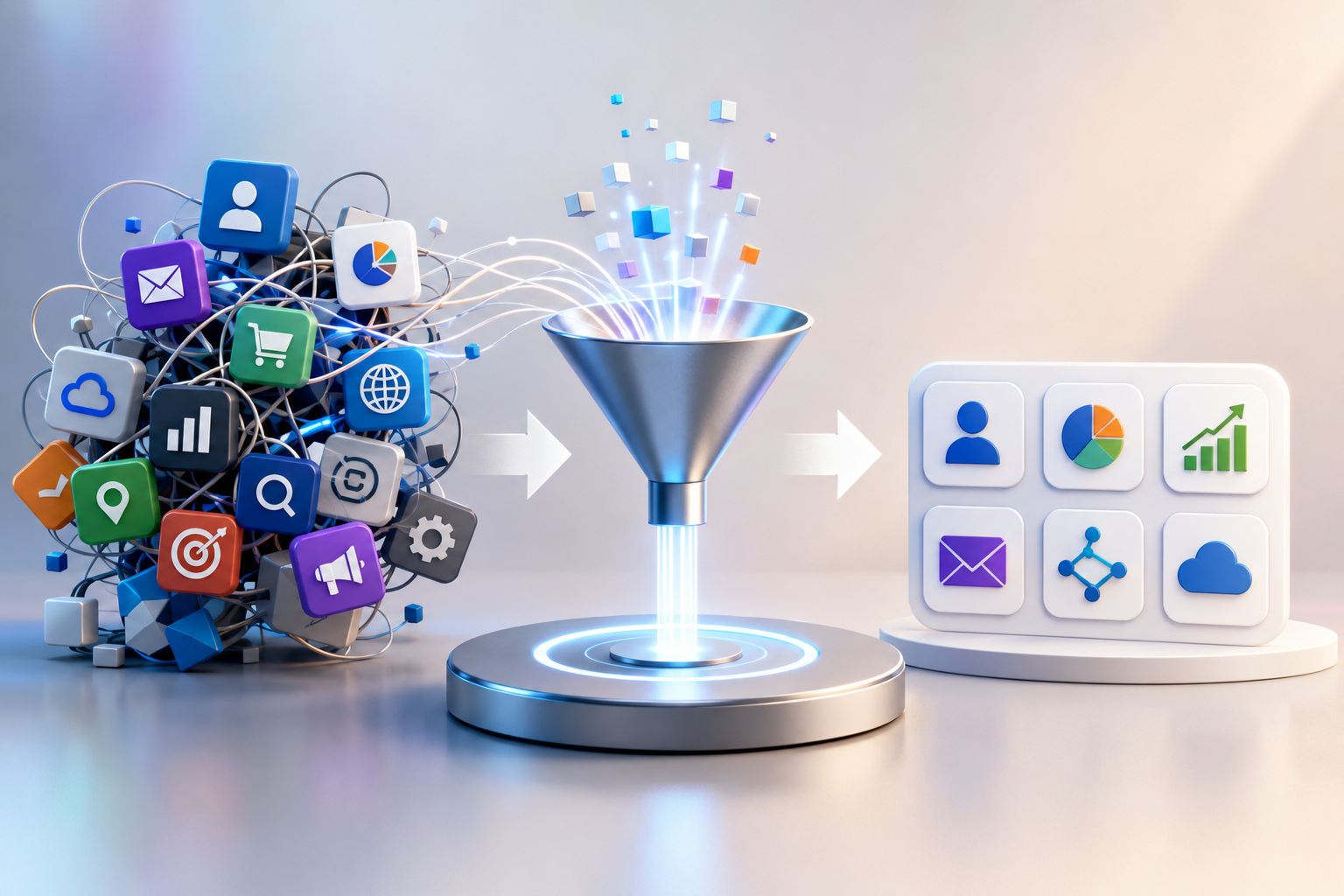
Customer interactions happen across websites, mobile apps, CRM systems, email platforms, ad networks, contact centers, in-store systems, and more. The result? Fragmented identities, disconnected journeys, and campaigns that often feel personalized in theory but generic in execution.
That’s why the Unified Customer View (UCV) is quickly becoming the foundation of the next generation of marketing platforms.
A unified customer view gives brands a single, continuously updated understanding of each customer across channels, devices, and business functions. It is no longer a “nice-to-have” dashboard for marketing teams. It is becoming the operational core for personalization, AI, lifecycle orchestration, attribution, and customer experience. Major platform vendors now position this capability as central to their customer data and engagement stacks, especially around identity resolution, real-time activation, and cross-channel orchestration.
Why the old marketing stack is breaking
For years, marketers built stacks by layering tools:
- One platform for email
- Another for ads
- A CRM for sales
- Separate analytics and web tools
- A loyalty platform
- Maybe a customer support system
Each tool solved a problem. Together, they created a mess.
The issue isn’t just data silos. It’s identity fragmentation. A single customer may appear as:
- an anonymous website visitor,
- an email subscriber,
- a mobile app user,
- a support ticket owner,
- and a purchaser,
…without those records ever being connected into one usable profile.
This disconnect leads to familiar marketing failures:
- Customers receiving irrelevant offers right after purchasing
- Loyalty members treated like first-time visitors
- Service issues ignored in promotional campaigns
- Different teams acting on different versions of the truth
Traditional segmentation and campaign tools were never designed to unify this complexity in real time. Newer customer data platforms (CDPs) and engagement platforms are explicitly built to solve this by stitching identities, standardizing data models, and activating profiles across channels.
What is a Unified Customer View, really?
A Unified Customer View is more than a “360-degree profile” slide in a sales deck.
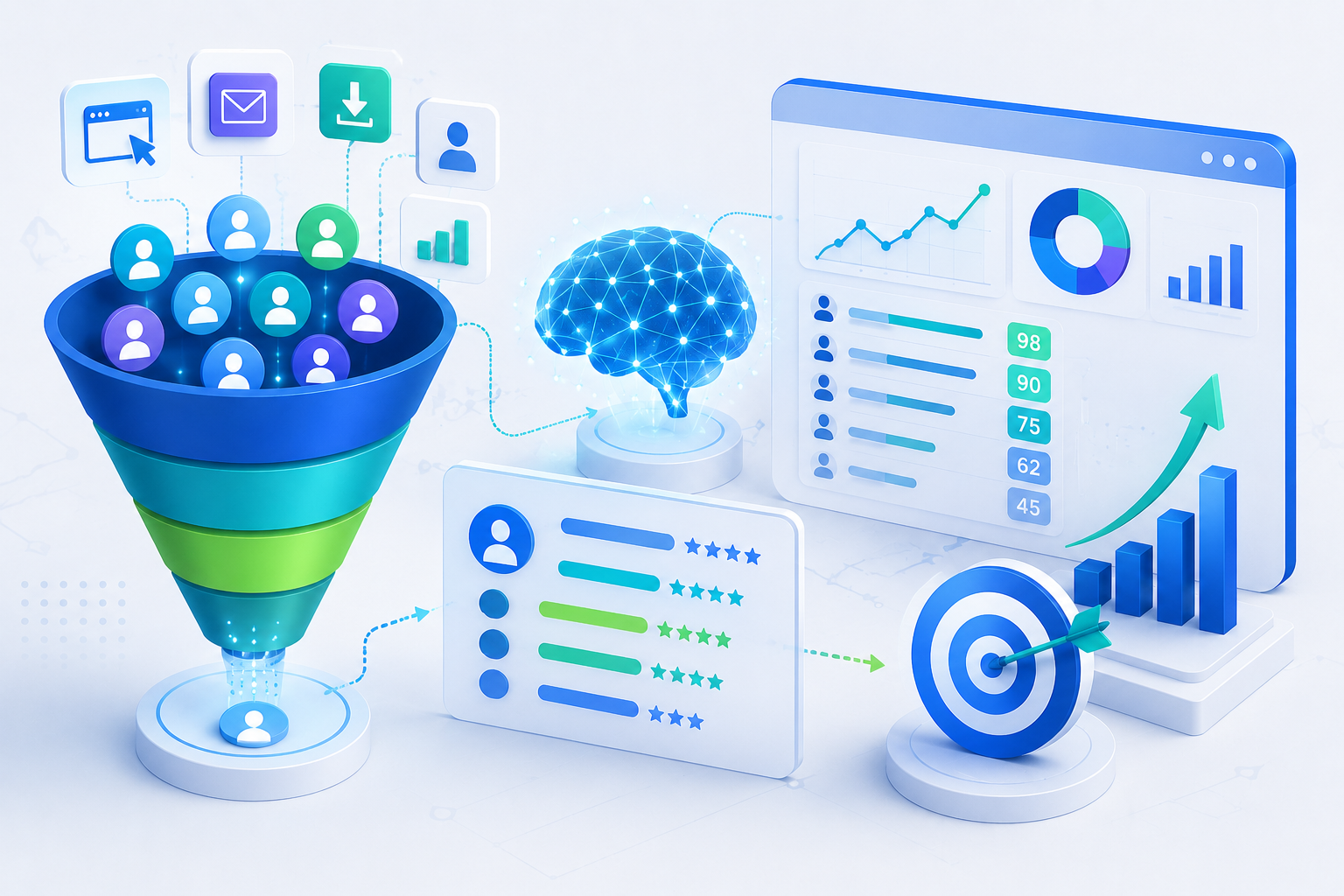
At its best, it is a living customer intelligence layer that brings together:
- Identity data — email, phone, login IDs, device IDs, loyalty IDs
- Behavioral data — browsing, app activity, clicks, engagement signals
- Transactional data — purchases, returns, subscriptions, payment patterns
- Operational data — support interactions, delivery status, service issues
- Preference and consent data — opt-ins, channel preferences, privacy settings
- Predictive signals — propensity, churn risk, next-best-action, LTV potential
This creates one profile that can answer questions such as:
- Who is this customer?
- What have they done recently?
- What are they likely to do next?
- What should we say or show them right now?
That’s the difference between stored customer data and actionable customer understanding.
Why Unified Customer View is becoming the future of marketing platforms
1) Personalization is moving from campaign-level to moment-level
Old-school personalization meant inserting a first name into an email.
Today, customers expect brands to remember context:
- what they browsed,
- what they bought,
- where they dropped off,
- what issue they recently had,
- and which channel they prefer.
That level of relevance requires a unified profile that updates continuously and can be activated instantly. Real-time CDP vendors now emphasize profile freshness and streaming activation precisely because personalization is shifting from “segment and send” to “sense and respond.”
2) AI is only as good as the customer context behind it
Every martech platform now wants to sell AI.
But AI without unified customer context is just automation with confidence issues.
To deliver meaningful outcomes, AI models need:
- clean identity resolution,
- trustworthy first-party data,
- cross-channel behavioral history,
- and up-to-date customer state.
Whether you’re using AI for recommendations, content generation, journey optimization, or lead scoring, the quality of output depends on the quality of customer context.
In other words:
The future of AI in marketing is not just better models — it’s better profiles.
This is one reason platform vendors increasingly position UCV/CDP layers as the data foundation for AI-led marketing and customer engagement.
3) Third-party data is fading; first-party intelligence is rising
As privacy regulations tighten and third-party cookies continue to decline, brands can no longer depend on borrowed audience signals to drive performance at scale.
That shifts competitive advantage toward companies that can:
- capture first-party data directly,
- unify it responsibly,
- and activate it with precision.
A Unified Customer View turns first-party data from a reporting asset into a growth engine.
Instead of asking, “How do we target more efficiently?”
Brands can ask:
- “How do we recognize customers earlier?”
- “How do we build trust across touchpoints?”
- “How do we increase lifetime value over time?”
That’s a much more durable strategy.
4) Marketing platforms are converging
One of the biggest changes happening in martech is platform convergence.
Historically, customer data platforms, customer engagement platforms, CRM systems, analytics tools, and communication tools lived in separate categories.
That boundary is disappearing.
The market is moving toward platforms that combine:
- data collection,
- identity resolution,
- audience building,
- journey orchestration,
- channel execution,
- measurement,
- and increasingly, AI copilots.
Industry and vendor commentary in 2025 consistently points to this convergence, especially around unified data plus activation rather than standalone campaign tooling.
That means the future marketing platform is not just where campaigns are launched.
It’s where customer intelligence is operationalized.
The core capabilities of a future-ready Unified Customer View
Not all “customer 360” promises are created equal.
A true UCV should include the following capabilities:
1. Identity Resolution
This is the engine behind the entire system.
It connects fragmented identifiers — email addresses, phone numbers, cookies, device IDs, CRM records, loyalty IDs — into a single profile.
Without strong identity resolution, everything else is guesswork. This capability is foundational across leading CDP architectures.
2. Real-Time Data Ingestion
Customer behavior changes fast. Profiles that update overnight are often already stale.
Future-ready platforms ingest data in near real time so marketers can react when intent is highest.
3. Cross-Channel Activation
A unified profile is useless if it stays trapped in a dashboard.
The real value comes when the profile can trigger experiences across:
- email,
- SMS,
- paid media,
- website personalization,
- mobile push,
- call center workflows,
- and in-app journeys.
4. Consent and Governance Layer
As data privacy expectations rise, unified customer views must include:
- permission management,
- purpose-based usage,
- suppression logic,
- and auditability.
Trust is now part of the architecture.
5. AI-Ready Data Foundation
A future-proof UCV doesn’t just store data — it structures it so AI systems can actually use it.
That means:
- standardized schemas,
- profile completeness,
- event histories,
- and clear business logic.
From channel-centric marketing to customer-centric orchestration
This is the real strategic shift.
Most organizations still market by channel:
- the email team runs email,
- the media team runs paid,
- the app team runs push,
- the CRM team runs retention.
But customers don’t experience brands by channel.
They experience one brand.
A Unified Customer View enables companies to move from channel execution to customer orchestration.
That means:
- suppressing ads after a purchase,
- escalating high-intent visitors to sales,
- pausing promotions after a service complaint,
- triggering win-back journeys based on behavior,
- and aligning messaging across teams automatically.
That’s not just better marketing.
That’s better business coordination.
The business impact goes beyond marketing
Although marketers are often the biggest advocates for UCV initiatives, the real impact is cross-functional.
A strong unified customer view can improve:
Customer Experience
More relevant, less repetitive, more consistent interactions.
Sales Effectiveness
Better lead context, better timing, better account visibility.
Service Quality
Support teams can see behavioral and purchase history, not just ticket logs.
Retention and Loyalty
Brands can identify churn risk, upsell opportunities, and lifecycle triggers earlier.
Measurement and ROI
Attribution becomes more realistic when customer journeys are connected across systems.
In short:
Unified Customer View is not just a marketing upgrade. It’s a customer operating model.
Common mistakes companies make
Despite the promise, many UCV initiatives fail because they’re approached as tech projects instead of business transformation.
Here are the most common mistakes:
1) Treating it as a data warehouse problem only
Warehouses matter, but storage alone doesn’t create activation or customer intelligence.
2) Focusing on dashboards instead of decisions
If teams can “see” the customer but can’t act on that understanding, the platform will underperform.
3) Ignoring governance until later
Privacy, consent, identity rules, and data quality should be built in from day one.
4) Trying to unify everything at once
The smartest teams start with high-value use cases:
- abandoned cart recovery,
- paid media suppression,
- churn prevention,
- lead scoring,
- onboarding journeys.
5) Buying for features instead of architecture
The best platform is not the one with the longest feature list.
It’s the one that fits your ecosystem, maturity, and use cases.
What the next 3 years will look like
The next phase of marketing platforms won’t be defined by who sends the best email or builds the prettiest dashboard.
It will be defined by who can recognize, understand, and respond to customers fastest and most intelligently.
Over the next few years, expect Unified Customer View capabilities to evolve in five major ways:
1. UCV will become the default architecture, not a premium add-on
Brands will increasingly expect identity, profile unification, and activation as core platform features.
2. AI agents will operate on unified profiles
Campaign planning, journey design, segmentation, and next-best-action engines will increasingly depend on structured customer context.
3. Warehouse-native and composable architectures will grow
Many organizations want flexibility rather than monolithic suites, pushing more interoperability between CDPs, warehouses, and engagement tools. Vendor commentary in 2025 strongly reflects this direction.
4. Anonymous-to-known journey stitching will become more important
The ability to connect pre-login behavior to known customer profiles will be a major competitive edge.
5. Trust and transparency will become differentiators
The brands that win won’t just know more about customers.
They’ll prove they can use that knowledge responsibly.
Read Also: Influencer Marketing Meets Martech: The Rise of Data-Driven Creators