Digital transformation is no longer optional for B2B companies. Whether you’re optimizing internal operations or improving the customer experience, digitization helps create faster workflows, reduce errors, and scale efficiently.
But despite the benefits, many organizations stumble during the transition—not because of the technology, but because of how they approach the process.
Here are the five biggest mistakes to avoid when digitizing your B2B processes—and what to do instead.
1. Digitizing Broken Processes Without Fixing Them First
One of the most common (and costly) mistakes is taking a flawed manual process and simply recreating it in digital form.
Bad workflows become bad automated workflows, just faster and harder to undo later.
What to do instead:
- Audit each process before digitizing it.
- Identify bottlenecks, unnecessary steps, and duplicate work.
- Redesign for simplicity, clarity, and scalability.
Digitization works best when built on optimized processes—not inherited pain points.
2. Choosing Tools Before Defining Requirements
B2B teams often get excited about software features and jump into tool selection too early.
But without clear requirements, you risk ending up with tools that don’t integrate, don’t scale, or don’t solve real problems.
What to do instead:
- Define your goals and KPIs.
- Map required features to existing workflows.
- Involve cross-department stakeholders.
- Prioritize integrations and future scalability.
Technology should support the strategy—not the other way around.
3. Ignoring Change Management and Training
Even the best tools fail if teams resist using them or don’t know how.
Many organizations underestimate:
- Training needs
- Proper onboarding
- Communication during transition
- Role adjustments
- Cultural shifts
What to do instead:
- Provide hands-on training sessions and documentation.
- Communicate the “why” behind the change.
- Offer ongoing support and feedback channels.
- Identify internal champions to encourage adoption.
Remember: digital transformation is 20% technology and 80% people.
4. Not Integrating Systems Across Departments
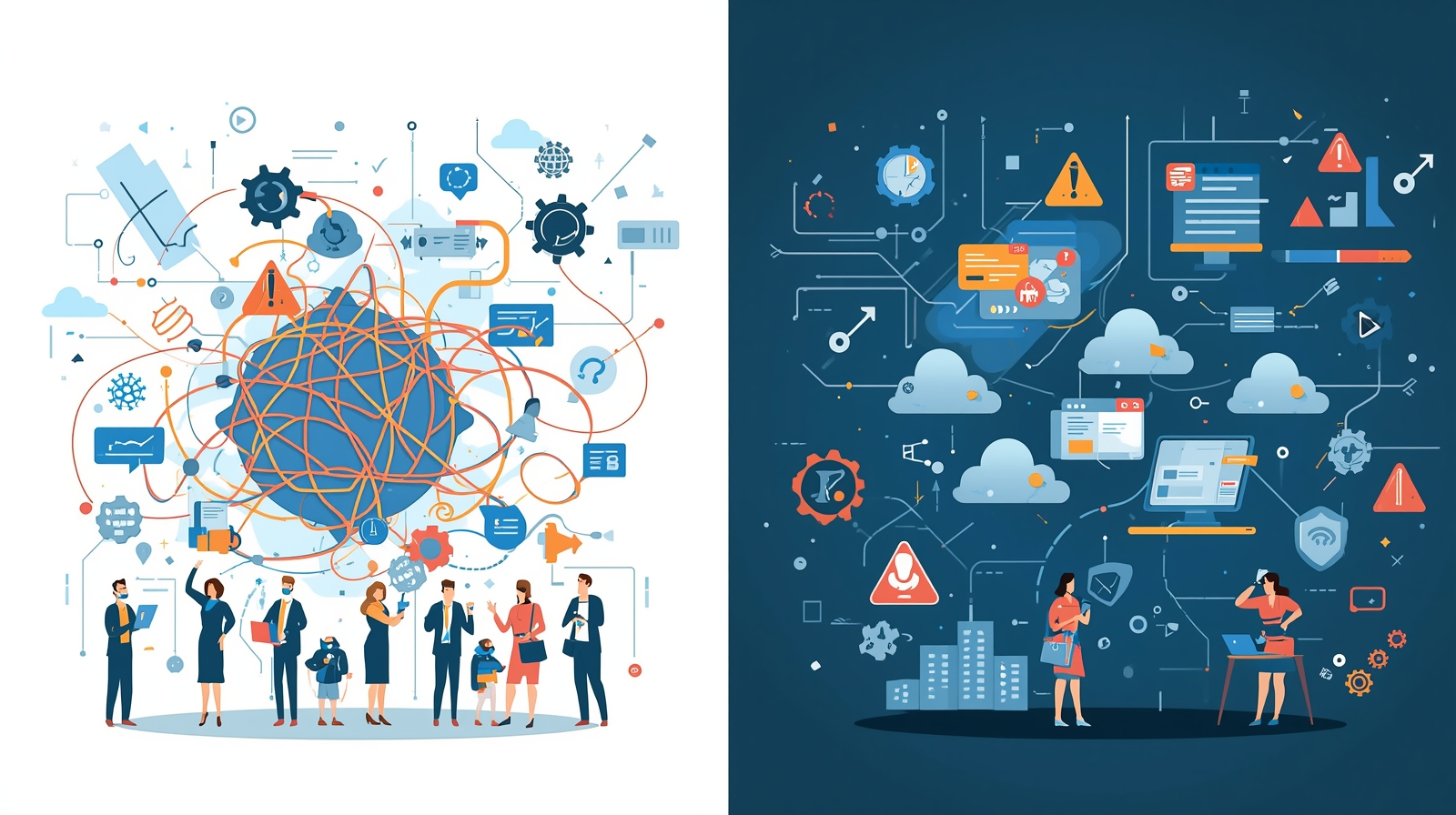
Siloed digital systems defeat the purpose of digitization.
If sales, marketing, support, and operations each use separate tools that don’t talk to one another, you create:
- Data inconsistencies
- Double entry
- Miscommunication
- Delayed workflows
- A fragmented customer experience
What to do instead:
- Prioritize tools with native integrations or open APIs.
- Establish a unified data strategy.
- Ensure systems like CRM, ERP, and support platforms sync seamlessly.
Integrated systems enable automation and a smooth end-to-end customer journey.
5. Underestimating Security & Compliance Requirements
As B2B companies digitize, cyber risks increase—especially when dealing with sensitive customer data, large transactions, and multi-party workflows.
Common mistakes include:
- Weak access controls
- Lack of compliance oversight
- Unsecured third-party applications
- No regular security audits
What to do instead:
- Choose tools with strong security certifications (ISO, SOC 2, GDPR compliance, etc.).
- Implement robust IAM (Identity & Access Management).
- Enforce encryption, MFA, and secure data storage.
- Regularly audit tools, permissions, and data flows.
Security should be built-in—not an afterthought.
Read Also: Predictions: The Next Wave of Innovation in B2B Tech