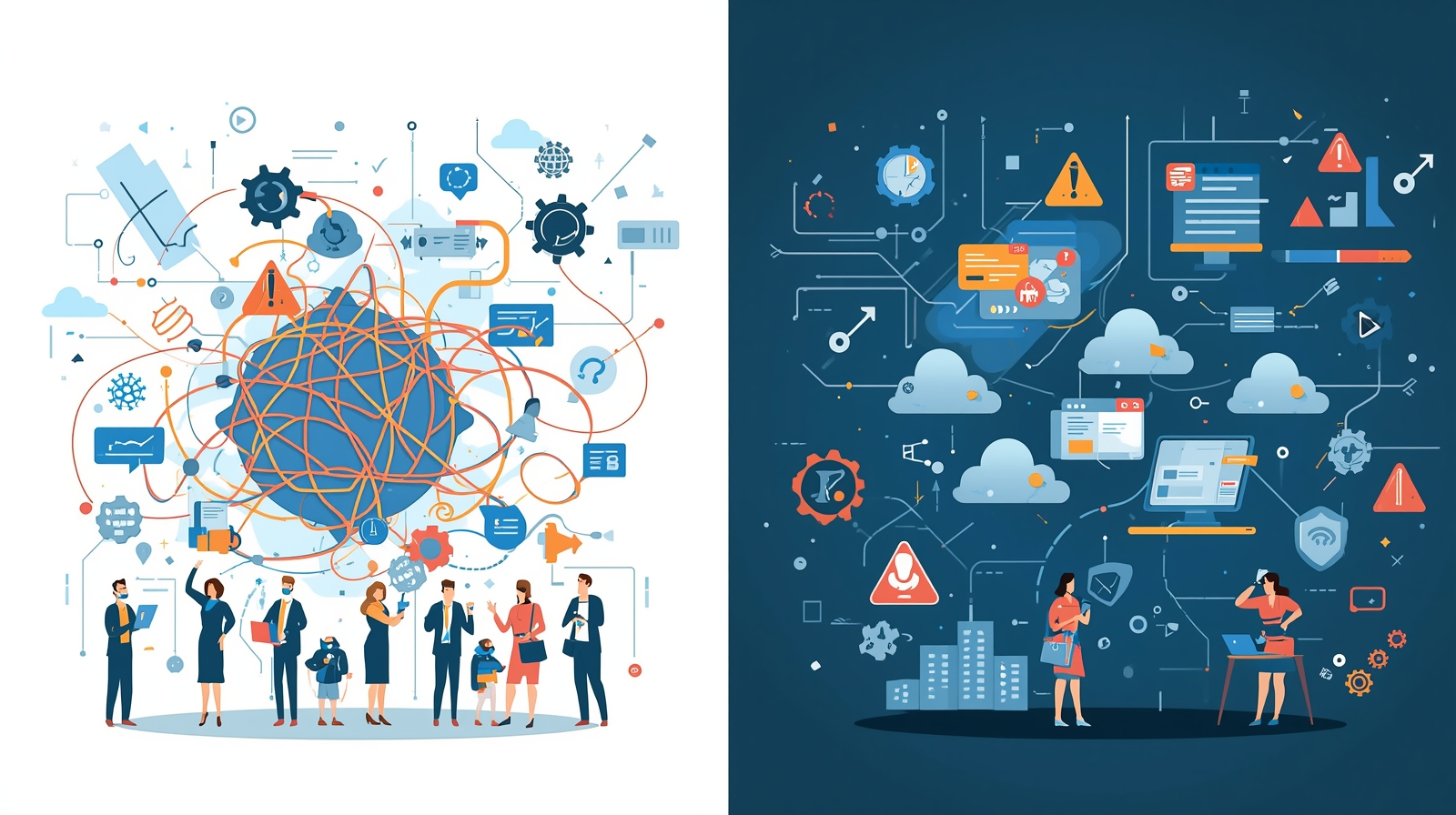

In today’s digital economy, AI-driven platforms are rapidly transforming how business-to-business (B2B) interactions occur. By leveraging data analytics, machine learning, and automation, these platforms enhance operational efficiency, optimize supply chains, and enable predictive insights that were once impossible. However, as B2B platforms increasingly rely on large volumes of sensitive data, they face significant data privacy challenges — both technical and regulatory. Addressing these challenges is essential for building trust, maintaining compliance, and safeguarding competitive advantage.
Why Data Privacy Matters in AI-Driven B2B Platforms
B2B platforms process a variety of data types, including:
- Client and partner business details
- Transactional records
- Supply chain information
- Proprietary operational data
- Behavioral and usage analytics
AI systems often require access to aggregated and fine-grained datasets to deliver accurate predictions and recommendations. However, this necessity exposes organizations to risks associated with data misuse, leaks, and non-compliance. In the B2B context, privacy issues are not just legal obligations — they are strategic imperatives.
Key Data Privacy Challenges
- Data Sensitivity and Scope
Unlike consumer-focused platforms where personal data dominates, B2B environments involve corporate and operational information that can be equally or more sensitive.
- Intellectual property (IP) and trade secrets risk exposure if improperly processed or shared.
- Behavioral patterns gleaned from AI can reveal strategic business practices.
- Cross-organization data sharing increases exposure and complicates accountability.
- Regulatory Complexity
B2B platforms operate across jurisdictions subject to diverse data protection laws:
- GDPR (European Union) imposes strict requirements on personal data handling and rights (e.g., data subject access requests, right to erasure).
- CCPA/CPRA (California) governs consumer privacy, with obligations that sometimes extend to B2B contacts.
- Emerging data localization laws in India, China, and Southeast Asia mandate on-shore data storage or impose restrictions on cross-border data transfers.
Complying with this regulatory patchwork requires careful data governance and legal expertise.
- Data Ownership and Consent
Data used by AI platforms often originates from multiple stakeholders. In B2B contexts:
- Clear consent mechanisms are harder to implement, since data may be shared through contractual agreements rather than explicit opt-ins.
- Determining data ownership becomes complex once data is merged or processed by the platform.
- Stakeholders may misinterpret how their data is used, especially when secondary processing (e.g., for model training) is involved.
- Transparency and Explainability
AI systems are often viewed as “black boxes.” For data privacy:
- Lack of clarity around how data is used can undermine trust.
- Organizations and partners may be unwilling to contribute data without understanding processing and retention policies.
- Emerging legal standards (e.g., GDPR’s “right to explanation”) demand explanations of automated decisions — challenging for complex AI models.
- Data Minimization and Anonymization
AI thrives on large datasets, but privacy best practices recommend:
- Data minimization: Only collecting data necessary for the task.
- Anonymization/pseudonymization: Making it impossible to link data back to specific entities.
Balancing the need for rich datasets with privacy mandates is challenging. Improper anonymization techniques can leave residual risks of re-identification — especially when AI models combine datasets or infer sensitive attributes.
- Third-Party Integrations and Supply Chain Risks
AI-driven systems often integrate with external APIs, data providers, and partner systems.
- Each integration introduces additional privacy obligations.
- Vendors may process data in ways that the primary platform cannot fully control or audit.
- Supply chain vulnerabilities can lead to indirect data exposure.
- Security Threats and Data Breaches
Even the best privacy policies fail if data security is compromised. Common threats include:
- Cyberattacks and ransomware
- Insider threats
- Misconfigured cloud services
- Insecure development practices
Since AI systems process aggregated data, a breach can expose sensitive insights across multiple clients.
Strategies for Addressing Privacy Challenges
Effective privacy management requires a multi-layered approach:
- Strong Data Governance
Establish frameworks that define:
- Data classification
- Access controls
- Retention policies
- Regular audits and compliance checks
Governance ensures that privacy practices are embedded in operational workflows.
- Privacy-By-Design and Default
Incorporate privacy from the earliest stages of platform development:
- Embed consent mechanisms in user interfaces
- Default to minimal data collection
- Document data flows and processing purposes
- Anonymization and Differential Privacy
Advanced techniques like differential privacy introduce noise to datasets so AI models cannot infer specific details — reducing re-identification risks while preserving useful patterns.
- Explainable AI (XAI) and Transparency
Invest in explainability tools that:
- Clarify how AI uses data
- Provide insight into automated decisions
- Support compliance with legal transparency requirements
- Contractual Data Protection Safeguards
Contracts with partners and data providers should include:
- Clear data usage limits
- Security obligations
- Auditing rights
- Breach notification requirements
- Incident Response Preparedness
Develop and test response plans for data breaches, including:
- Forensics and containment
- Regulatory reporting
- Stakeholder communication
Effective incident response reduces damage and legal exposure.
The Future of Data Privacy in AI-Driven B2B Platforms
As AI technologies evolve, so too will privacy expectations and regulatory frameworks. Key trends to watch include:
- Global harmonization of privacy laws
- Stronger enforcement and penalties
- Growing demand for privacy-enhancing technologies (PETs)
- Rise of data trusts and federated learning models
Organizations that proactively address privacy challenges will not only reduce risk but also differentiate themselves in a marketplace where trust is a key competitive advantage.
Read Also: Cybersecurity in the Age of AI: New Threats and Protective Strategies