
In today’s growth-focused organizations, the biggest barrier to scale isn’t always product-market fit—it’s misalignment. Marketing generates leads Sales doesn’t trust. Sales closes deals Customer Success wasn’t prepared for. Customer Success uncovers expansion opportunities that never make it back to Sales or Marketing.
The solution? Revenue Operations (RevOps).
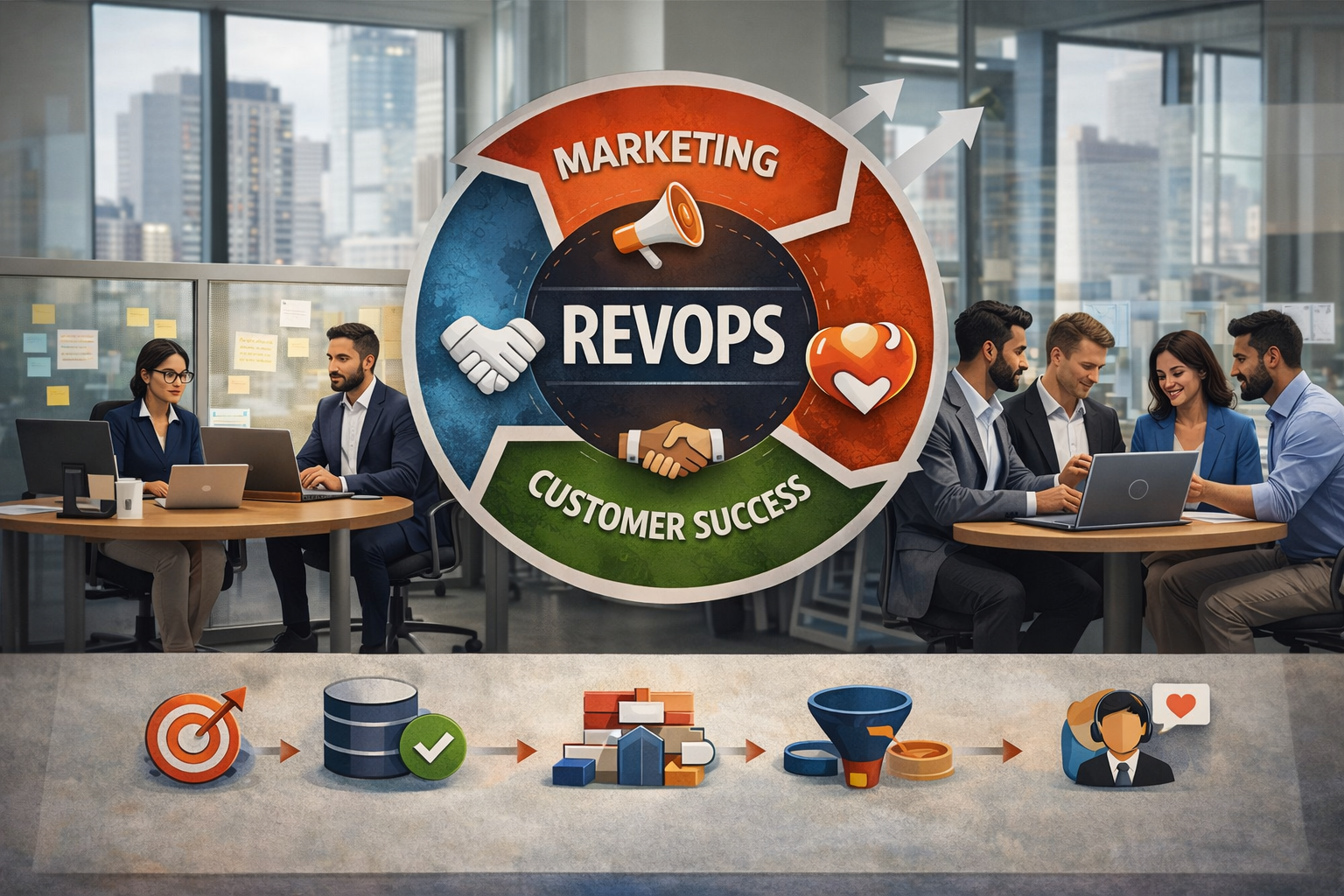
RevOps isn’t just a department—it’s a strategic framework that aligns Sales, Marketing, and Customer Success under a single revenue engine.
What Is RevOps?
Revenue Operations (RevOps) is a unified approach to managing revenue-generating teams through shared processes, data, technology, and performance metrics.
Instead of operating in silos, RevOps creates:
- A single source of truth for data
- Aligned KPIs across departments
- Streamlined customer handoffs
- Predictable revenue forecasting
- Clear ownership of the full customer lifecycle
The goal is simple: maximize revenue efficiency and customer lifetime value.
Why Alignment Matters More Than Ever
Modern buyers don’t see departments—they see one brand experience.
If Marketing promises one thing, Sales sells another, and Customer Success delivers something different, trust erodes quickly.
Misalignment leads to:
- Lower conversion rates
- Inaccurate forecasting
- Increased churn
- Poor customer experience
- Revenue leakage
RevOps fixes this by shifting focus from departmental targets to lifecycle performance.
The Traditional Silo Problem
Marketing Focus
- MQL volume
- Campaign performance
- Cost per lead
Sales Focus
- Pipeline
- Quota attainment
- Close rates
Customer Success Focus
- Retention
- Adoption
- NPS
Each team optimizes for different outcomes—often unintentionally working against one another.
RevOps replaces siloed optimization with shared accountability.
The RevOps Framework for Alignment
1. Align Around the Customer Lifecycle
Instead of separate funnels, RevOps builds one connected journey:
Awareness → Engagement → Conversion → Onboarding → Adoption → Expansion → Renewal
Every stage has:
- Clear entry and exit criteria
- Defined ownership
- Shared metrics
This eliminates finger-pointing and handoff friction.
2. Establish Shared Revenue KPIs
Alignment starts with metrics.
Instead of Marketing owning MQLs and Sales owning bookings, align around:
- Revenue growth
- Customer acquisition cost (CAC)
- Customer lifetime value (CLTV)
- Win rate
- Net revenue retention (NRR)
- Sales cycle length
When everyone is measured against revenue impact, behavior changes.
3. Create a Unified Tech Stack
RevOps ensures systems talk to each other.
Core components often include:
- CRM (e.g., Salesforce)
- Marketing automation (e.g., HubSpot)
- Customer success platforms (e.g., Gainsight)
- BI tools (e.g., Tableau)
The key isn’t the tools—it’s clean data, standardized definitions, and automated workflows.
RevOps owns data governance so teams trust the numbers.
4. Standardize Handoffs Between Teams
Handoffs are where revenue is lost.
RevOps defines:
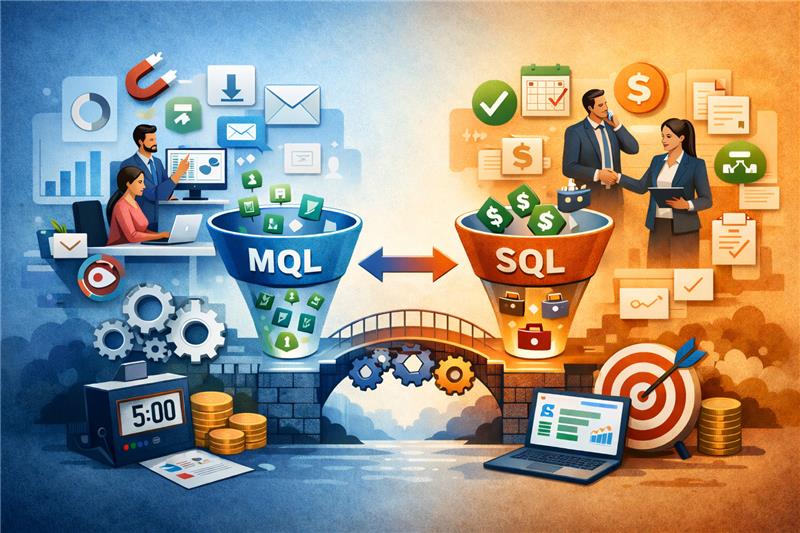
- What qualifies a lead
- When Sales accepts a lead
- What information must transfer to Customer Success
- How expansion opportunities are routed
Clear SLAs between departments reduce friction and increase speed to revenue.
5. Centralize Forecasting & Reporting
Without RevOps, each team produces its own forecast.
With RevOps:
- Pipeline reporting is standardized
- Revenue projections use shared data models
- Risk is visible earlier
- Executive leadership gets one revenue view
This improves strategic decision-making and investor confidence.
The Role of RevOps in Each Team
Marketing + RevOps
- Attribution modeling
- Funnel conversion analysis
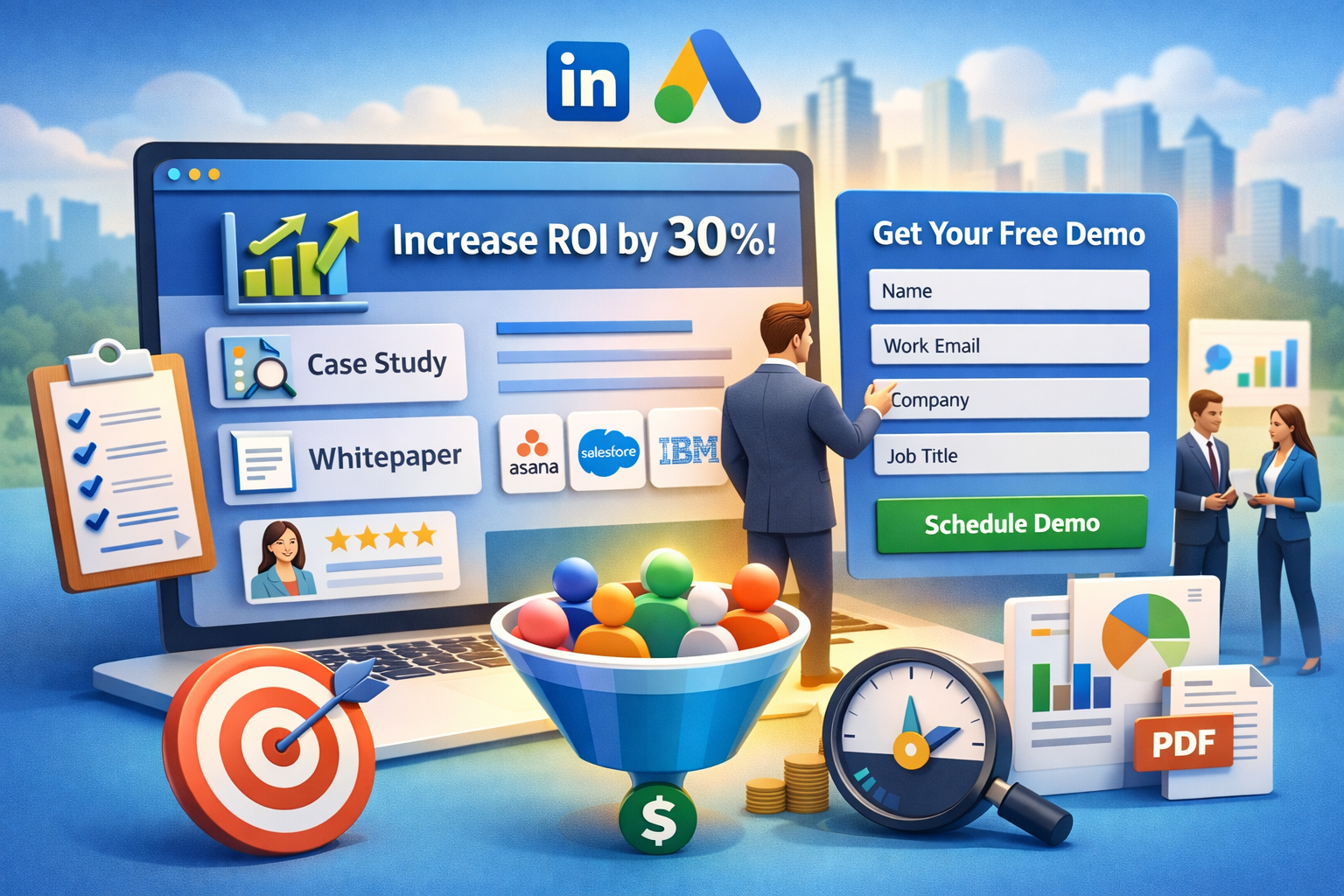
- Campaign ROI measurement
- Lead scoring alignment with Sales
Sales + RevOps
- Pipeline hygiene
- Forecast accuracy
- Territory planning
- Compensation design
Customer Success + RevOps
- Health scoring models
- Churn prediction
- Expansion tracking
- Renewal forecasting
RevOps acts as the connective tissue—not a gatekeeper.
Cultural Shift: From Departments to Revenue Team
The biggest transformation isn’t operational—it’s cultural.
RevOps encourages:
- Shared dashboards
- Cross-functional planning
- Joint quarterly reviews
- Transparency in performance
When Sales celebrates renewals and Customer Success celebrates new bookings, alignment becomes real.
Benefits of RevOps Alignment
Organizations that adopt RevOps typically see:
- Higher forecast accuracy
- Improved CAC efficiency
- Shorter sales cycles
- Increased retention and expansion
- Better customer experience
- Faster scalable growth
Most importantly, revenue becomes predictable rather than reactive.
How to Start Implementing RevOps
You don’t need a full reorg to begin.
Start with:
- Audit your current revenue processes
- Map your full customer journey
- Identify data inconsistencies
- Align on shared KPIs
- Assign clear RevOps ownership
Over time, this may evolve into a formal RevOps function—but alignment can begin immediately.