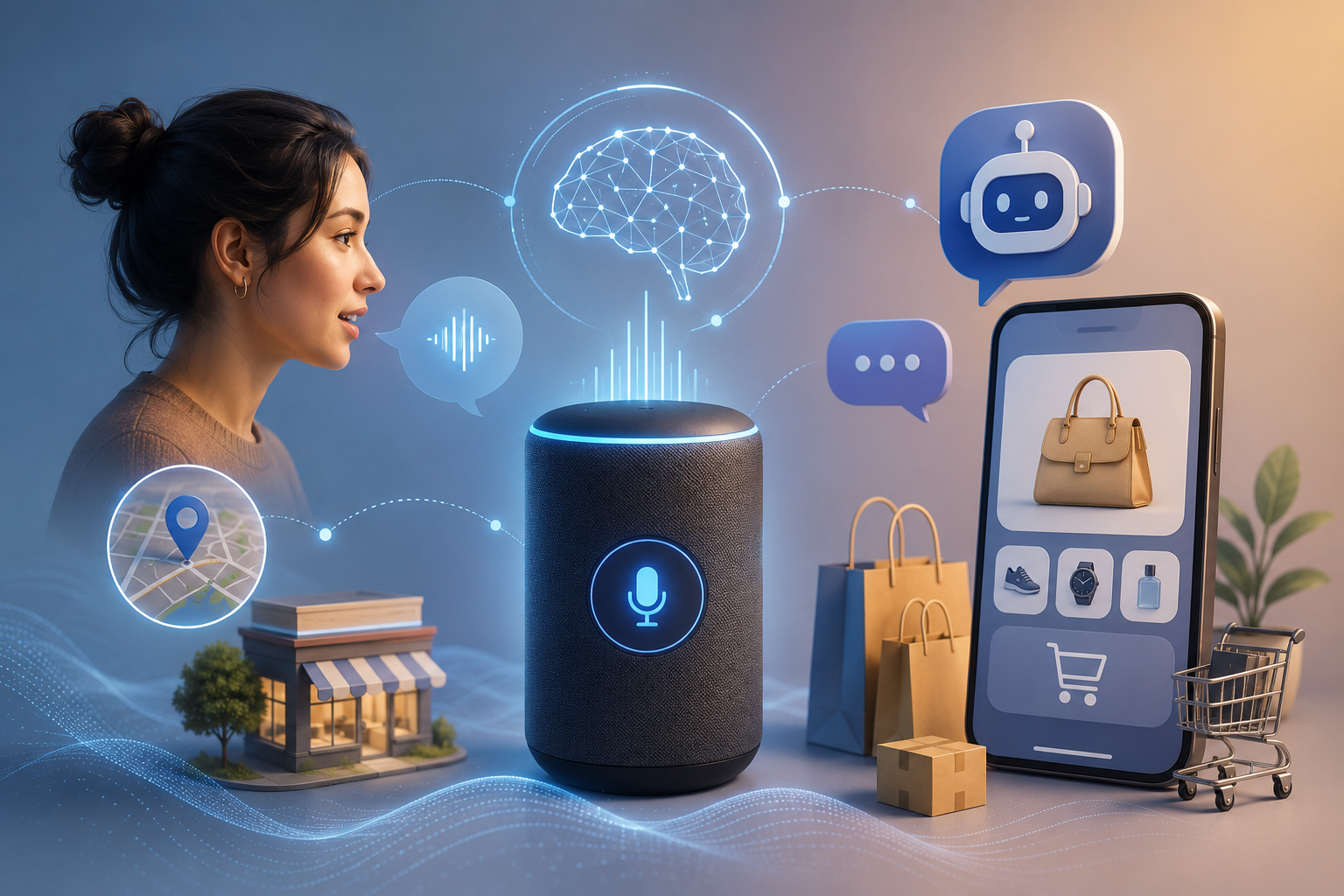

AI search assistants are intelligent systems powered by artificial intelligence that help people find information, products, and services more efficiently. Unlike traditional keyword-based search, these assistants understand user intent and context, often using natural language and personalization to deliver better results.
Think of them as advanced helpers embedded in search engines, ecommerce platforms, chatbots, and voice interfaces that guide buyers through every stage of their purchase journey.
🛒 How AI Search Assistants Integrate Into the Buyer Journey
The buyer journey typically has three main stages:
- Awareness — realizing a need or problem
- Consideration — exploring and comparing options
- Decision — choosing and purchasing a solution
Here’s how AI search assistants elevate each stage:
1️⃣ Awareness Stage: Smarter Discovery
Early in the journey, buyers are exploring broad topics or trying to solve a problem. AI assistants help by:
- Interpreting intent: Understanding conversational queries like “best sneakers for walking long distances” rather than just keywords.
- Providing contextual results: Showing educational content, product categories, and trending queries that introduce buyers to relevant options.
- Reducing friction: Predictive autocomplete and suggestions refine searches and reduce cognitive load.
Impact: Buyers discover relevant products or services faster and with less effort.
2️⃣ Consideration Stage: Personalized Exploration
At this stage, buyers evaluate options. AI search assistants support them by:
- Offering tailored recommendations: Based on search history, preferences, and behavior.
- Delivering comparison insights: Highlighting differences between products, features, and pricing in natural language.
- Answering questions in real time: Through conversational interfaces that mimic human discussion, clarifying doubts immediately.
Example: A user asking an ecommerce AI assistant “compare these two smartphones for photography” can get a structured comparison without manually opening multiple pages.
Impact: Shoppers make more informed choices, increasing confidence and reducing decision paralysis.
3️⃣ Decision Stage: Facilitating Conversion
When the buyer is ready to act, AI search assistants help seal the deal:
- Providing accurate product matches: Surfacing best-fit items with filters that adapt based on intent.
- Assisting checkout: Offering real-time support for pricing, availability, promotions, and delivery details.
- Reducing abandonment: Proactively addressing cart abandonment with reminders, messaging, or incentives.
Impact: Friction around purchasing decreases, leading to higher conversion rates.
🚀 Beyond Purchase: Retention and Loyalty
AI search assistants don’t stop after checkout. They continue to influence the post-purchase experience by:
- Handling support inquiries: Answering questions about returns, tracking, and troubleshooting.
- Driving repeat engagement: Recommending accessories, complementary services, and future deals.
- Learning preferences: Improving future interactions with better personalization over time.
Outcome: Customers stay engaged and are more likely to return.
💡 Real-World Benefits for Businesses
Integrating AI search assistants yields measurable benefits:
- Higher engagement: users stay on the site longer due to personalized, conversational search experiences.
- Boosted conversions: streamlined search and decision support reduce barriers to purchase.
- Lower support costs: AI answers common questions automatically.
- Valuable insights: analytics from conversational queries reveal emerging customer trends and unmet needs.
⚠️ Challenges and Considerations
Even strong AI systems pose challenges:
- Data privacy: Personalization relies on data — brands must handle user info ethically and compliantly.
- Relevance vs. bias: AI must avoid reinforcing past behavior at the cost of discovery (e.g., always showing the same brands).
- User expectations: Shoppers expect accuracy; errors in recommendations or answers can erode trust.
Brands should balance automation with transparency, explainability, and options for human support when needed.
🎯 What’s Next? Future Trends
The evolution of AI search assistants will likely include:
- Multimodal understanding: Combining text, voice, and visual search (e.g., search by image).
- Emotion and sentiment-aware responses: More empathetic, conversational interactions.
- Seamless cross-channel experiences: Unified search behavior across web, mobile, and voice platforms.
Generative insights: Summarized recommendations and trend predictions based on aggregated data.
Read also: Attribution Models in the Age of AI Analytics: From Measurement to Predictive Performance